
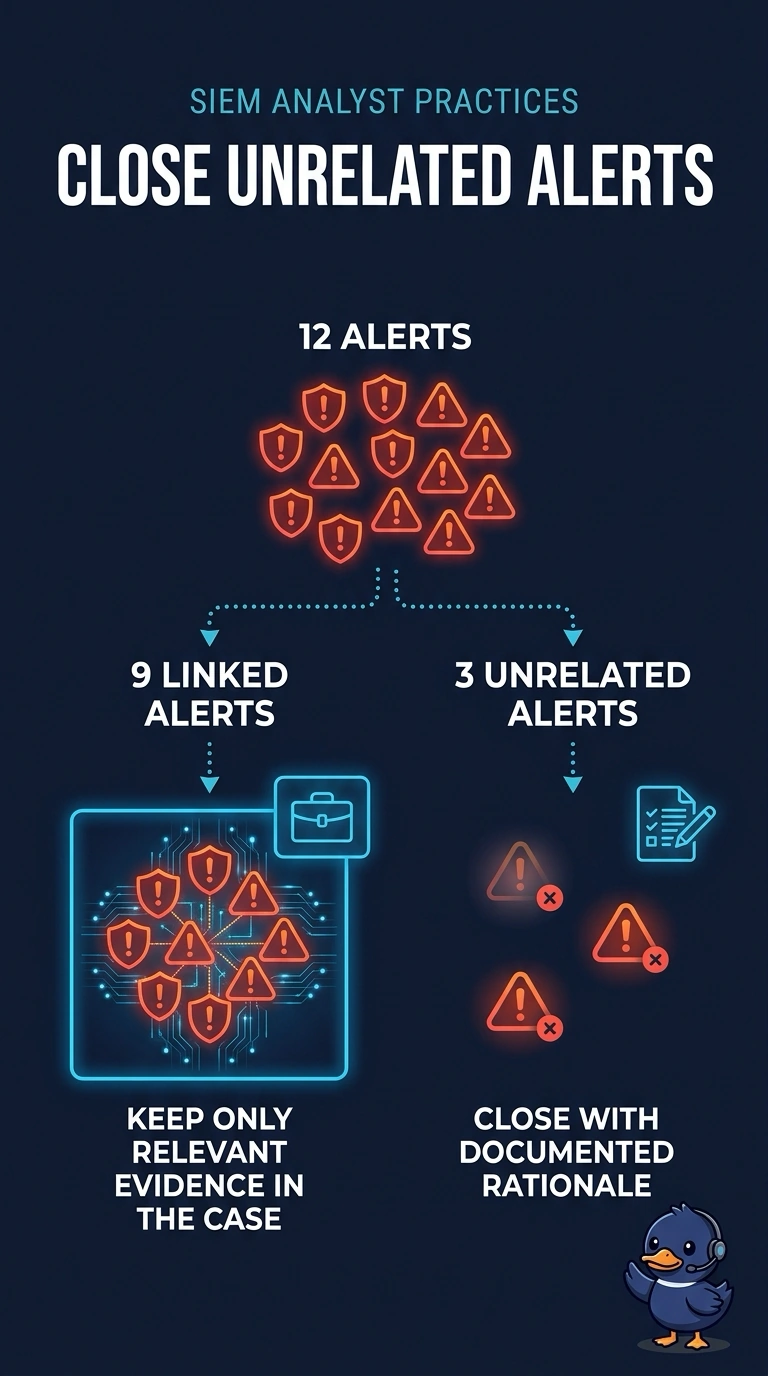
During a phishing investigation at a university, an analyst reviews twelve alerts on an affected faculty laptop, links nine to the intrusion case, and determines three are unrelated routine updates. How should the analyst handle those three alerts in case management?
Select an answer to reveal the explanation.
Short Explanation
When a dozen alerts land on one laptop, keeping your case file clean takes discipline. The trap is either stuffing unrelated noise into the incident case or trying to wipe those alerts away completely. Closing the three benign alerts separately with a clear note keeps your case focused and your audit trail intact.
Full Explanation
Clean case management separates confirmed incident activity from benign background noise while preserving full accountability, so the analyst should close the three unrelated alerts with documented rationale and keep only relevant evidence in the case. Recording why those three alerts represent routine software updates lets peer reviewers and auditors verify that nothing was overlooked without cluttering the phishing timeline. Attempting to purge the three routine-update alerts from the SIEM repository so future audits only see confirmed threats destroys telemetry needed for historical verification and compliance. Choosing to merge all twelve alerts into the intrusion case without notes so the incident timeline appears complete pollutes the case scope and misleads responders about what the attacker actually did. Deciding to leave the three alerts open and unassigned in the queue until the final post-incident report is published creates unnecessary triage backlog and signals incomplete investigation work. As an operational caveat, double-check process lineage and timestamps before ruling out updates, because adversaries sometimes masquerade as legitimate updaters. As an operational check, review the case's linked observables and alert list to confirm every attached item aligns with the documented phishing timeline.
Prefer to study offline? Printable PDF study book + test engine ($7.50, unofficial). These questions stay free here.