
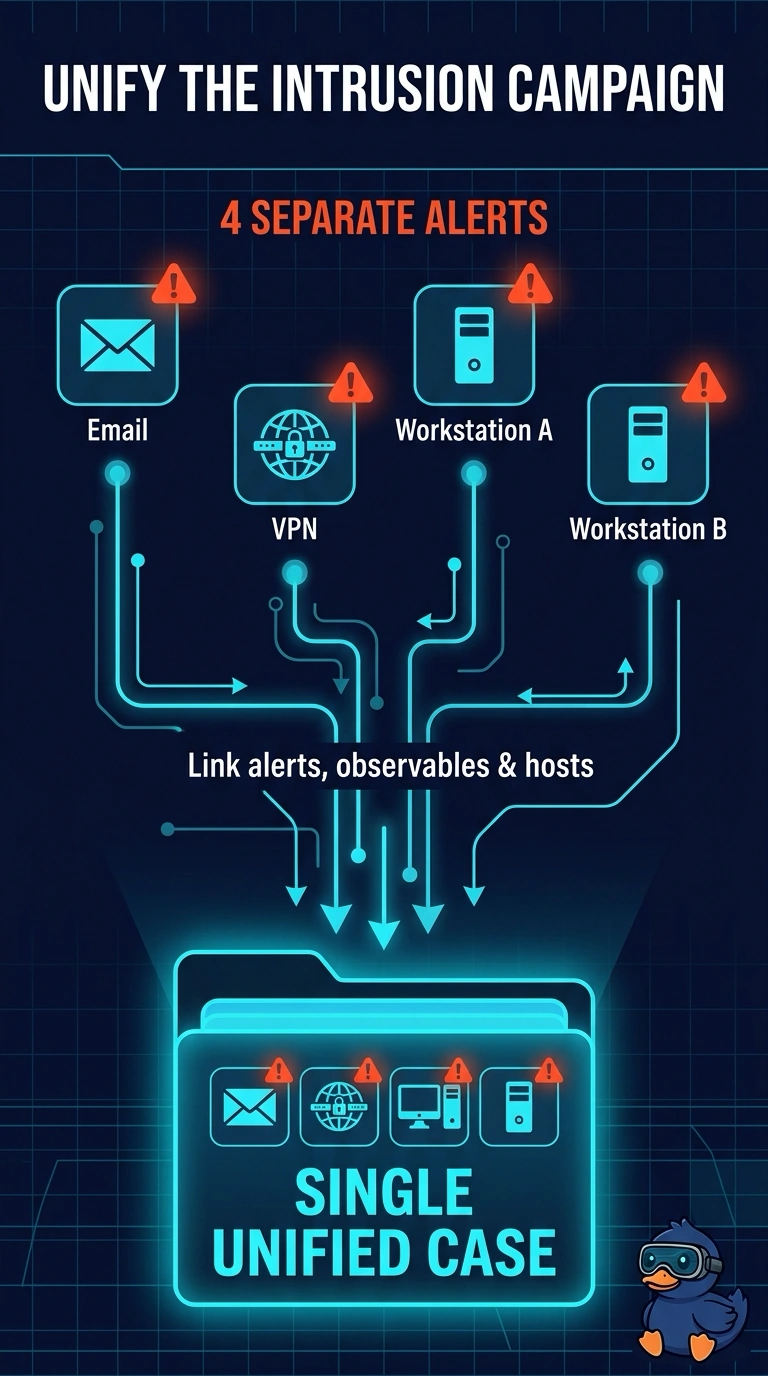
A manufacturing SOC analyst determines that four separate alerts across email, VPN, and two workstations belong to the same intrusion campaign. How should the analyst organize this work in case management?
Select an answer to reveal the explanation.
Short Explanation
Scattered tickets turn one clear story into four confusing fragments when you hand off a shift. Link related alerts and observables into a single case, avoiding the trap of leaving findings siloed or deleting alerts to tidy the queue.
Full Explanation
When multiple alerts trace back to one intrusion, you should Link all related alerts, observables, and hosts into a single unified case so every investigator sees the complete scope, shared indicators, and resolution status in one place. Case management is built to connect disparate detections into a coherent investigative record for handoff and audit. Choosing to Keep each alert in an isolated ticket and summarize them only in a chat message fragments evidence and makes shift handoffs or post-incident reviews unreliable. Deciding to Delete three of the alerts so only the highest-severity record remains open destroys valuable detection history and obscures which hosts were touched. Opting to Disable correlation rules until all four alerts are manually closed separately interrupts ongoing monitoring without organizing the active investigation. Caveat: only merge alerts into one case after confirming a shared link such as a common user, host, or observable, so unrelated incidents do not get tangled together. Operational check: review the unified case timeline and attached observables to verify that all four alerts and affected assets are represented before closing.
Prefer to study offline? Printable PDF study book + test engine ($7.50, unofficial). These questions stay free here.