
A logistics firm SOC analyst hunts for unusual internal SMB connections in CQL, but thousands of routine monitoring health checks flood the results and hide rare anomalies. How should the analyst refine the CQL query?
Select an answer to reveal the explanation.
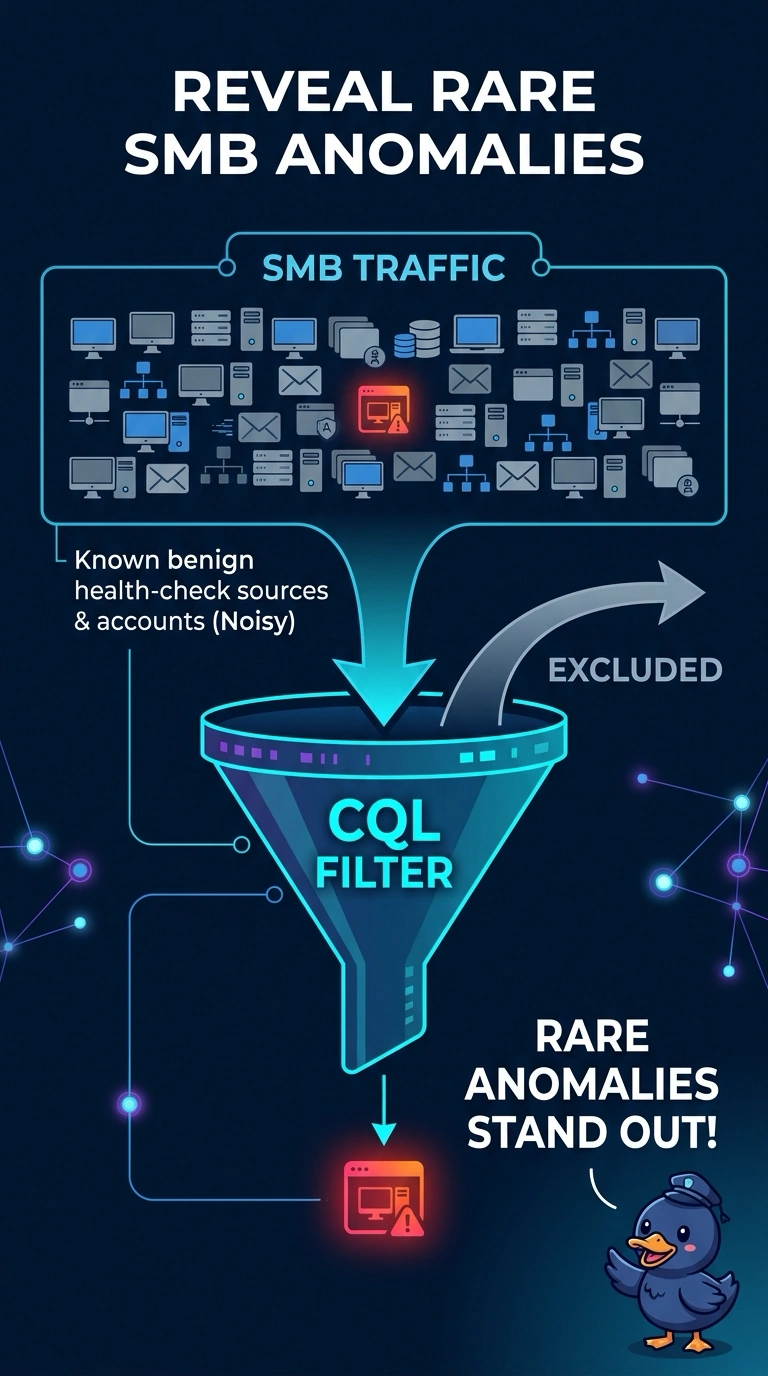
Short Explanation
Hunting in a noisy dataset is like trying to hear a whisper in a server room—you have to quiet the fans first. The trap is shrinking your time window or sorting rows, which hides real lateral movement instead of filtering out the known chatter.
Full Explanation
When routine monitoring traffic dominates a hunting query, the right move is to "Exclude known benign health-check sources and accounts in CQL so rare anomalous connections stand out" while keeping your full hunting window intact. Filtering out verified administrative scanners and service accounts removes predictable noise at query time so low-volume lateral movement becomes visible. Choosing to "Shorten the CQL query time window to five minutes so fewer total events are returned in the table" simply reduces coverage and risks missing genuine attacker activity outside that narrow slice. Trying to "Switch the CQL query from CPS normalized fields to raw unparsed log strings to reduce noise" loses cross-source consistency without removing the underlying health-check events. Likewise, deciding to "Sort the CQL event table alphabetically by destination hostname to group all monitoring servers together" only reorders rows and still leaves anomalous connections buried under truncated display limits. As a caveat, verify that excluded health-check accounts are not themselves compromised before filtering them out permanently. Operationally, test your exclusion against a recent time slice and confirm the remaining SMB events still include expected legitimate baseline traffic.
Prefer to study offline? Printable PDF study book + test engine ($7.50, unofficial). These questions stay free here.