
A retail SOC analyst runs a CQL query for outbound connections to a suspicious external IP across firewall logs, gets 400 matching events, and immediately reports that store servers established active sessions with the IP. What did the analyst overlook when interpreting these results?
Select an answer to reveal the explanation.
Short Explanation
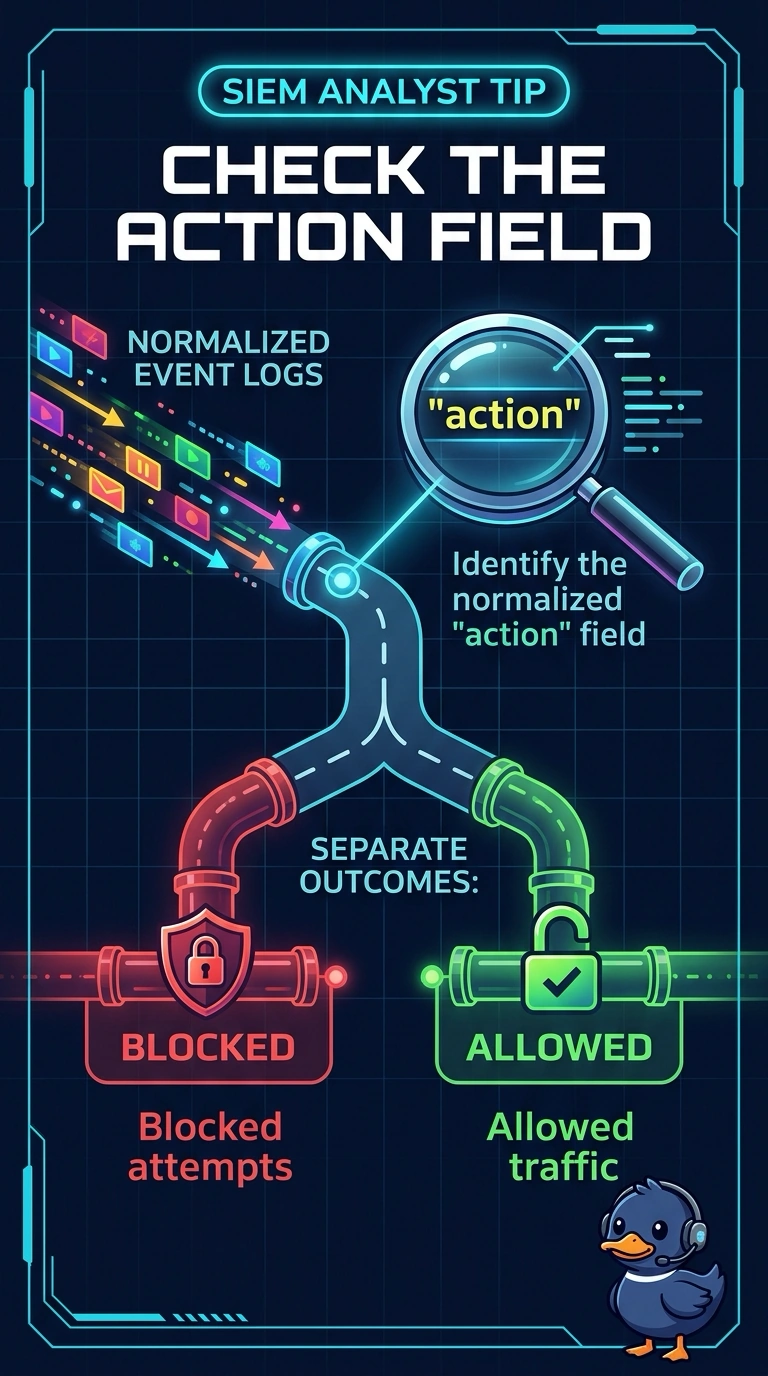
Seeing four hundred firewall hits for a bad IP does not mean four hundred connections succeeded, any more than four hundred knocks on a locked door mean someone got inside. You need to check the normalized action field before declaring active sessions. The trap is treating raw event volume as proof of allowed network communication.
Full Explanation
Firewall and proxy logs record both denied and permitted traffic, so matching a destination IP alone never proves a session succeeded. Checking the normalized action field to separate blocked attempts from allowed traffic reveals whether the perimeter stopped the requests or let them through. A permit action is permission to attempt traffic, not alone proof of an established application session. Verify handshake/session-end, bytes and endpoint evidence before reporting successful communication. By contrast, Expanding the query time window to thirty days to confirm whether additional stores logged hits only widens the dataset without clarifying whether any of the existing 400 events were permitted. Switching from normalized CPS fields to raw vendor event text so every log line is unparsed removes structured schema fields and makes consistent filtering across sources harder. Adding a wildcard filter on the destination IP field to capture nearby addresses in the subnet broadens the match criteria and introduces unrelated traffic instead of interpreting the current hits. A key caveat is that even blocked outbound attempts still warrant endpoint checks to see what process initiated the request. As an operational check, group the matching CQL events by the normalized action or outcome field to verify the exact breakdown of blocked versus allowed connections.
Prefer to study offline? Printable PDF study book + test engine ($7.50, unofficial). These questions stay free here.