
A university SOC analyst runs a broad CQL search across millions of campus firewall and DNS records and finds the results too noisy to spot suspicious outbound connections. What should the analyst do in CQL to isolate relevant events?
Select an answer to reveal the explanation.
Short Explanation
Think of a noisy SIEM search like panning for gold: you want to shrink the pile before you start inspecting every pebble. Filtering early on normalized fields cuts out routine traffic, whereas the trap is trying to brute-force raw records or discard useful telemetry.
Full Explanation
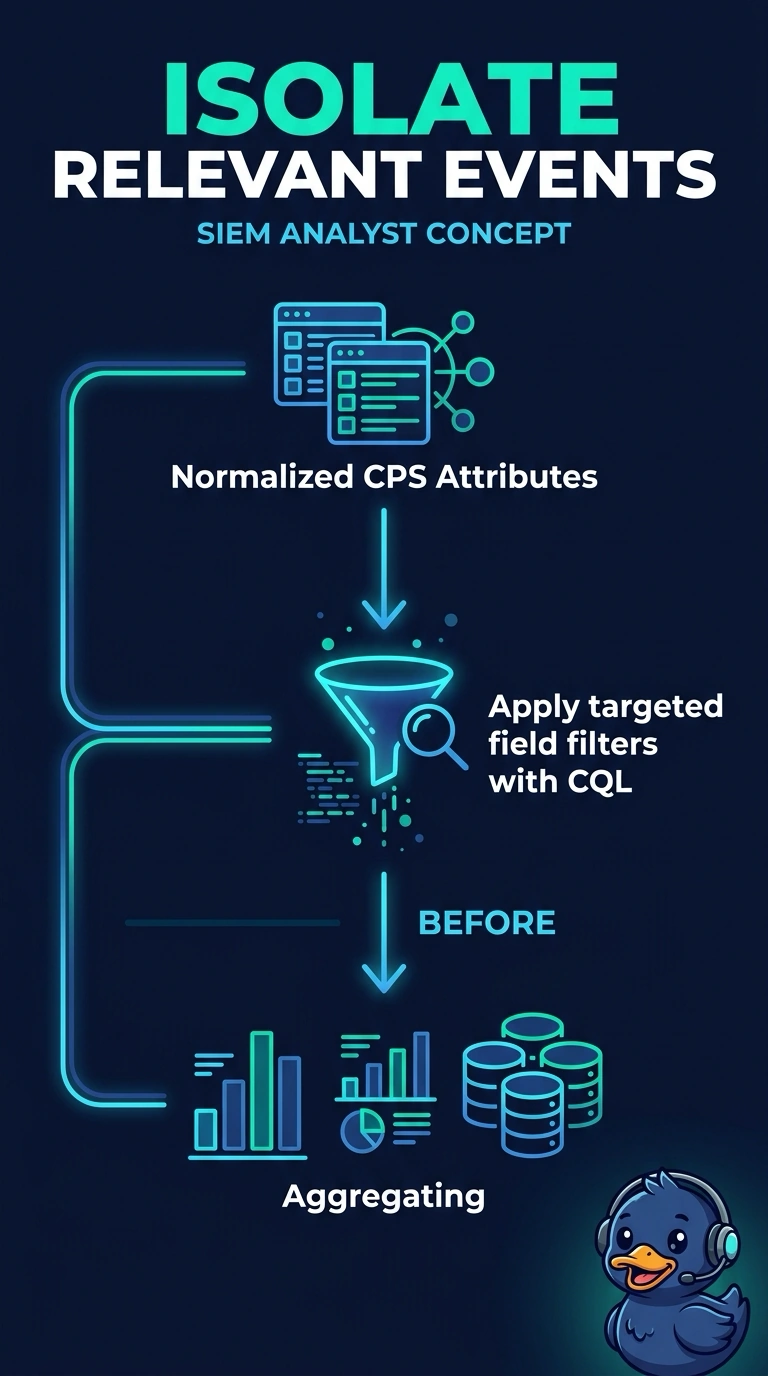
When a dataset contains millions of campus firewall and DNS events, you should Apply targeted field filters on normalized CPS attributes before aggregating so CQL narrows the working set to specific hosts, ports, or actions first. By filtering early on common schema fields, the query engine processes only relevant records and produces cleaner summaries. Choosing to Delete older log records from the dataset so fewer events appear in search results destroys historical visibility needed for scoping and compliance. Trying to Disable CPS normalization and search only unparsed raw event timestamps removes consistent field names across sources and makes cross-source filtering harder. Attempting to Export all matching raw events to a spreadsheet and inspect every row offline wastes analyst time and bypasses CQL's built-in speed and aggregation. Caveat: overly narrow filters can hide related activity if an attacker uses unexpected ports or hosts, so start with high-confidence scope constraints and widen as needed. Operational check: compare total matched event counts before and after adding each filter clause to confirm you retained the target host and timeframe.
Prefer to study offline? Printable PDF study book + test engine ($7.50, unofficial). These questions stay free here.