
A biotech company SOC analyst investigates an alert showing a research scientist downloaded 150 project files from a cloud repository at 2:00 PM. Before escalating the activity as unauthorized data exfiltration, what should the analyst check first?
Select an answer to reveal the explanation.
Short Explanation
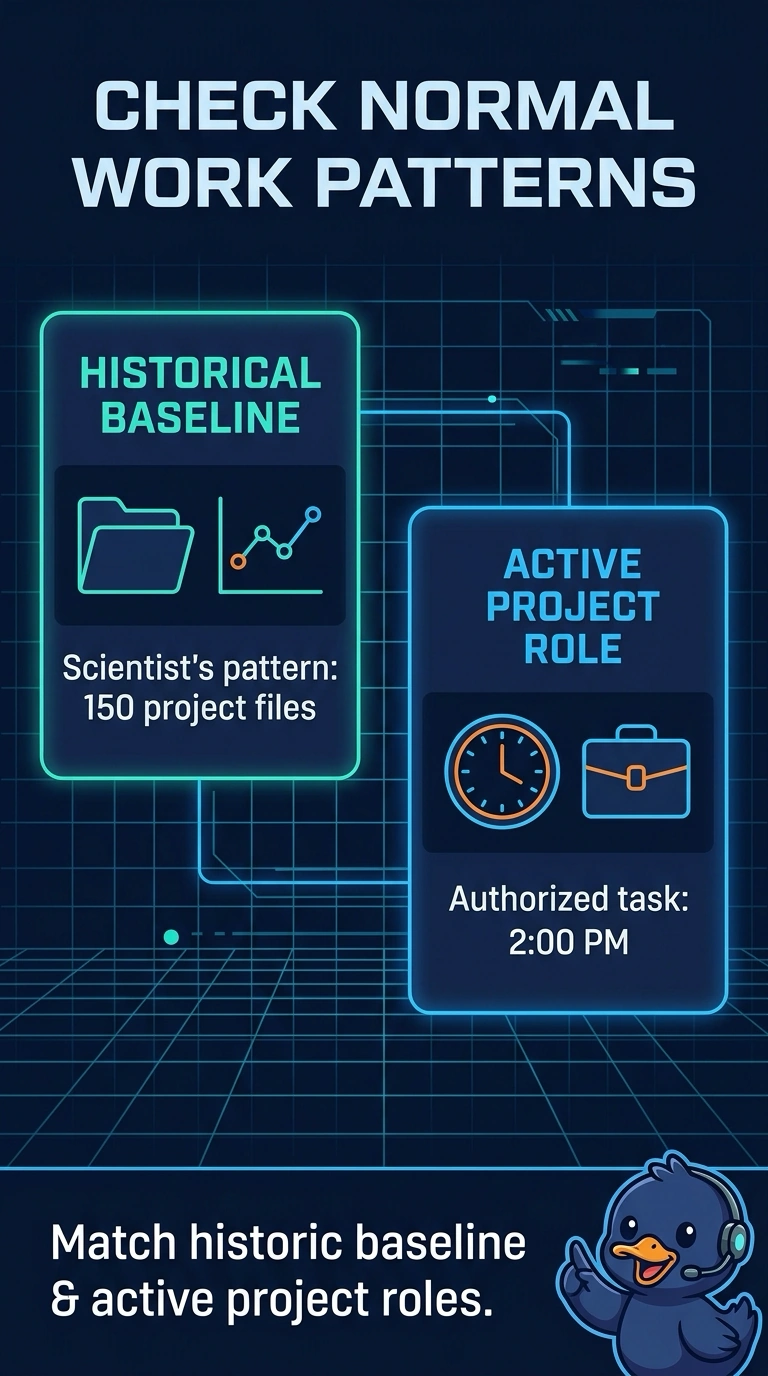
Volume alone can look scary until you realize a scientist might pull dozens of datasets every Tuesday afternoon. The trap is treating a raw download count as proof of theft without checking the user's normal behavior first. Compare the activity against the scientist's historical baseline and project role before hitting the panic button.
Full Explanation
Evaluating The scientist's historical download baseline and active project role for normal work patterns establishes whether 150 downloads represent an anomaly or routine research work. Analysts must understand user context and baseline behavior in Falcon Next-Gen SIEM before attributing legitimate business activity to an adversary. Checking Whether the cloud repository's default retention policy archives downloaded files automatically does not indicate whether the scientist's current access was authorized or unusual. Looking at Whether an existing Falcon Fusion SOAR workflow can immediately isolate the scientist's workstation jumps straight to disruptive containment before confirming any malicious intent. Inspecting Whether the scientist's workstation has an active local firewall rule blocking outbound SMB is irrelevant to assessing an authorized cloud repository download over web protocols. Caveat: even a user with a high-volume baseline can be compromised, so always verify that the session originated from expected devices and locations. As an operational check, query 30 days of prior repository access logs for that account to compare file counts, access hours, and source IP addresses against the current event.
Prefer to study offline? Printable PDF study book + test engine ($7.50, unofficial). These questions stay free here.