
A logistics company SOC analyst confirms that a malicious executable ran on one dispatch laptop and wants to identify every other system where the file may have been staged, even if it has not executed yet. Which observable pivot best achieves this?
Select an answer to reveal the explanation.
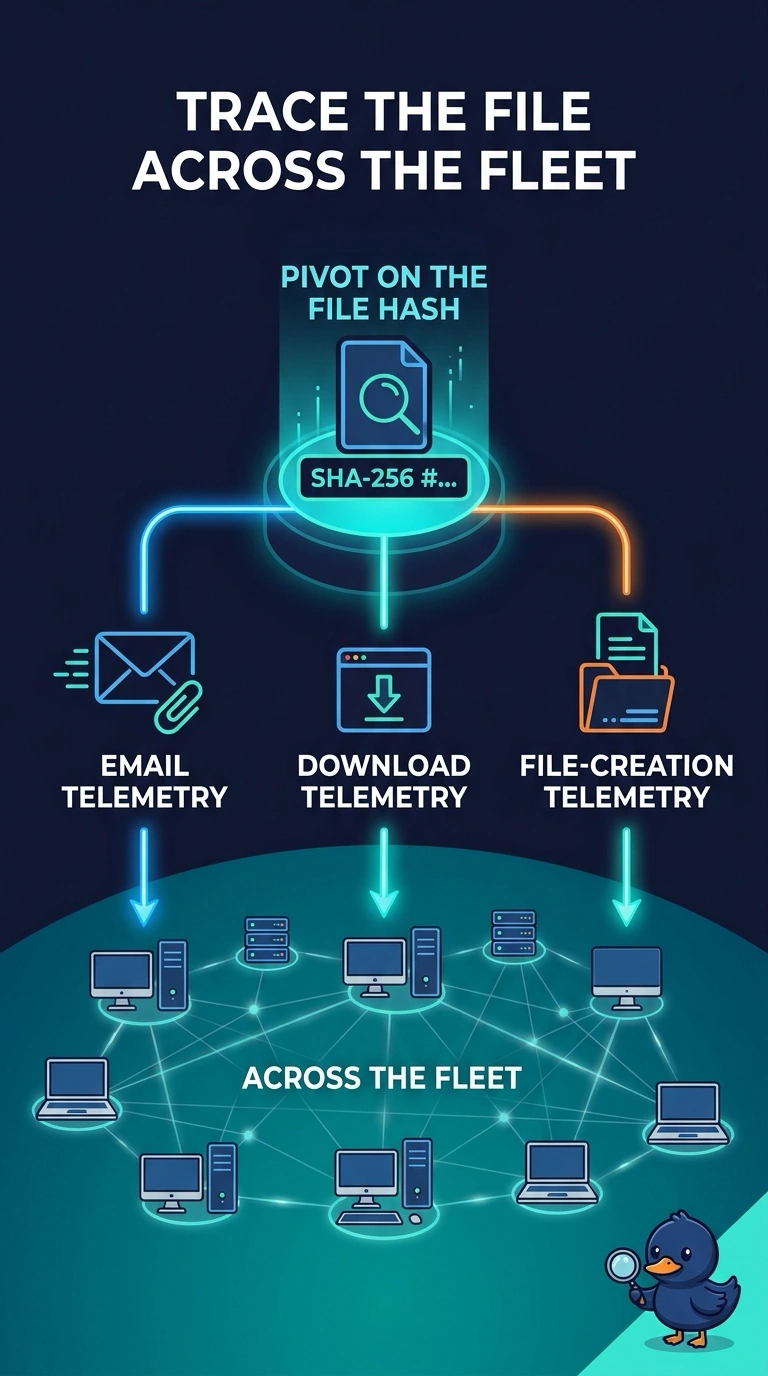
Short Explanation
Looking only at running programs is like checking who lit a match while you ignore the boxes of matches still sitting on desks. The trap is relying solely on execution alerts, which leaves unexecuted copies staged on other hosts undetected.
Full Explanation
Scoping a malware incident completely requires finding both hosts where the payload ran and hosts where it landed without executing. Selecting Pivot on the file hash across file-creation, download, and email telemetry across the fleet uncovers staged executables written to disk, downloaded via browsers, or delivered to inboxes before any user launches them. By contrast, Search only process-execution alerts for the file hash across all corporate workstations misses every system where the file sits dormant on disk or in a downloads folder. Choosing Isolate every dispatch laptop in the region before checking whether the file exists elsewhere causes unnecessary operational disruption without answering which hosts actually received the artifact. Meanwhile, Check only outbound firewall deny logs for the external IP address contacted by the laptop cannot reveal hosts that received the file via email or internal transfer and have not yet beaconed outward. As a caveat, attackers sometimes recompile or slightly modify payloads per target, so also pivot on related delivery domains or filenames. As an operational check, query the SHA-256 hash across endpoint file-write and email-gateway logs in CQL and verify containment on every matching host.
Prefer to study offline? Printable PDF study book + test engine ($7.50, unofficial). These questions stay free here.