
A biotech company SOC analyst investigates an unsigned executable launched from a user's temporary folder on a research workstation. A threat-intelligence lookup on the file's SHA-256 hash returns zero malicious sightings. What should the analyst recognize before closing the alert as benign?
Select an answer to reveal the explanation.
Short Explanation
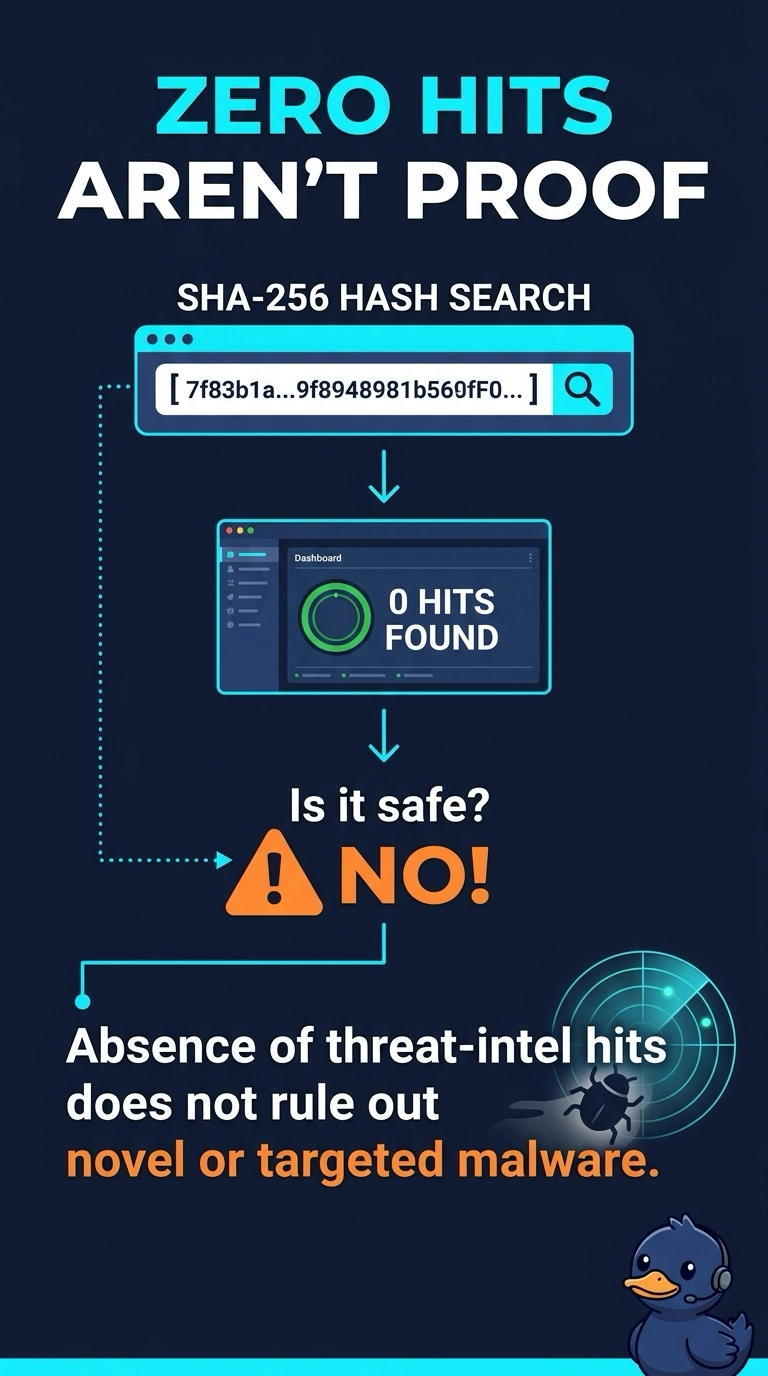
Just because a suspect isn't on a wanted poster yet doesn't mean they're harmless—you still check what they're doing in your lobby! The trap is treating zero threat-intelligence hits as a clean bill of health. Novel or recompiled malware often has an unknown hash, so inspect execution context first.
Full Explanation
Because adversaries routinely recompile payloads or deploy custom tooling, Absence of threat-intelligence hits does not rule out novel or targeted malware, so an unknown SHA-256 hash must still be evaluated through parent process, command line, and network behavior. Assuming that Threat-intelligence feeds automatically block any unknown hash before execution is false, since feeds inform triage rather than blocking every previously unseen binary. Claiming that Unsigned files in temporary folders are always routine operating system updates reverses normal security expectations, as legitimate OS updates are typically signed and placed in standard system paths. Believing that A clean hash lookup guarantees the file has a valid digital publisher signature confuses reputation intelligence with cryptographic code-signing verification. As a caveat, even a previously unseen binary can turn out to be an authorized internal utility, so confirm software origin with the user or IT team. As an operational check, inspect child processes and outbound connections from the executable before closing.
Prefer to study offline? Printable PDF study book + test engine ($7.50, unofficial). These questions stay free here.