
A hospital platform team attempts to deploy the Falcon sensor DaemonSet into a standard application namespace enforced by a restricted Kubernetes Pod Security standard, and the cluster rejects the sensor pods at creation time. How should the team resolve this deployment failure?
Select an answer to reveal the explanation.
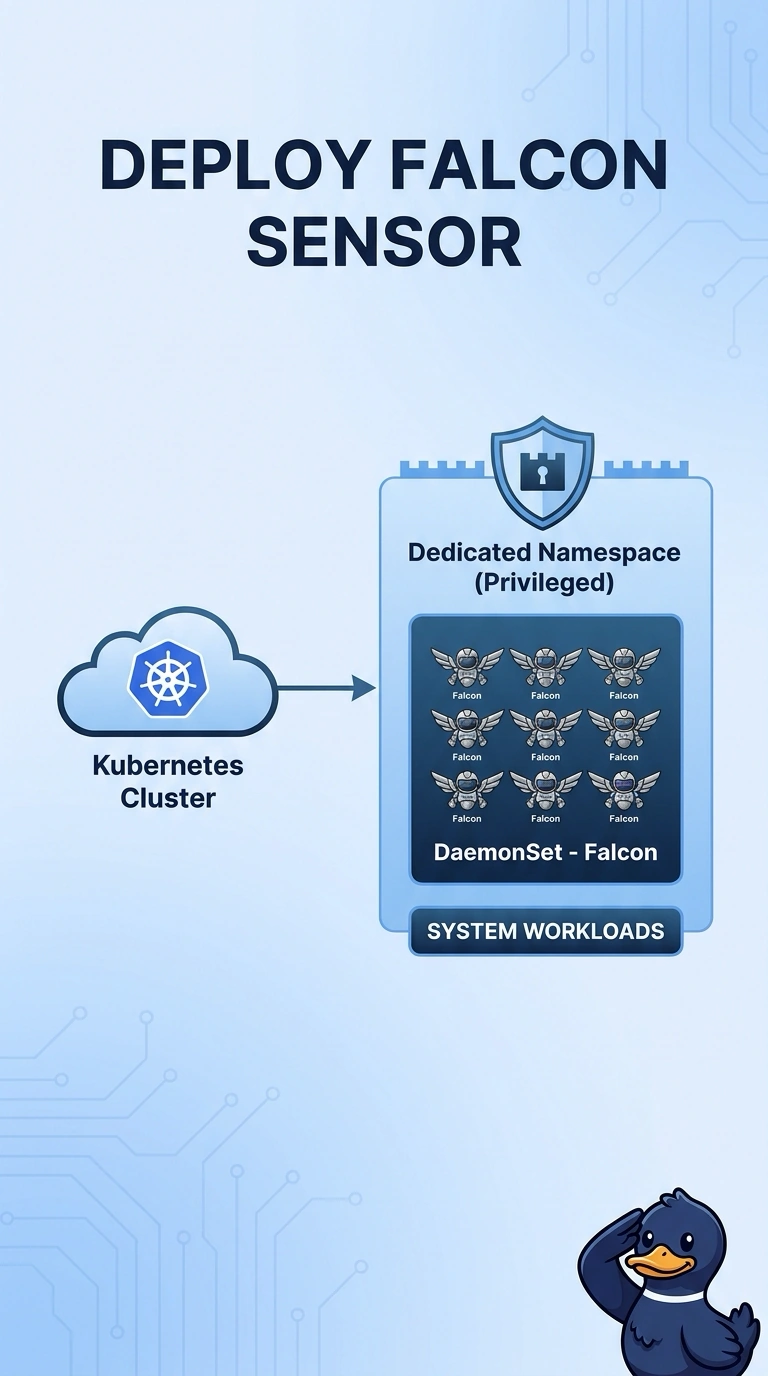
Short Explanation
Think of the Falcon sensor like a building security guard who needs master key access to patrol every floor; if you lock the guard inside a visitor-only lobby, they cannot do their job. The trap is weakening security across all application namespaces or switching to agentless scans when isolating the sensor in a dedicated system namespace keeps both your workloads and visibility intact.
Full Explanation
Because the Falcon sensor DaemonSet needs host-level access to observe process, file, and network activity across all pods on a worker node, a namespace enforcing a restricted Kubernetes Pod Security standard blocks its pods at creation time, so the team should Deploy the sensor DaemonSet in a dedicated namespace that permits privileged system workloads. Isolating the sensor in its own system namespace preserves strict pod security enforcement for every application namespace while giving the node agent the host visibility it requires. Choosing to Disable the pre-runtime image assessment policy for the container registry hosting the sensor fails because registry scanning evaluates stored image packages before deployment and does not control Kubernetes Pod Security admission checks. Choosing to Replace the node-level DaemonSet with an agentless cloud posture scan for the Kubernetes cluster leaves running containers unprotected because agentless posture scanning audits control-plane configurations rather than in-container runtime behavior. Choosing to Lower the Pod Security standard across every application namespace in the cluster to privileged introduces unnecessary risk by allowing ordinary application pods to request elevated host privileges. As a caveat, ensure RBAC also limits who can deploy workloads into that dedicated sensor namespace. Operationally, verify the DaemonSet pods schedule and reach a running state on every worker node after moving them.
Prefer to study offline? Printable PDF study book + test engine ($7.50, unofficial). These questions stay free here.