
During a retail SOC investigation, Falcon Cloud Security triggers a runtime container drift alert when a web pod executes an unexpected binary written to its local filesystem. Before the analyst connects, Kubernetes restarts the pod and the unexpected binary disappears. What should the analyst do next?
Select an answer to reveal the explanation.
Short Explanation
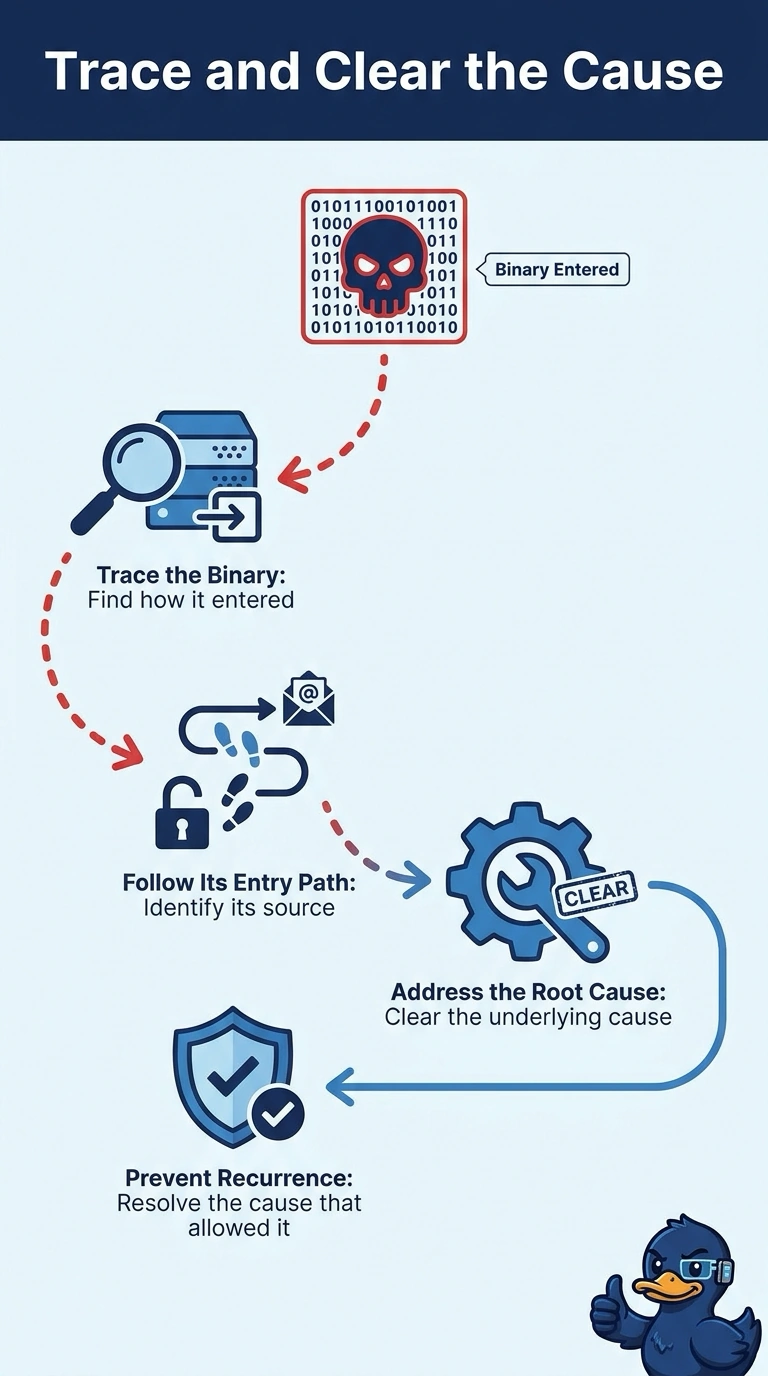
A restarted pod may sweep away the visible traces, but it doesn’t close the way in. You’re right to investigate how the binary arrived and address the root cause, so the same activity can’t recur.
Full Explanation
Investigating how the binary entered and clearing the root cause is the appropriate response because a pod restart removes changes in its ephemeral writable layer without closing the vulnerability, misconfiguration, or exposed credential that allowed the binary to run. If that weakness remains in the application or cluster configuration, an attacker may repeat the action on the newly started pod. Ignoring the alert because pod restarts permanently fix image flaws confuses a temporary reset of container state with lasting remediation; a restart does not repair an image flaw or the underlying entry point. Deleting the container registry integration to stop further drift alerts removes image-scanning visibility without addressing the runtime detection or possible compromise. Disabling runtime drift detection on all production Kubernetes clusters would blind the SOC to future unauthorized binary executions across those workloads rather than resolve the cause. One caveat is that Falcon Cloud Security telemetry captured before the restart can still help trace the activity even though the binary has disappeared. As a practical check, review the runtime detection timeline for parent-process lineage and outbound connections, then patch or isolate the exposed workload.
Prefer to study offline? Printable PDF study book + test engine ($7.50, unofficial). These questions stay free here.