
A manufacturing security team notices that dozens of newly provisioned cloud accounts each trigger the same posture finding for missing flow-log retention, even though engineers repeatedly fix the setting manually in individual accounts. How should the team remediate this recurring issue?
Select an answer to reveal the explanation.
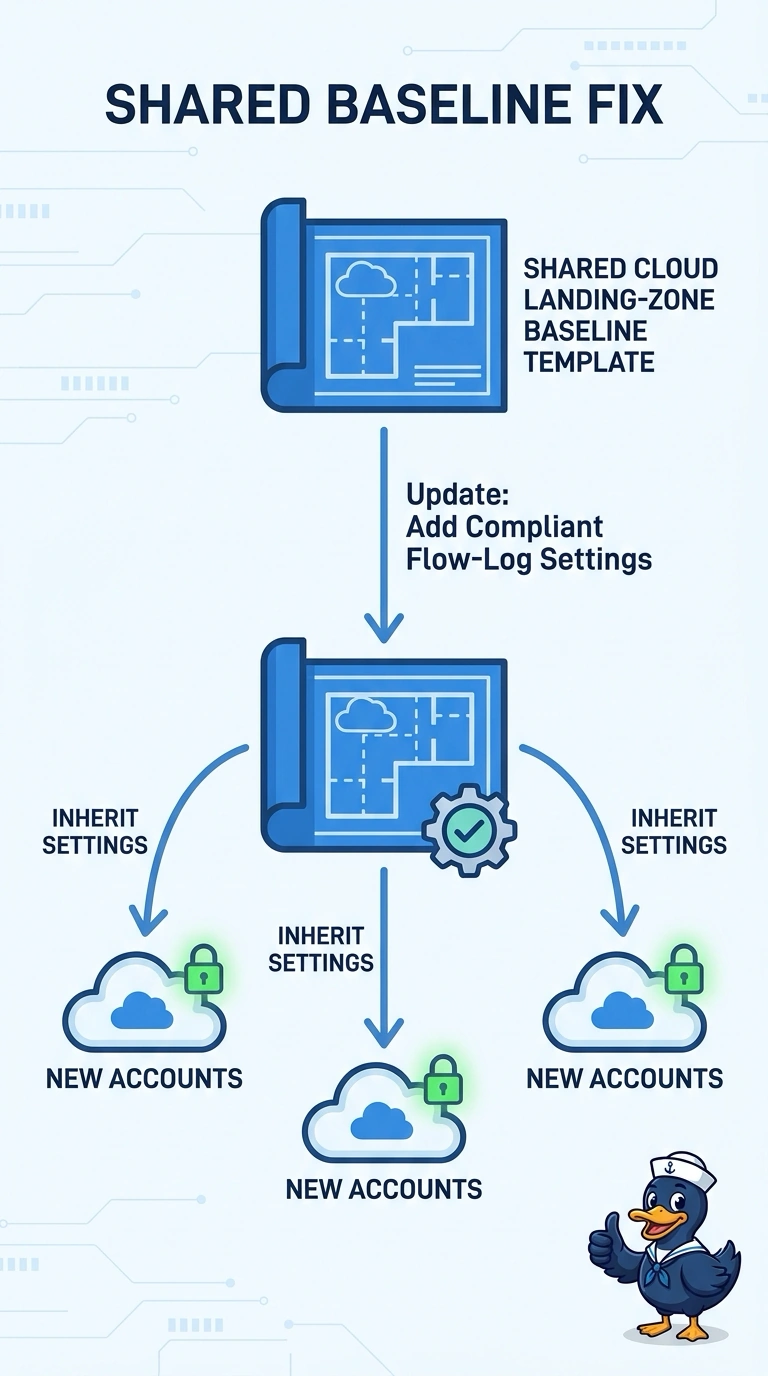
Short Explanation
Mopping up a leaky pipe every morning gets old fast when you can fix the valve upstream. The trap is patching individual accounts or hiding alerts after provisioning instead of correcting the shared template that creates every new account.
Full Explanation
Fixing drift at the source prevents new accounts from launching misconfigured, which is why the team should Update the shared cloud landing-zone baseline template so new accounts inherit compliant flow-log settings. When the account-vending or Infrastructure-as-Code baseline enforces compliant retention by default, future accounts start compliant without manual fixes. Choosing to Create a permanent suppression rule on the flow-log posture check so new accounts stop generating alerts merely hides a missing retention finding, which concerns how long logs are kept and is distinct from necessarily missing log collection, while leaving forensic gaps. Similarly, choosing to Disable scheduled compliance reporting for newly onboarded accounts until manual fixes are completed only blinds auditors without fixing the cloud misconfiguration. Finally, deciding to Remove all newly provisioned accounts from their assigned cloud group so posture policies no longer evaluate those accounts is incorrect because Changing group membership alone is not evidence that provider settings or scan registration changed; do not use organizational filters to hide the problem. Updating the template fixes future deployments, so existing accounts still need a one-time remediation pass. For a check, provision a test account from the updated baseline and verify the flow-log check passes on discovery.
Prefer to study offline? Printable PDF study book + test engine ($7.50, unofficial). These questions stay free here.