
A distributed enterprise routes cloud security findings to product teams via Fusion SOAR based on resource owner tags, but discovers that critical alerts on newly created untagged resources are never assigned. How should the team fix this routing gap?
Select an answer to reveal the explanation.
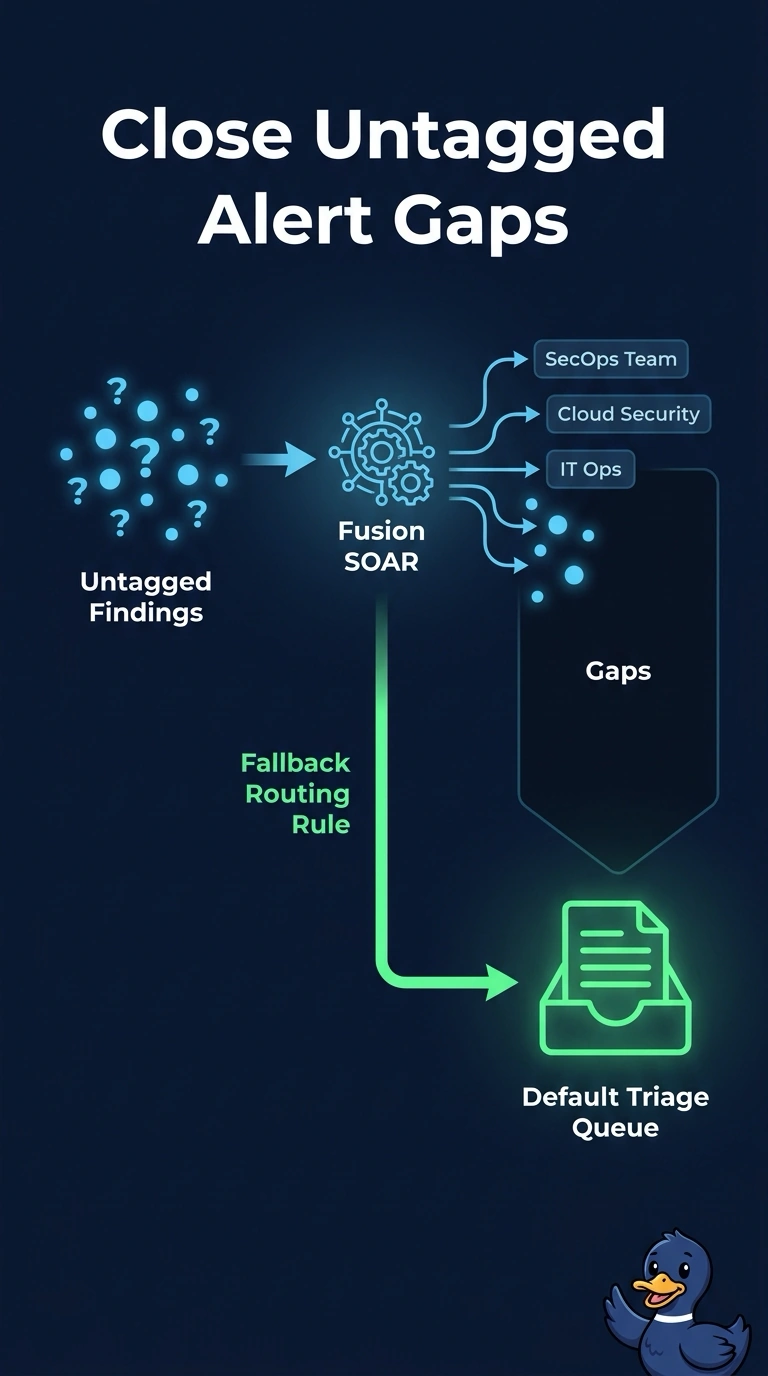
Short Explanation
Tag-based routing works great until someone spins up a resource in a hurry and forgets the owner tag, leaving critical alerts in limbo. Always give your Fusion SOAR workflow a safety-net fallback queue so untagged findings still reach a human.
Full Explanation
Tag-driven alert routing improves ownership accountability, but missing or malformed tags are common during rapid cloud provisioning. Choosing to "Add a fallback routing rule to send untagged findings to a default triage queue" ensures that critical security alerts on untagged or shared resources are captured by a central SOC or platform triage team instead of being silently dropped. "Disable all Fusion SOAR workflows until every cloud resource has manual tags" leaves the entire organization blind to real-time cloud alerts across properly tagged environments. "Delete untagged cloud resources automatically without notifying any engineering team" risks causing severe production outages if a critical workload was launched without tags. "Replace Fusion SOAR notifications with monthly PDF compliance summaries" introduces unacceptable detection delays for urgent security findings. Caveat: a fallback queue should be monitored regularly so untagged resources are both remediated and properly tagged. Operational check: test the Fusion SOAR routing logic with a sample finding lacking an owner tag and verify it arrives in the default triage channel.
Prefer to study offline? Printable PDF study book + test engine ($7.50, unofficial). These questions stay free here.