
A retail security manager wants leadership to receive a monthly summary of cloud benchmark compliance trends across all business units, while SOC analysts receive immediate alerts for critical runtime incidents. How should the team configure these two reporting needs?
Select an answer to reveal the explanation.
Short Explanation
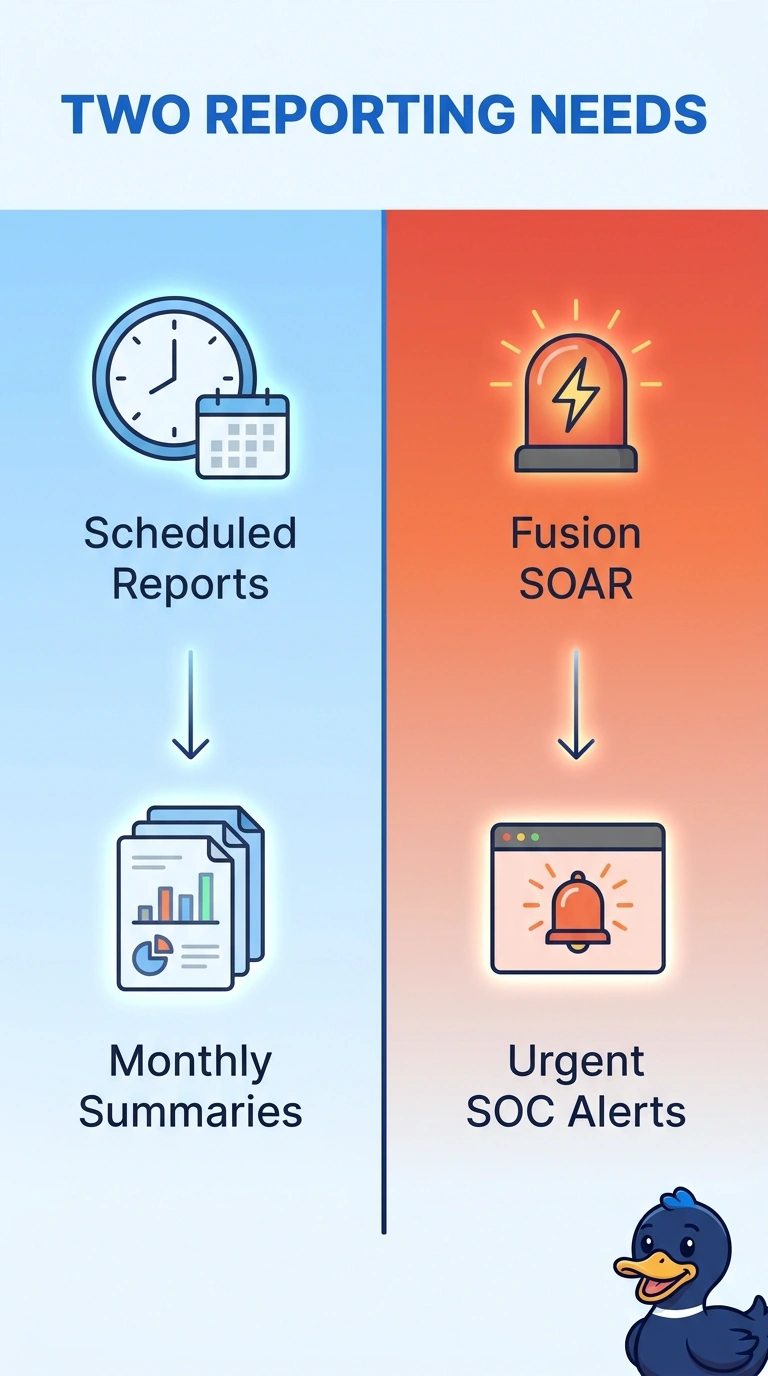
Think of scheduled reports as your monthly financial statement and Fusion SOAR as your fire alarm—each serves a different cadence and audience. The trap is forcing executive summaries and urgent SOC alerts through the exact same delivery channel.
Full Explanation
Choosing to Use scheduled reports for monthly summaries and Fusion SOAR for urgent SOC alerts matches each Falcon Cloud Security mechanism to its intended operational tempo. Scheduled reports compile recurring compliance and posture summaries for stakeholders on a predictable cadence, while Fusion SOAR workflows trigger immediate, scoped notifications or response actions when high-severity runtime incidents occur. Choosing to Route every monthly compliance summary through real-time paging workflows for leadership misuses real-time incident channels for periodic governance reporting. Choosing to Send all critical runtime attack detections only inside a monthly scheduled summary report introduces unacceptable response delays during active compromises. Choosing to Disable Fusion SOAR notifications so compliance metrics are reviewed manually in the console eliminates automated real-time alerting for the SOC. As a caveat, verify that each scheduled report scopes the exact cloud groups leadership expects to review. For an operational check, test a scheduled report delivery and trigger a controlled Fusion SOAR notification rule to confirm both channels reach their intended recipients.
Prefer to study offline? Printable PDF study book + test engine ($7.50, unofficial). These questions stay free here.