
A manufacturing DevSecOps team already scans images after they are pushed to its private container registry, but developers complain that they only learn about critical package vulnerabilities after artifacts are already published. Which change gives developers earlier feedback before an image reaches the shared registry?
Select an answer to reveal the explanation.
Short Explanation
Waiting until an image hits the registry is like inspecting a car only after it rolls off the lot! The trap is relying on downstream cluster checks or weekly reports when you can shift image assessment directly into the CI/CD pipeline.
Full Explanation
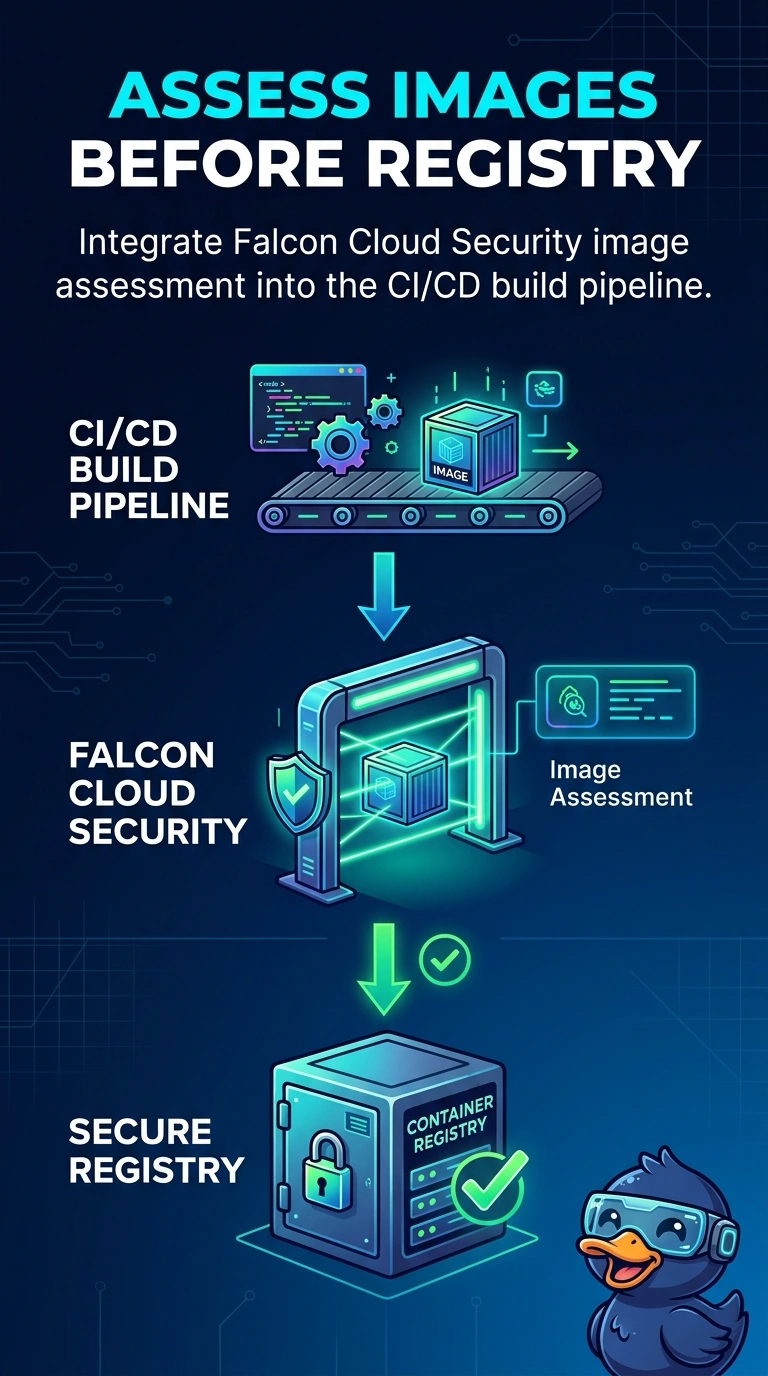
Integrate Falcon Cloud Security image assessment into the CI/CD build pipeline gives developers immediate feedback during the build stage before vulnerable artifacts are pushed to the shared registry. Shifting pre-runtime assessment left lets teams catch vulnerable OS packages and application libraries early and fail builds automatically when policy thresholds are exceeded. Wait for node-level runtime Falcon sensors to alert after the image is deployed to production reacts far too late, exposing live clusters to known vulnerabilities before developers are notified. Configure a weekly scheduled Cloud Security Posture Management (CSPM) compliance report tracks cloud control-plane posture on a periodic schedule rather than assessing container image packages during builds. Enable Kubernetes admission control in alert-only mode on the production cluster nodes only evaluates pods at cluster deployment time, after the image has already been pushed to the registry. Caveat: CI/CD scanning does not replace continuous registry assessment, because newly disclosed vulnerabilities still affect previously stored images. Operational check: run a test pipeline build with a known vulnerable package and confirm the CI/CD step reports the finding before any registry push occurs.
Prefer to study offline? Printable PDF study book + test engine ($7.50, unofficial). These questions stay free here.