
A hospital platform team integrates its private container registry with Falcon Cloud Security and the connection test succeeds, yet images pushed to a newly created clinical repository never receive pre-runtime assessment results. What should the team verify first?
Select an answer to reveal the explanation.
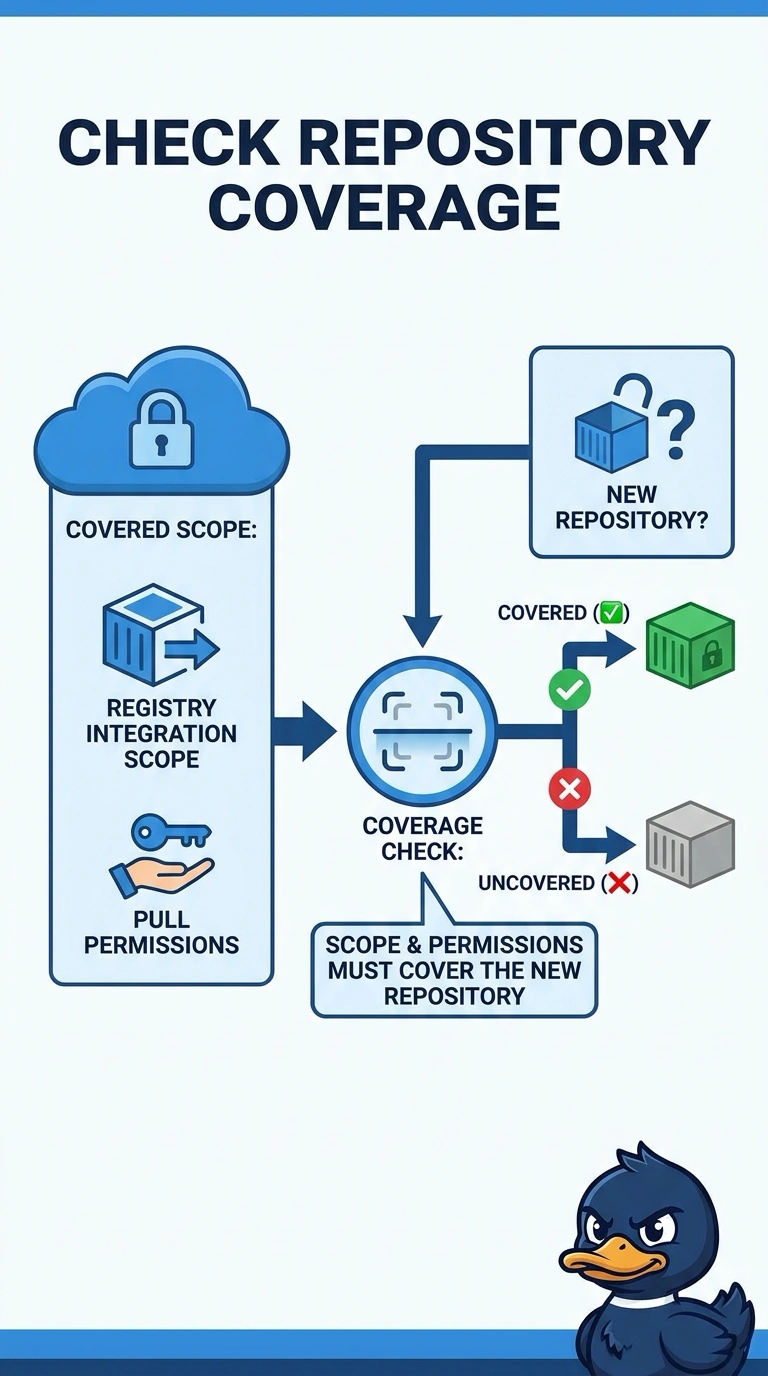
Short Explanation
You’re right to look beyond the successful connection test, since it doesn’t guarantee access to a newly created repository. First verify that the registry integration’s scope and pull permissions cover the clinical repository; runtime sensors, cloud account coverage, and storage bucket workflows address different tasks.
Full Explanation
Verifying that the registry integration’s scope and pull permissions cover the new repository addresses two common reasons a healthy registry connection can miss newly pushed images. Repository filters may exclude a new repository, or the credentials may have pull permissions only for earlier namespaces, so a successful base connection does not guarantee that the integration can access the clinical repository. Falcon runtime sensors deployed on Kubernetes worker nodes as a DaemonSet monitor running containers; their presence does not provide pre-runtime assessment of images in the registry. Including all production virtual machine accounts in the cloud organization hierarchy concerns cloud posture coverage, not container registry scanning. Enabling Fusion SOAR automated remediation workflows for storage bucket findings concerns response to those findings and does not affect image assessment. An exam caveat is that a successful connection test confirms connectivity, not repository coverage or access. As a practical check, review the integration’s repository scope and the credentials’ pull permissions, then push a test image and confirm that assessment results appear for the new repository.
Prefer to study offline? Printable PDF study book + test engine ($7.50, unofficial). These questions stay free here.