
A hospital IT team wants Falcon Cloud Security to continuously evaluate container images already stored in its private repository as new vulnerability advisories are published, even when no new builds occur. Which capability provides this coverage?
Select an answer to reveal the explanation.
Short Explanation
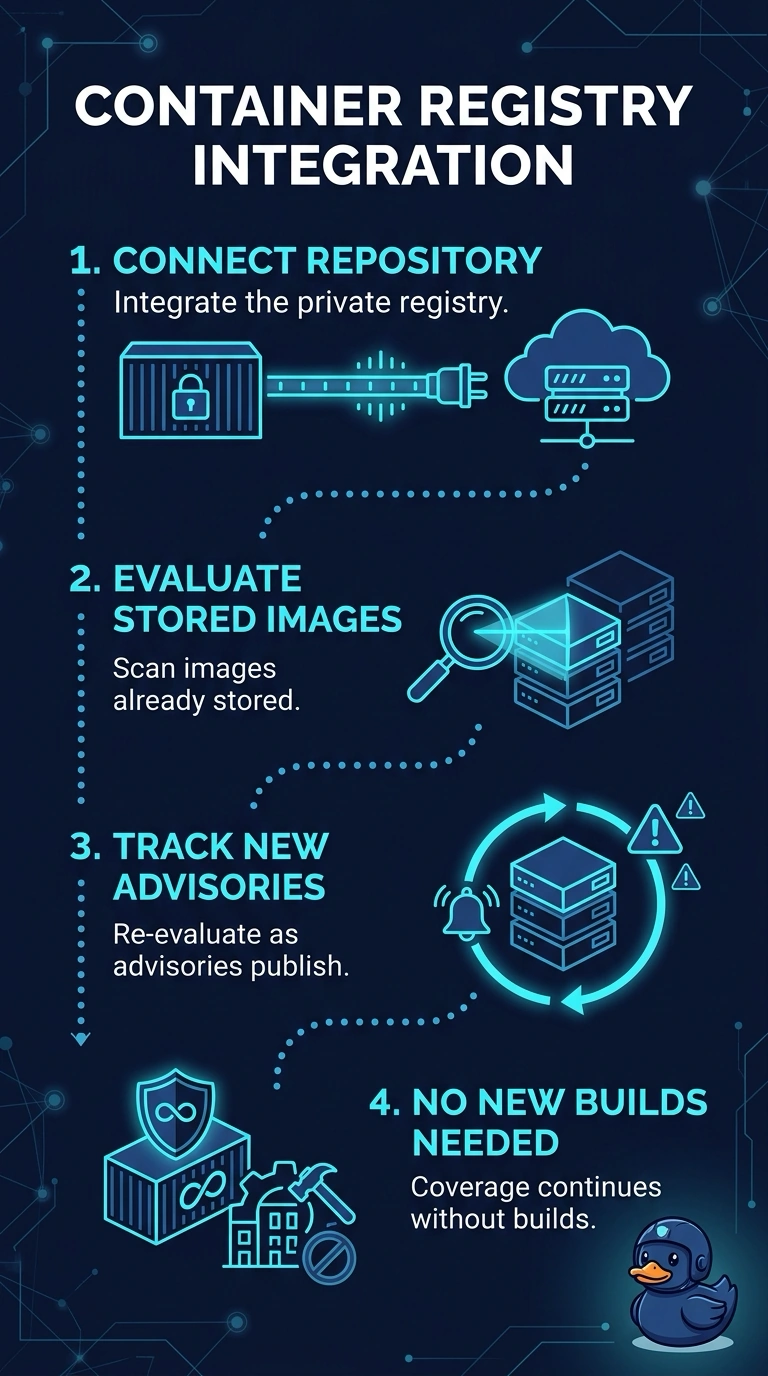
An image that passed every check last month can become vulnerable today when a new CVE is disclosed. You need more than Kubernetes node sensor telemetry or cloud identity entitlement review, because neither continuously reassesses stored images. With container registry integration, you keep repository images under assessment as new advisories emerge.
Full Explanation
Container registry integration connects Falcon Cloud Security to private or public container registries so stored images can be inventoried and reassessed when new vulnerability intelligence is published, even when no new builds occur. This is the capability that covers images at rest between builds. Kubernetes node sensor telemetry monitors live containers and host processes after deployment, so it does not continuously evaluate dormant images in a repository. Cloud identity entitlement review analyzes human and service account permissions to reduce over-privileged access; it does not inspect packages in container images. Host firewall connection logging records network traffic at the operating-system or network layer and does not reveal vulnerabilities in packages or libraries inside stored images. One caveat is that registry integration needs valid read credentials and network reachability to the registry endpoint; restricted private registries can prevent assessments from running. To check coverage in practice, inspect the connected registry status in the console, verify a recent image assessment timestamp, and confirm that newly disclosed CVEs update findings for existing image tags.
Prefer to study offline? Printable PDF study book + test engine ($7.50, unofficial). These questions stay free here.