
A school district security team integrates Falcon Cloud Security image assessment into its container registry and CI pipeline. What does this pre-runtime assessment primarily evaluate?
Select an answer to reveal the explanation.
Short Explanation
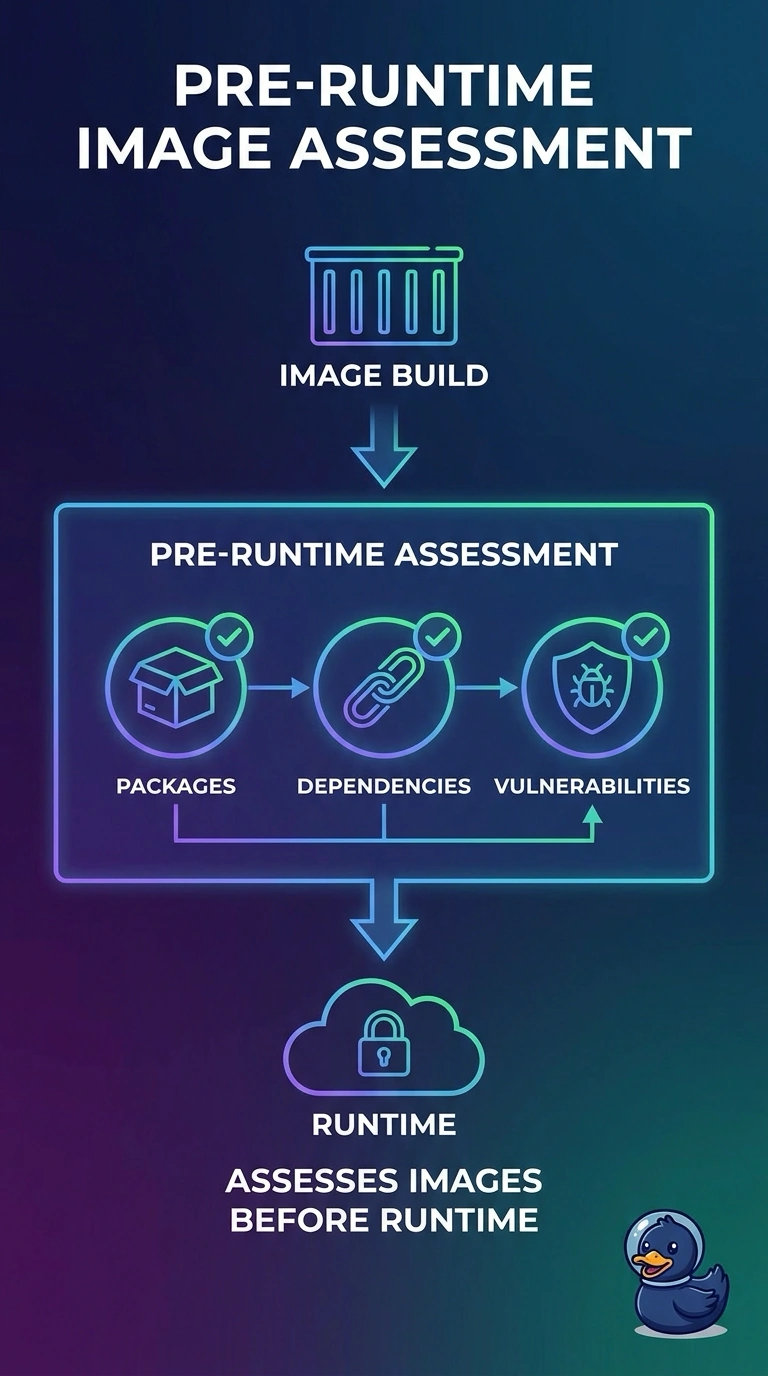
Pre-runtime image assessment is like inspecting ingredients before you cook the meal. Watch out for options describing live traffic or running processes—those happen after deployment, not while the image sits in a registry.
Full Explanation
Pre-runtime container image assessment inspects static container artifacts in registries or CI/CD pipelines before any workload is launched. By analyzing Image packages, dependencies, and known vulnerabilities, teams can identify outdated libraries, OS package flaws, and risky image configurations early in the build lifecycle. Live network connections between active worker nodes are observed only at runtime by host or container sensors monitoring active traffic. Cross-account IAM role trust policies in cloud accounts fall under cloud infrastructure posture and account registration rather than container image scanning. Real-time process execution inside running Linux containers is monitored by runtime sensors detecting behavioral threats and drift after a container starts. As a scope caveat, pre-runtime image assessment finds known vulnerabilities and package issues at rest, so it must be paired with runtime sensors to catch zero-day exploits or post-deployment tampering. For an operational check, review the image assessment findings view in Falcon Cloud Security to confirm recent registry digests show completed package and vulnerability scans.
Prefer to study offline? Printable PDF study book + test engine ($7.50, unofficial). These questions stay free here.