
A software platform team wants to reject any new Kubernetes deployment manifest that omits a read-only root filesystem setting, regardless of which container image is used. Which Falcon Cloud Security policy type enforces this requirement?
Select an answer to reveal the explanation.
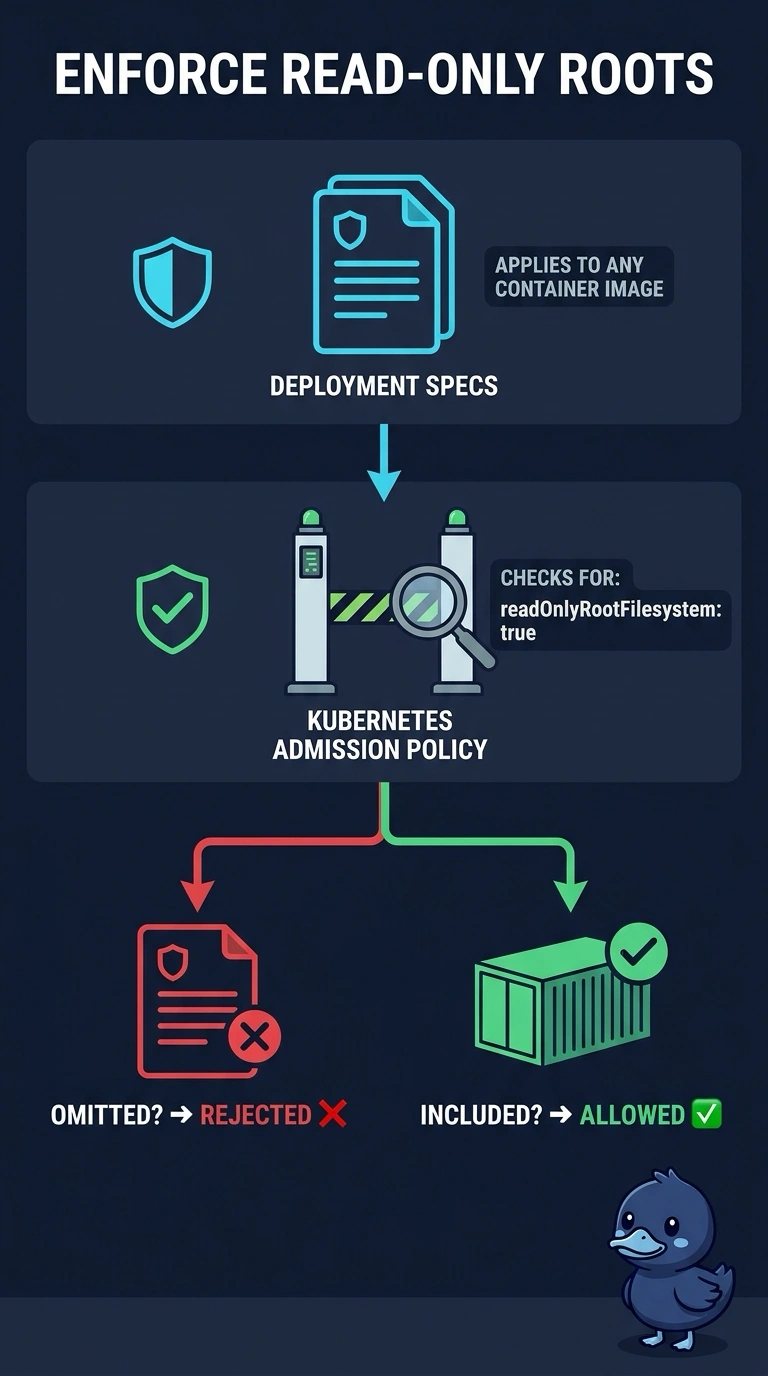
Short Explanation
Checking whether a pod asks for a read-only root filesystem is a question about how the workload is launched, not what is inside the image. Your clue is the deployment manifest itself, and the trap is picking image assessment when the rule applies regardless of the image.
Full Explanation
Because the requirement inspects Kubernetes pod deployment parameters rather than image contents or cloud storage settings, the team must configure A Kubernetes admission policy evaluating deployment specifications. Admission policies intercept Kubernetes API creation and update requests before pods are scheduled, allowing the platform team to reject manifests that omit required security context fields such as a read-only root filesystem. By contrast, An image assessment policy scanning operating system packages in the registry evaluates libraries, packages, and secrets inside container image layers, not Kubernetes runtime manifest settings. A cloud posture policy checking object storage encryption across cloud accounts audits cloud provider control-plane configurations and cannot block Kubernetes pod admission requests. A scheduled compliance report emailing weekly benchmark summaries to stakeholders is a passive reporting mechanism that delivers periodic summaries after the fact rather than enforcing deployment-time controls. As a caveat, enabling a blocking admission policy without testing can disrupt legacy pods that expect writable root filesystems. Operationally, start the admission policy in alert mode to identify affected deployments before switching to blocking enforcement.
Prefer to study offline? Printable PDF study book + test engine ($7.50, unofficial). These questions stay free here.