
A manufacturing security team already scans container images before deployment, but now needs a rule set that actively detects and blocks unauthorized process execution inside running containers. Which policy type should the team configure?
Select an answer to reveal the explanation.
Short Explanation
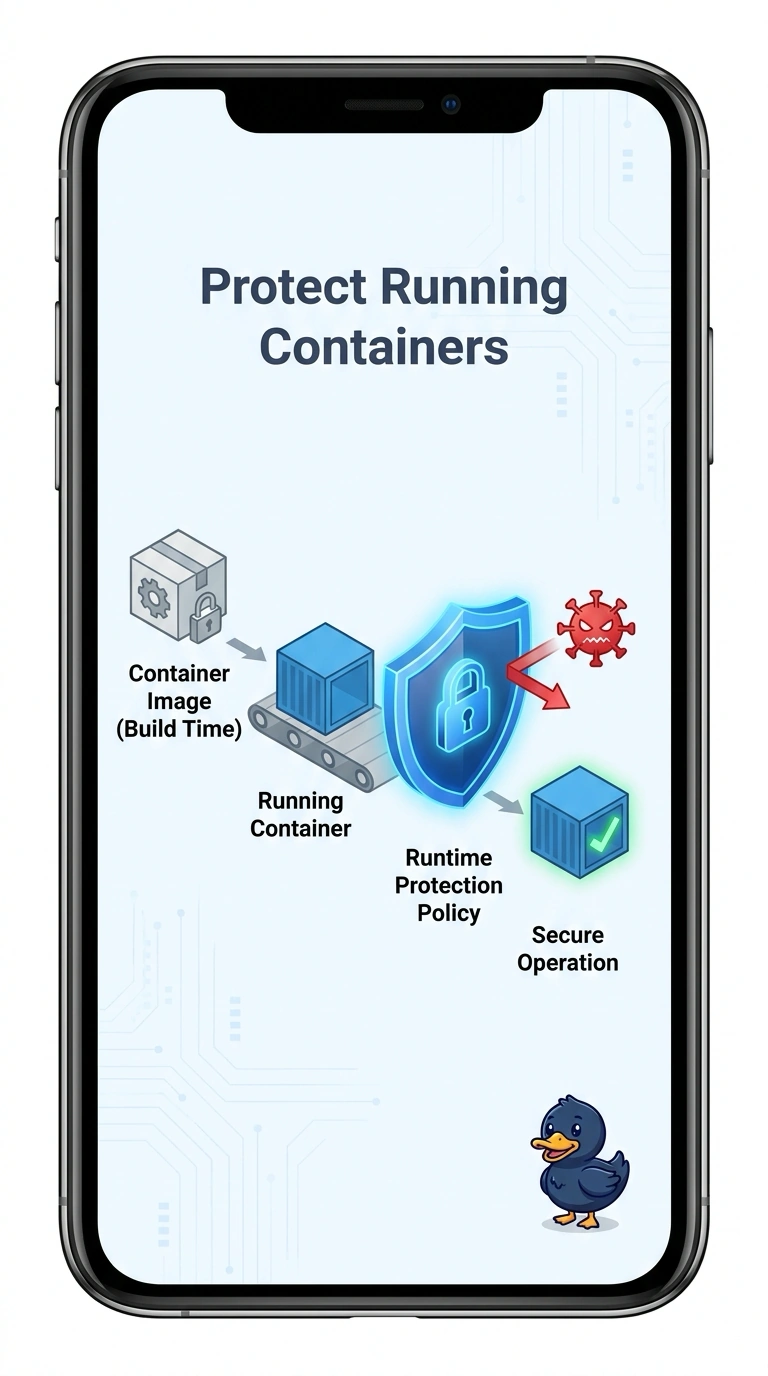
Pre-deployment image checks are like inspecting luggage at the airport, but you still need security inside the terminal once people are moving around. Don't fall for posture or image policies that only evaluate static configurations or stored artifacts. You need a runtime protection policy to detect and block unauthorized process execution inside live containers.
Full Explanation
A runtime protection policy governs live container behavior monitored by the Falcon sensor, enabling security teams to detect or block unauthorized process execution, container drift, and suspicious commands inside running workloads. A cloud posture benchmark policy evaluates cloud control-plane resources against security frameworks such as CIS or NIST, which does not inspect or block processes executing inside containers. A container image assessment policy defines vulnerability, secret, and package rules applied to images during CI/CD builds or registry scans before containers ever start. A registry scan exclusion policy omits specific repositories or image tags from pre-runtime scanning rather than enforcing behavioral controls at runtime. As a scope caveat, runtime enforcement requires active Falcon sensors on the host or Kubernetes worker nodes; without sensors, runtime policies cannot intercept live activity. As an operational check, review the effective prevention policy, Falcon host-group targeting and precedence for the worker nodes, verify required controls are in prevention mode, and confirm with a benign test command that blocking is enforced because event appearance alone does not demonstrate blocking.
Prefer to study offline? Printable PDF study book + test engine ($7.50, unofficial). These questions stay free here.