
A hospital compliance dashboard reports a high overall CIS benchmark pass rate across all cloud accounts, yet one critical finding flags an internet-exposed database holding sensitive records. How should the SOC analyst prioritize this?
Select an answer to reveal the explanation.
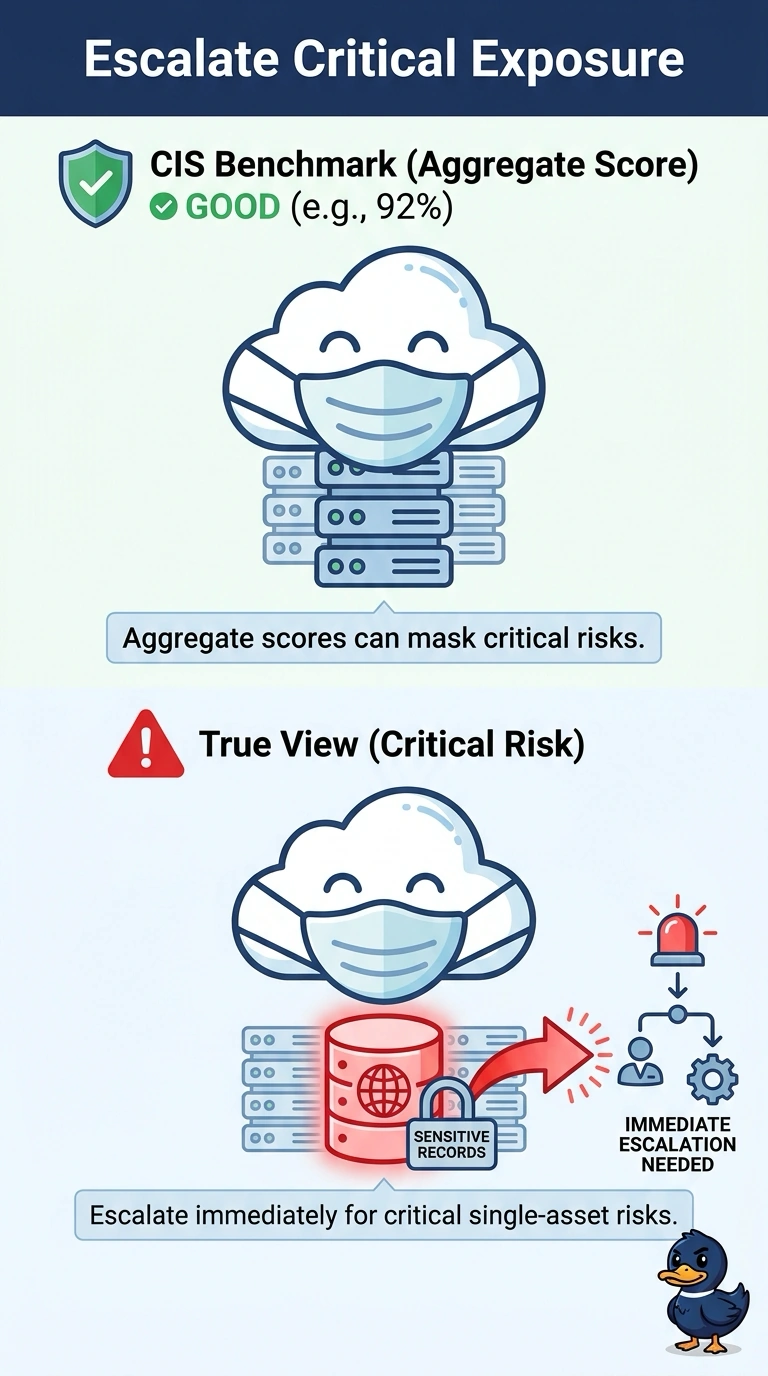
Short Explanation
A high overall pass rate sounds comforting until you realize the remaining gap is a vault door propped open to the street. Escalating that exposed sensitive database immediately keeps you safe, whereas the trap is letting an aggregate benchmark score lull you into treating a live exposure as minor.
Full Explanation
Escalate the exposed sensitive database immediately because aggregate benchmark scores can mask critical single-asset risks is the correct analytical decision; compliance percentages average many controls across numerous resources, so a single internet-reachable data store with sensitive records still represents an immediate high-impact attack target. Lower the finding priority because the high aggregate benchmark pass percentage across the organization proves overall cloud risk is minimal is dangerous because attackers exploit individual exposed weaknesses rather than average compliance scores. Exclude the database from posture scanning so the overall benchmark score reaches full compliance hides real exposure from visibility without reducing actual risk. Wait for the next scheduled weekly compliance report before reviewing whether the database is reachable externally introduces unnecessary delay when an internet-exposed sensitive asset requires prompt triage. As a caveat, verify whether compensating controls or private-only routing actually block external access when triaging the finding. For an operational check, inspect the database's public endpoint, security group rules, and Data Security Posture Management classification to confirm exposure and restrict access immediately.
Prefer to study offline? Printable PDF study book + test engine ($7.50, unofficial). These questions stay free here.