
A manufacturing security analyst sees two identical posture findings for an overly permissive security group assigned to a test instance in an isolated private subnet with no internet route, and one attached to a public-facing load balancer. How should the analyst prioritize remediation?
Select an answer to reveal the explanation.
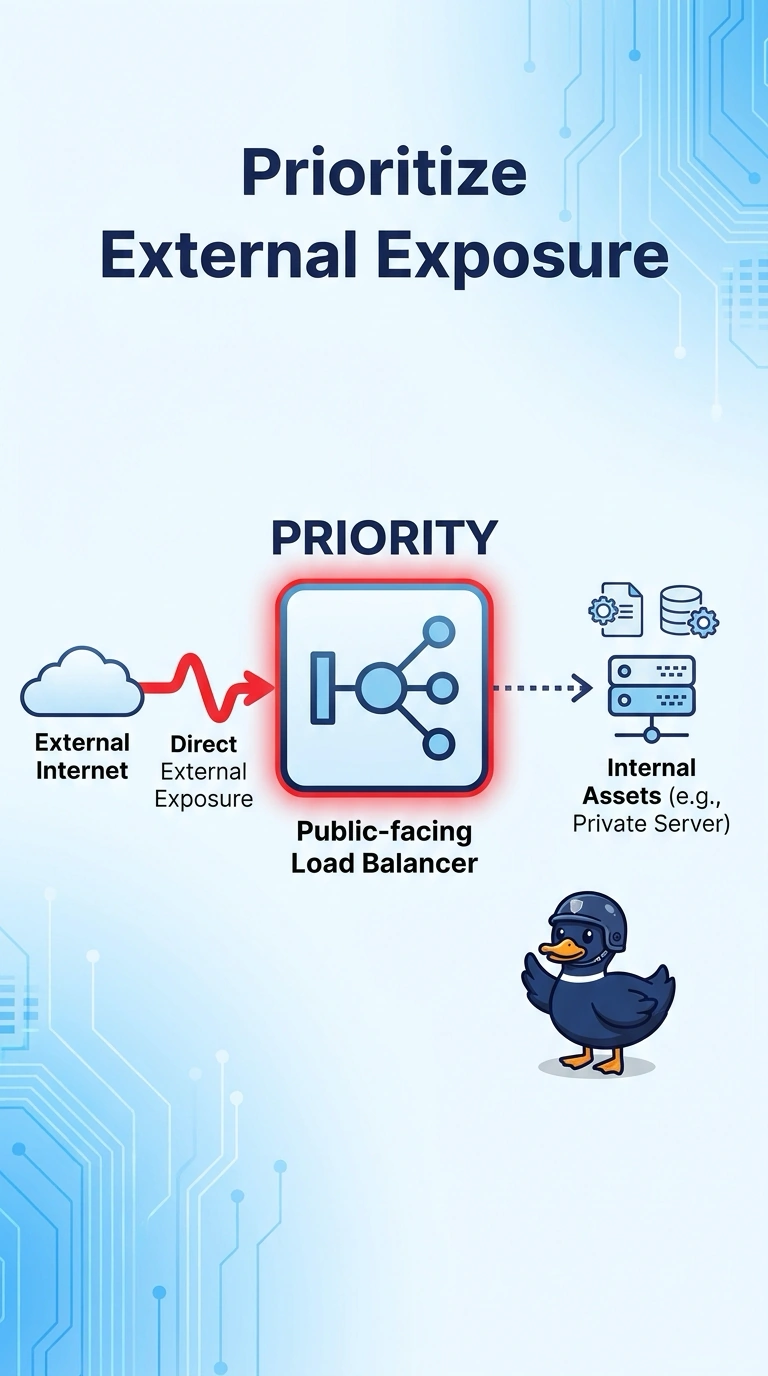
Short Explanation
Two identical firewall rules do not carry equal danger when one sits in a locked basement and the other faces the street—you fix the exposed one first. The trap is treating rule severity in a vacuum without checking network reachability.
Full Explanation
Choosing to Prioritize the public-facing asset due to direct external exposure reflects risk-based posture triage. An overly permissive security group on a public-facing load balancer creates an immediate path for external attackers, whereas an isolated internal subnet without an internet route has a much smaller blast radius. Choosing to Ignore both findings until a runtime Indicator of Attack is triggered leaves an exposed entry point open until a breach actually occurs. Choosing to Prioritize the internal test subnet because internal traffic is unencrypted misjudges risk by putting an unreachable test resource ahead of an internet-exposed production entry point. Finally, choosing to Treat both findings as identical because the rule text is the same misses the environmental context that separates urgent exposure from lower-risk internal misconfiguration. As a caveat, the internal test subnet rule should still be remediated on a normal schedule so lateral movement or future routing changes do not expose it later. For an operational check, verify the load balancer's route table and public IP reachability, then tighten the security group ingress rules to only required ports and sources.
Prefer to study offline? Printable PDF study book + test engine ($7.50, unofficial). These questions stay free here.