
A retail SOC analyst sees a critical unpatched package vulnerability on a production container image alongside a separate runtime alert showing active lateral movement from a running container. Which conclusion should guide the analyst's immediate triage?
Select an answer to reveal the explanation.
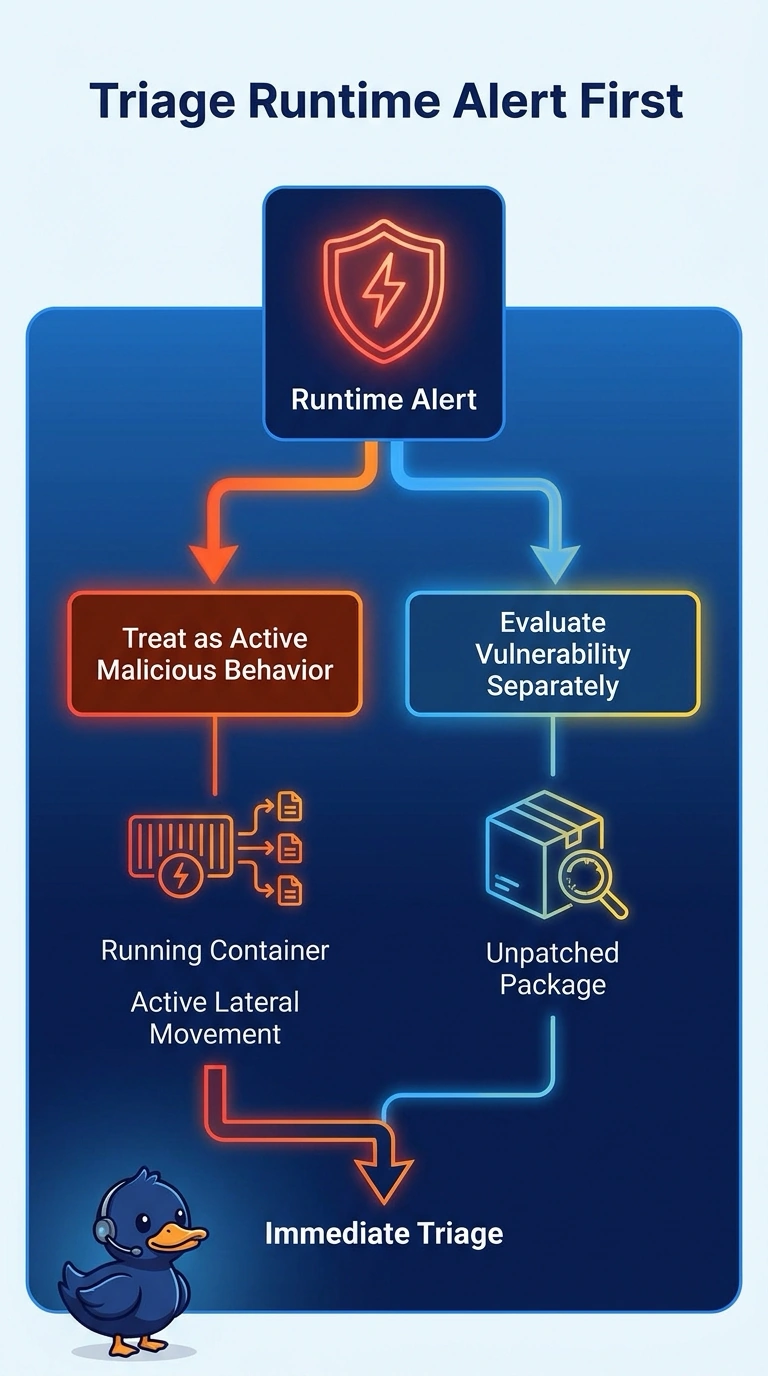
Short Explanation
Picture a smoke alarm blaring while you also spot an unlocked window down the hall—you tackle the active fire first! The trap is treating a package vulnerability as proof of compromise or waiting for a patch while an attacker moves laterally. You should respond to the runtime behavioral alert as active malicious activity while tracking the vulnerability separately.
Full Explanation
Effective cloud triage separates observed malicious execution from latent software weaknesses. You should Treat the runtime alert as active malicious behavior while evaluating the vulnerability separately because runtime telemetry reflects live process, network, or lateral-movement behavior inside the running workload, whereas a CVE only indicates a susceptible package. Choosing to Assume the unpatched package vulnerability proves an attacker has already exploited the running workload is flawed because a vulnerable package may never be reachable or invoked in production. Choosing to Wait to investigate the runtime alert until the development team finishes patching the base image is dangerous because rebuilding and redeploying images takes time while an active intrusion can escalate immediately. Choosing to Downgrade both alerts to routine benchmark deviations unless a public storage bucket is also open confuses control-plane posture checks with live workload compromise. As a caveat, runtime alerts still warrant correlation with image provenance and exposure context to scope blast radius. For an operational check, inspect the runtime detection timeline, process tree, and network connections to contain the affected pod while opening a separate remediation ticket for the image package.
Prefer to study offline? Printable PDF study book + test engine ($7.50, unofficial). These questions stay free here.