
A software enterprise wants to prevent developers from provisioning misconfigured cloud storage in Terraform pull requests while also ensuring that any unapproved container images are rejected when submitted to Kubernetes. Which two Falcon Cloud Security capabilities work together to enforce these pre-deployment gates?
Select an answer to reveal the explanation.
Short Explanation
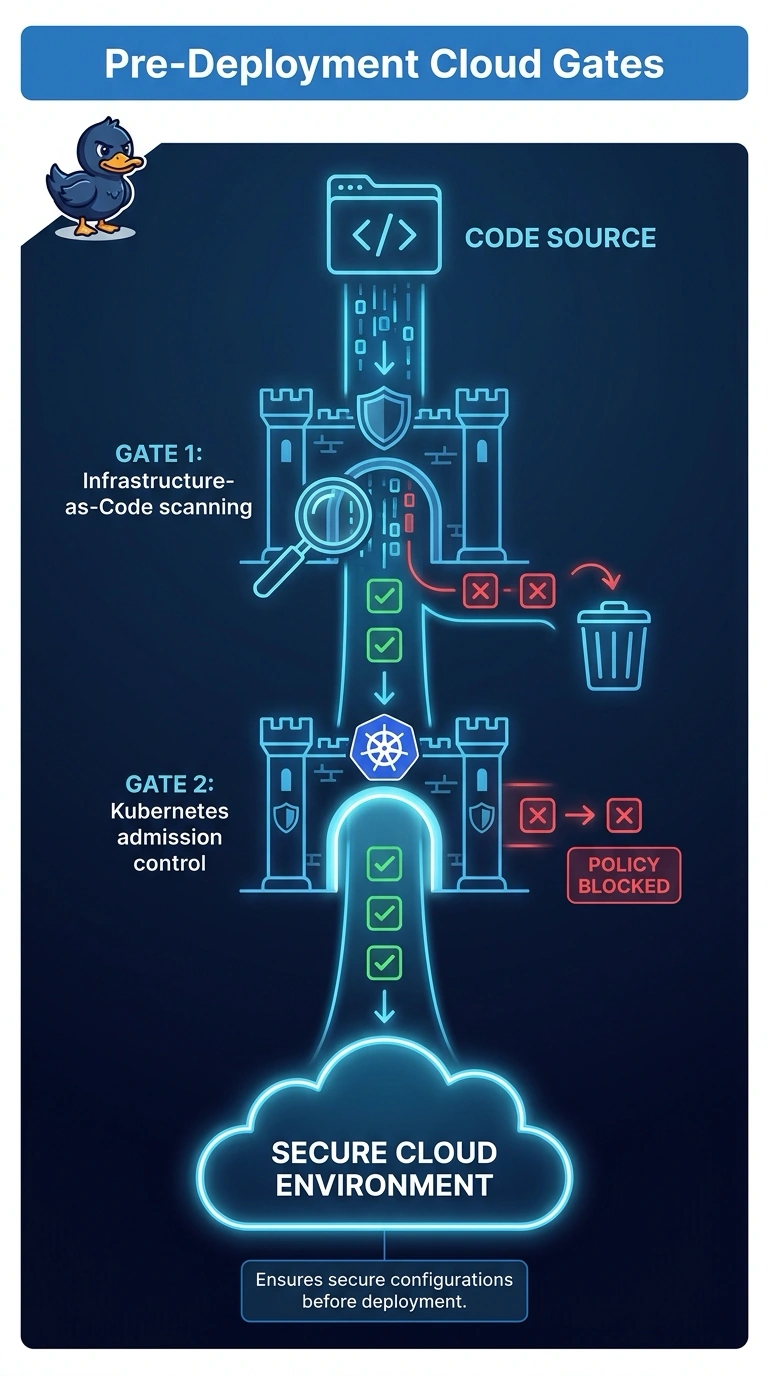
Think of this as checking your blueprints before pouring concrete and then inspecting the delivery trucks at your job-site gate. The trap is picking post-deployment monitoring or reporting tools that only react after resources are already live.
Full Explanation
Using Infrastructure-as-Code scanning and Kubernetes admission control covers both pre-deployment checkpoints: IaC scanning evaluates Terraform templates in pull requests before cloud storage is provisioned, and Kubernetes admission control enforces image and pod compliance rules before workloads are scheduled onto cluster nodes. Selecting Data Security Posture Management and scheduled compliance reports focuses on discovering sensitive data in already-provisioned stores and emailing periodic summaries, neither of which gates pull requests or pod scheduling. Choosing Cloud Infrastructure Entitlement Management and runtime drift detection addresses over-privileged cloud identities and unexpected binary execution inside running containers, which occur after deployment rather than at pre-deployment gates. Picking Agentless cloud posture scanning and Fusion SOAR ticket closure monitors live cloud control planes and updates external tickets after remediation, rather than blocking bad templates or unapproved pods upfront. Keep in mind as a caveat that pre-deployment gates do not replace runtime protection once workloads start executing. Configure the IaC result as a required pipeline/merge or provisioning gate, and configure the applicable admission rules in Prevent mode; merely running a scan does not itself block provisioning.
Prefer to study offline? Printable PDF study book + test engine ($7.50, unofficial). These questions stay free here.