
A software platform team is preparing to deploy the Falcon sensor across every worker node in its managed Kubernetes cluster to gain runtime container visibility. Which Kubernetes deployment model ensures the sensor runs on each node in the cluster?
Select an answer to reveal the explanation.
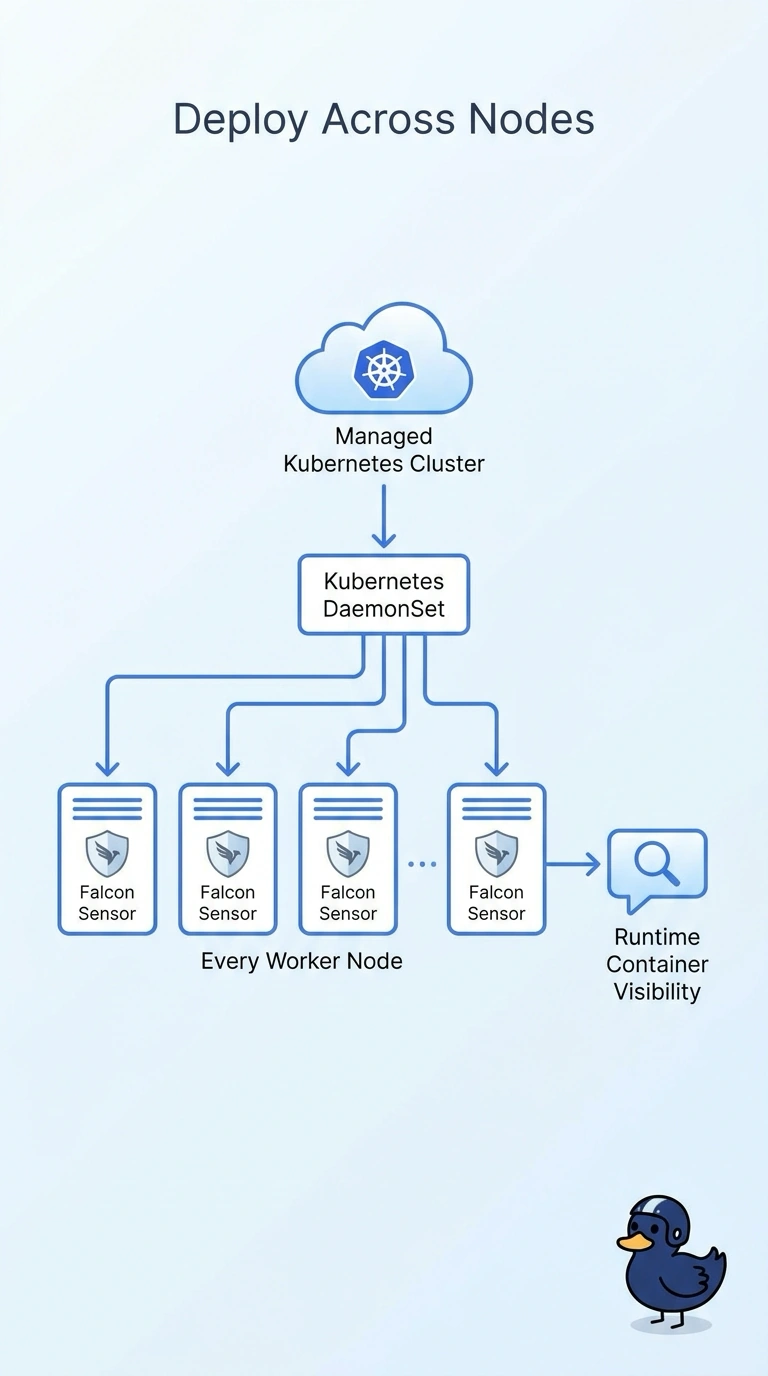
Short Explanation
Think of a security guard stationed on every floor of your building—if you only patrol one room, blind spots appear fast. The trap here is choosing a periodic job or an external scan that never stays resident on every worker node. You need a Kubernetes DaemonSet deployment so the Falcon sensor automatically runs on each node, including newly added ones.
Full Explanation
A Kubernetes DaemonSet deployment ensures that Kubernetes schedules one Falcon sensor pod onto every eligible worker node in the cluster and automatically places a sensor on new nodes as the cluster scales. This node-level presence gives the sensor direct kernel and container runtime visibility across all pods running on each host. A single-replica Kubernetes CronJob runs only on a schedule on one node at a time, leaving all other worker nodes unmonitored and failing to provide continuous runtime detection. An external agentless API snapshot scan inspects cloud control-plane state or disk snapshots out-of-band, which cannot observe live process execution, container drift, or network sockets inside running pods. A stateless admission webhook pod only evaluates deployment requests at admission time and does not monitor container behavior after pods start. As a scope caveat, node taints or restrictive pod security policies can block DaemonSet scheduling if not accounted for during cluster setup. As an operational check, list the DaemonSet pods across your cluster and verify that the desired pod count matches the ready worker node count and that each node reports active sensor telemetry.
Prefer to study offline? Printable PDF study book + test engine ($7.50, unofficial). These questions stay free here.