
A manufacturing cloud team rotates all service principal secrets across its cloud environment to satisfy an annual security policy, and Falcon Cloud Security subsequently stops updating asset inventory for that provider. What should the cloud engineer do first to restore posture scanning?
Select an answer to reveal the explanation.
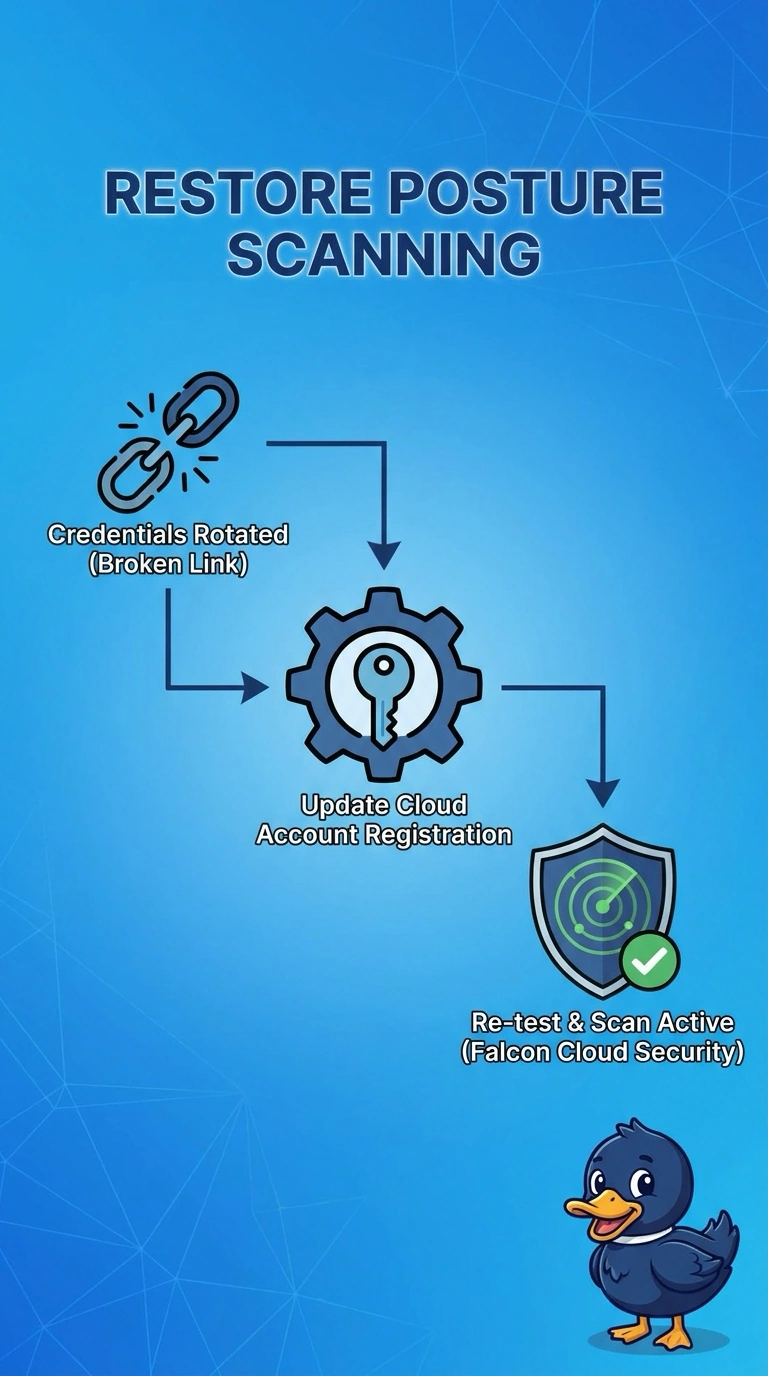
Short Explanation
Rotating cloud secrets is great hygiene, but if you forget to tell Falcon Cloud Security about the new credentials, posture scanning hits a locked door. Updating the affected secret-based registration with your rotated details and testing authentication restores API access so your asset inventory starts flowing again. The trap is touching Kubernetes sensors or cloud groups, which cannot fix broken cloud API authentication.
Full Explanation
The engineer should first update the affected secret-based registration and test authentication, because Falcon Cloud Security relies on valid service principal or role credentials to authenticate against cloud provider APIs and refresh asset inventory. Choosing to Reinstall the Falcon sensor DaemonSet on every Kubernetes worker node addresses node-level runtime workload monitoring rather than the cloud control-plane API credentials used for posture inventory. Choosing to create a new cloud group fails because Cloud Groups organize and scope cloud resources/findings; changing group membership does not repair expired provider credentials. Likewise, choosing to Add a scan exclusion for the cloud provider's identity management service omits resources from evaluation instead of restoring the broken API connection. As a caveat, verify that the rotated credential retains the exact read permissions required by your enabled posture capabilities. For an operational check, run the cloud account registration health check after updating the credentials and confirm that the last-scanned timestamp advances.
Prefer to study offline? Printable PDF study book + test engine ($7.50, unofficial). These questions stay free here.