
An enterprise with distributed regional offices needs to onboard dozens of cloud accounts into Falcon Cloud Security using a repeatable, version-controlled process rather than manual portal steps. Which registration approach best supports this goal?
Select an answer to reveal the explanation.
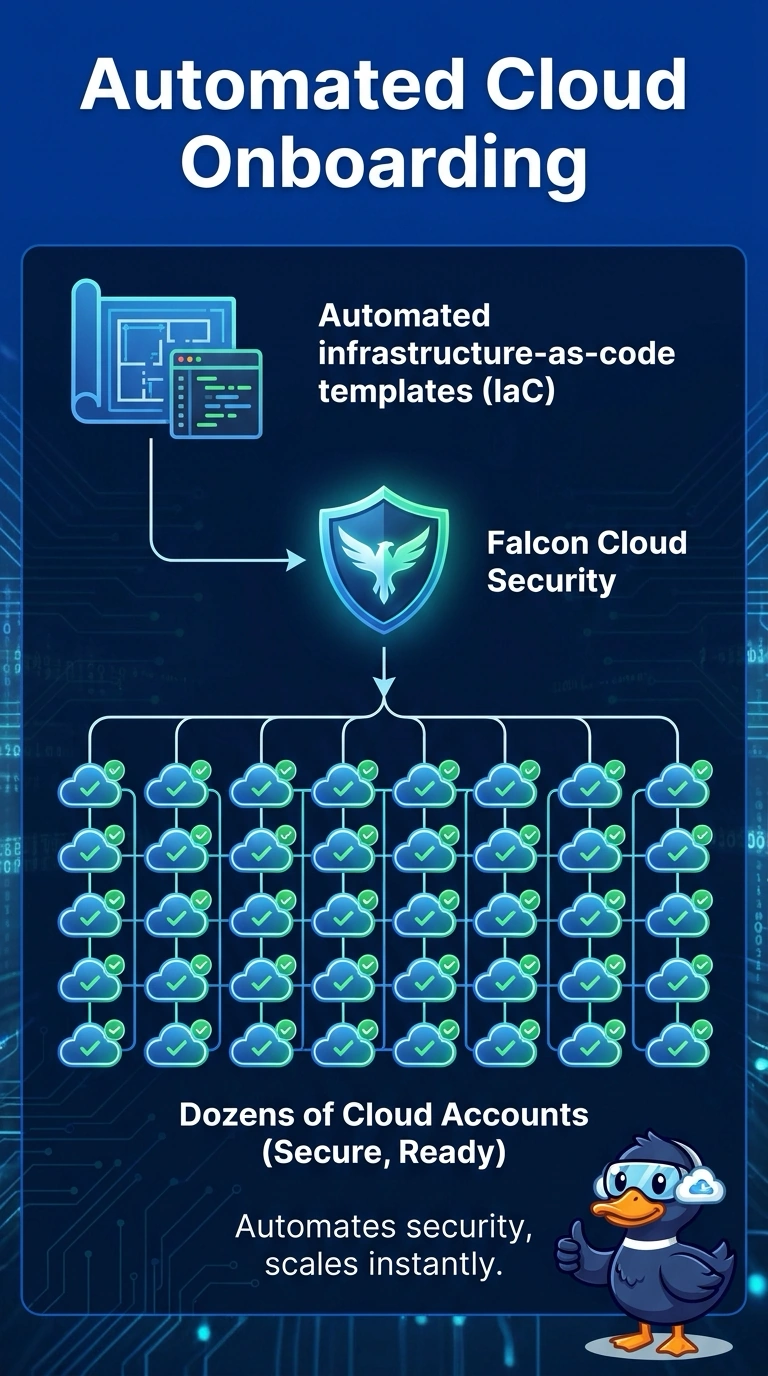
Short Explanation
When you have dozens of regional accounts to onboard, clicking through a web portal one by one is a recipe for drift and typos. Watch out for answers that mention manual account setup or unrelated endpoint and reporting tasks. Automated infrastructure-as-code templates let you deploy consistent onboarding roles and registrations across every account.
Full Explanation
Automated infrastructure-as-code templates let cloud teams define cross-account IAM roles, trust policies, and Falcon Cloud Security registration parameters in version-controlled code that deploys consistently across dozens of accounts. This repeatable workflow eliminates manual configuration drift and simplifies auditing changes before rollout. Manual read-only IAM user creation per account relies on error-prone portal steps and static user credentials rather than scalable role-based onboarding. Deploying runtime sensors on every workstation protects employee endpoints rather than registering cloud provider control planes for posture and asset visibility. Creating a local scheduled report per region only automates recurring compliance exports after accounts are already onboarded and does not register new accounts. As a scope caveat, organization-wide deployments still require appropriate cloud administrator privileges in each target account or management hierarchy. As an operational check, run a template deployment plan in a staging account, confirm the onboarding status turns healthy in the console, and verify that cloud resources begin appearing in inventory.
Prefer to study offline? Printable PDF study book + test engine ($7.50, unofficial). These questions stay free here.