
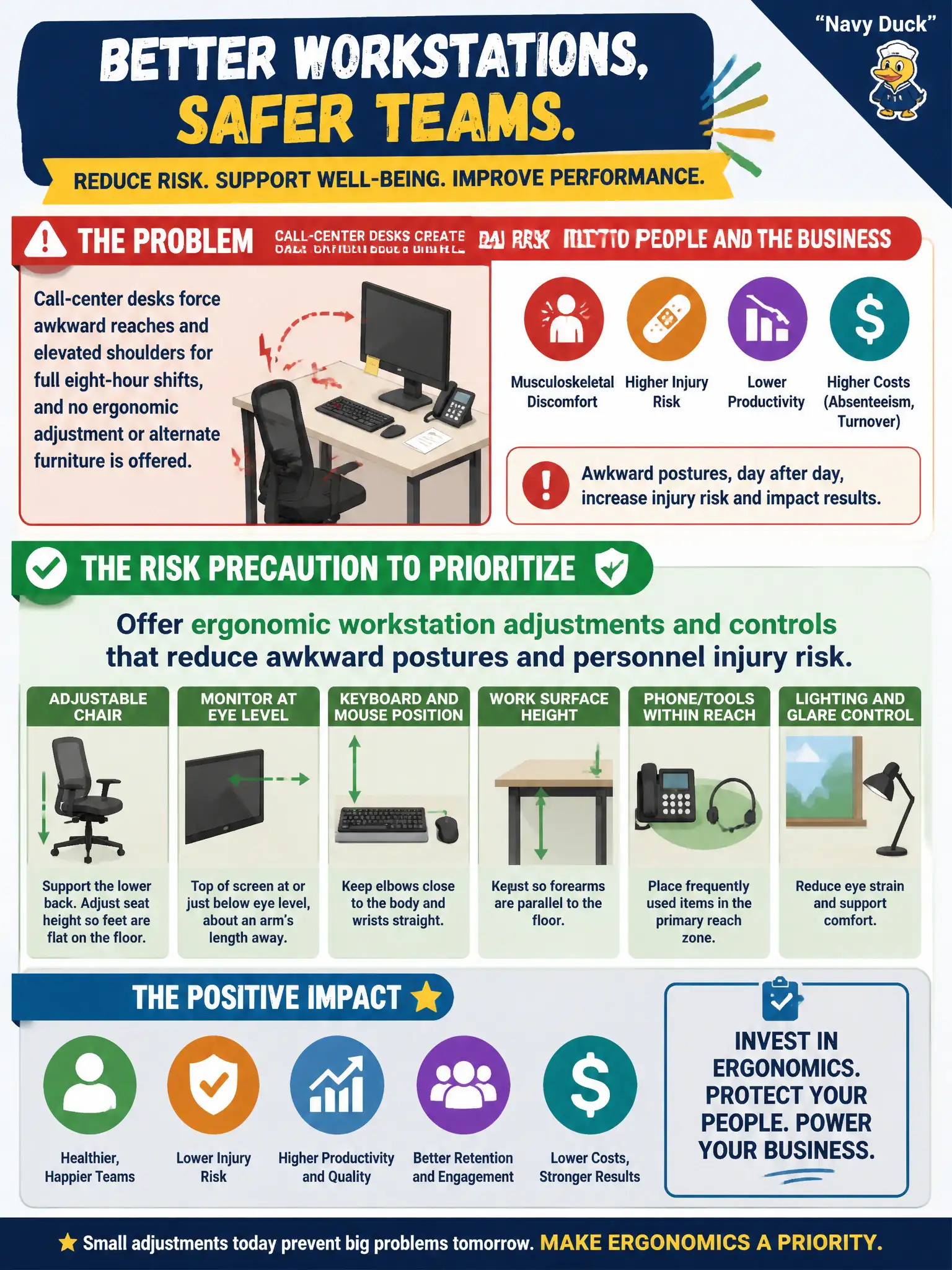
Call-center desks force awkward reaches and elevated shoulders for full eight-hour shifts, and no ergonomic adjustment or alternate furniture is offered. What risk precaution should leadership prioritize?
Select an answer to reveal the explanation.
Short Explanation
Eight hours of twisted reaches is a slow injury factory. Ergonomic tweaks—height, reach, support—are the precaution that keeps bodies in the game.
Full Explanation
Leadership should prioritize ergonomic workstation adjustments and controls that reduce awkward postures and personnel injury risk when call-center desks force elevated shoulders and awkward reaches for full shifts without alternate furniture. Requiring stretches only during unpaid breaks as the sole mitigation places the burden on workers’ unpaid time and leaves the workstation hazard unchanged. Accepting musculoskeletal complaints as normal for sedentary civic roles normalizes preventable injury and ignores redesign options. Replacing all desks with standing-only stations without assessment or choice can create new lower-limb and fatigue problems and violates fit-to-worker principles. Ergonomics belongs among personnel risk precautions because cumulative trauma affects availability, workers’ compensation, and service quality. Exam caveat: one-size furniture mandates are not automatically hierarchy-aligned; assessment and adjustability matter. Operational check: offer adjustable chairs, monitor heights, and keyboard/mouse placement; allow sit-stand choices based on assessment; rotate tasks where feasible; track discomfort reports as leading indicators; and verify a sample of stations meet basic ergonomic criteria within a defined remediation window.