
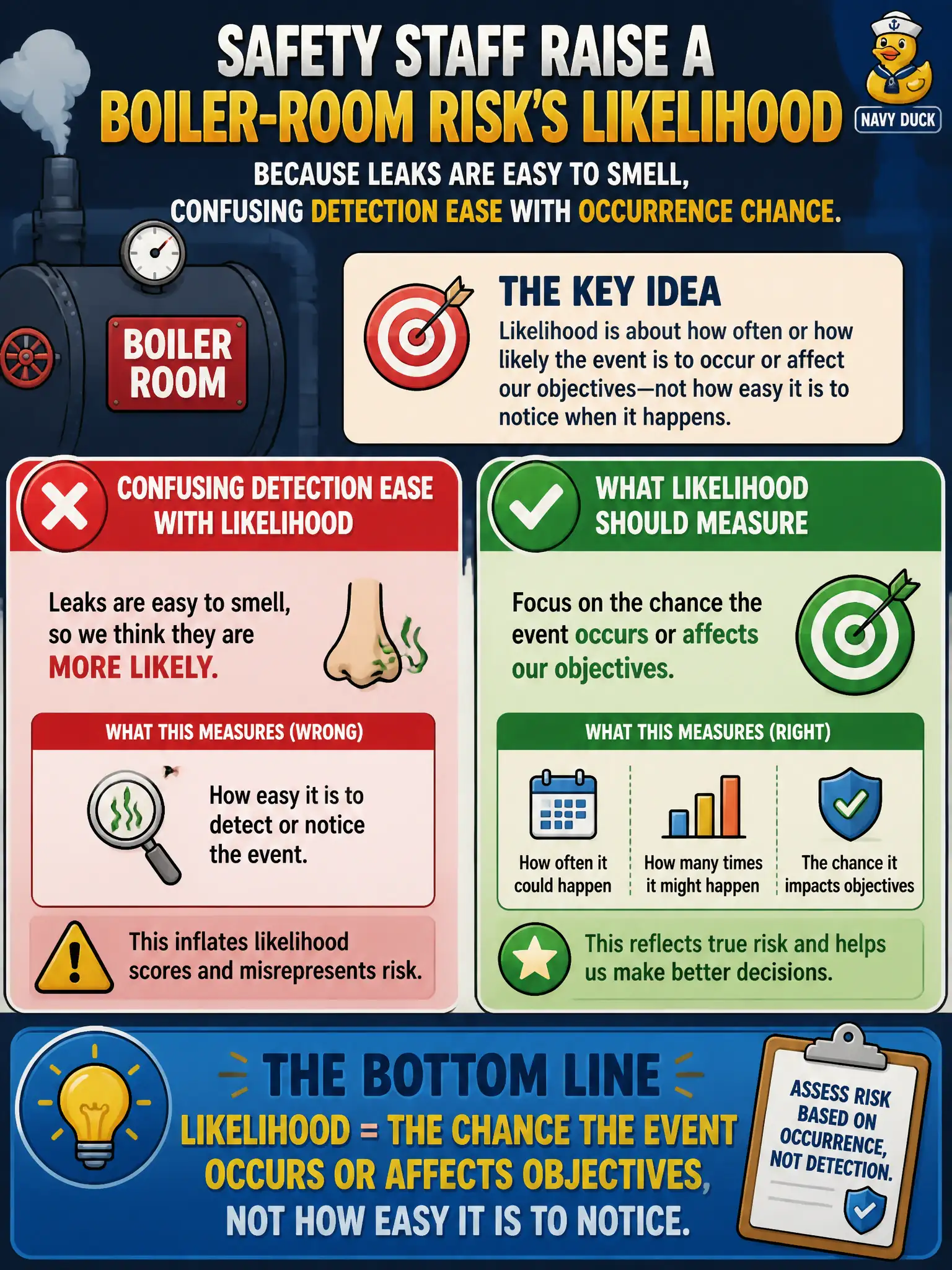
Safety staff raise a boiler-room risk's likelihood because leaks are easy to smell, confusing detection ease with occurrence chance. What should likelihood measure?
Select an answer to reveal the explanation.
Short Explanation
Easy to smell is not the same as likely to happen. Detection is about noticeability; likelihood is about chance of occurrence. Keep those dials separate.
Full Explanation
Likelihood measures the chance an event occurs or affects objectives—not how easy it is to notice. Raising a boiler-room risk's likelihood because leaks are easy to smell confuses detection ease with occurrence probability. Checklist completion speed after an alarm is a response metric, not likelihood. Whether the public detects an issue before staff is about transparency or detection pathways, not event probability. Sensor counts without failure-probability analysis do not equal likelihood. Exam caveat: do not substitute detectability for probability. Operational check: score boiler leak likelihood from maintenance history, inspection findings, and equipment age; score detection capability as a separate control effectiveness note; and keep both visible on the facilities risk row. Recalibrate if staff keep inflating likelihood for "obvious" smells. In municipal practice, record the rationale in the risk procedure or committee minutes so future staff apply the same rule under budget pressure. Re-validate after the next seasonal peak or org-chart change to confirm the civic control still holds as designed for residents and staff. In municipal practice, record the rationale in the risk procedure or committee minutes so future staff apply the same rule under budget pressure. Re-validate after the next seasonal peak or org-chart change to confirm the civic control still holds as designed for residents and staff.