
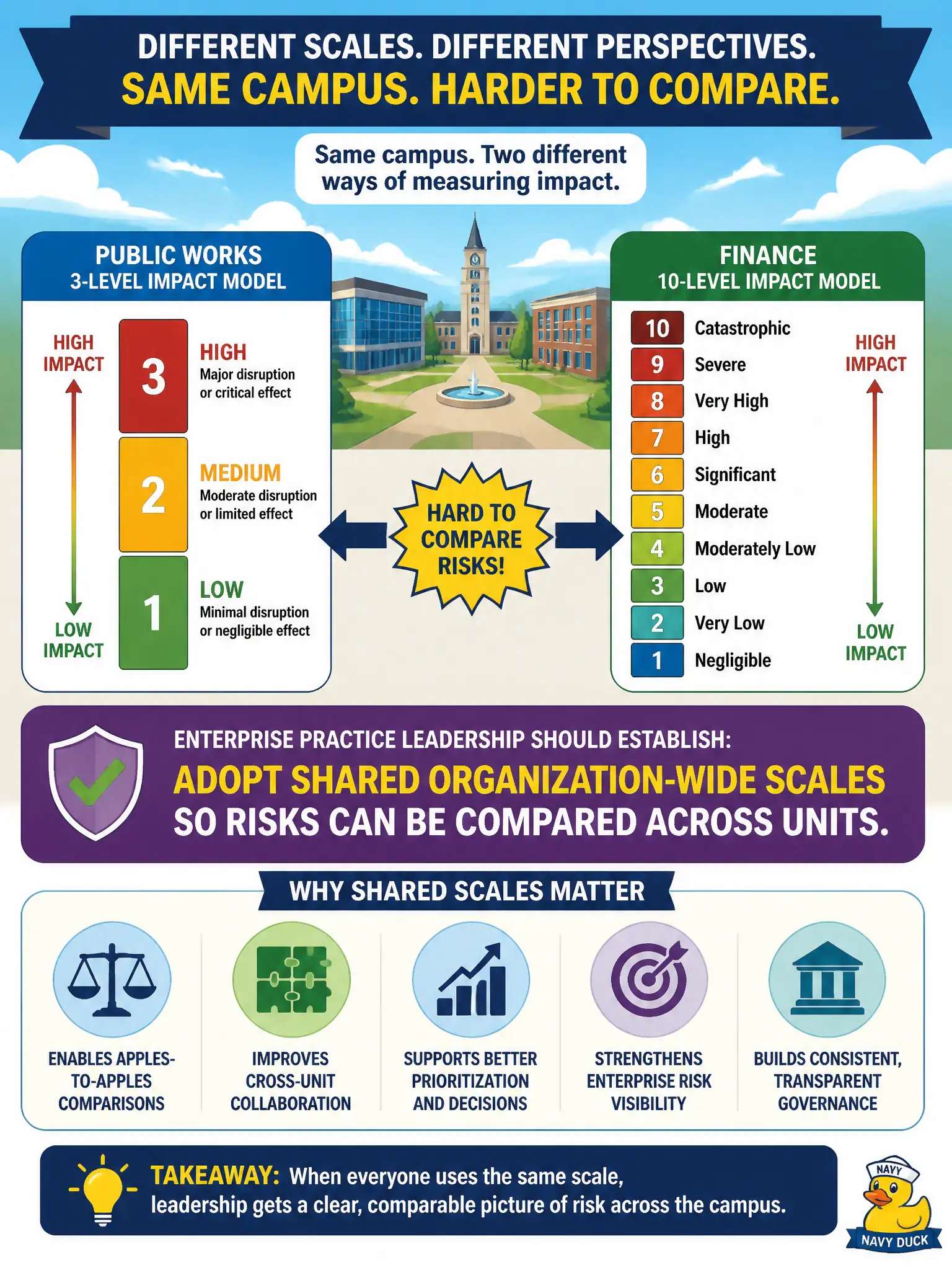
Public works uses a 3-level impact model while finance invents a 10-level model for the same campus. What enterprise practice should leadership establish?
Select an answer to reveal the explanation.
Short Explanation
Two scales on one campus is like two rulers measuring the same hallway in different inches. Shared scales let leaders compare apples to apples across departments.
Full Explanation
Enterprise comparison requires shared organization-wide likelihood and impact scales. When public works uses a 3-level model and finance invents a 10-level model for the same campus, portfolio prioritization breaks. Allowing private scales and translating only at year-end delays insight and invites translation error. Forcing finance to abandon numbers for narrative-only risks is unnecessary if a shared scale exists. Mandating public works copy a 10-level model without training still fails calibration. Exam caveat: one agreed scale (or a formally mapped translation) beats silent local dialects. Operational check: adopt a single civic enterprise scale, train both public works and finance, remap legacy scores once, and retire private legends. Spot-check five paired items to confirm comparable meanings after conversion. In municipal practice, record the rationale in the risk procedure or committee minutes so future staff apply the same rule under budget pressure. Re-validate after the next seasonal peak or org-chart change to confirm the civic control still holds as designed for residents and staff. In municipal practice, record the rationale in the risk procedure or committee minutes so future staff apply the same rule under budget pressure. Re-validate after the next seasonal peak or org-chart change to confirm the civic control still holds as designed for residents and staff.