
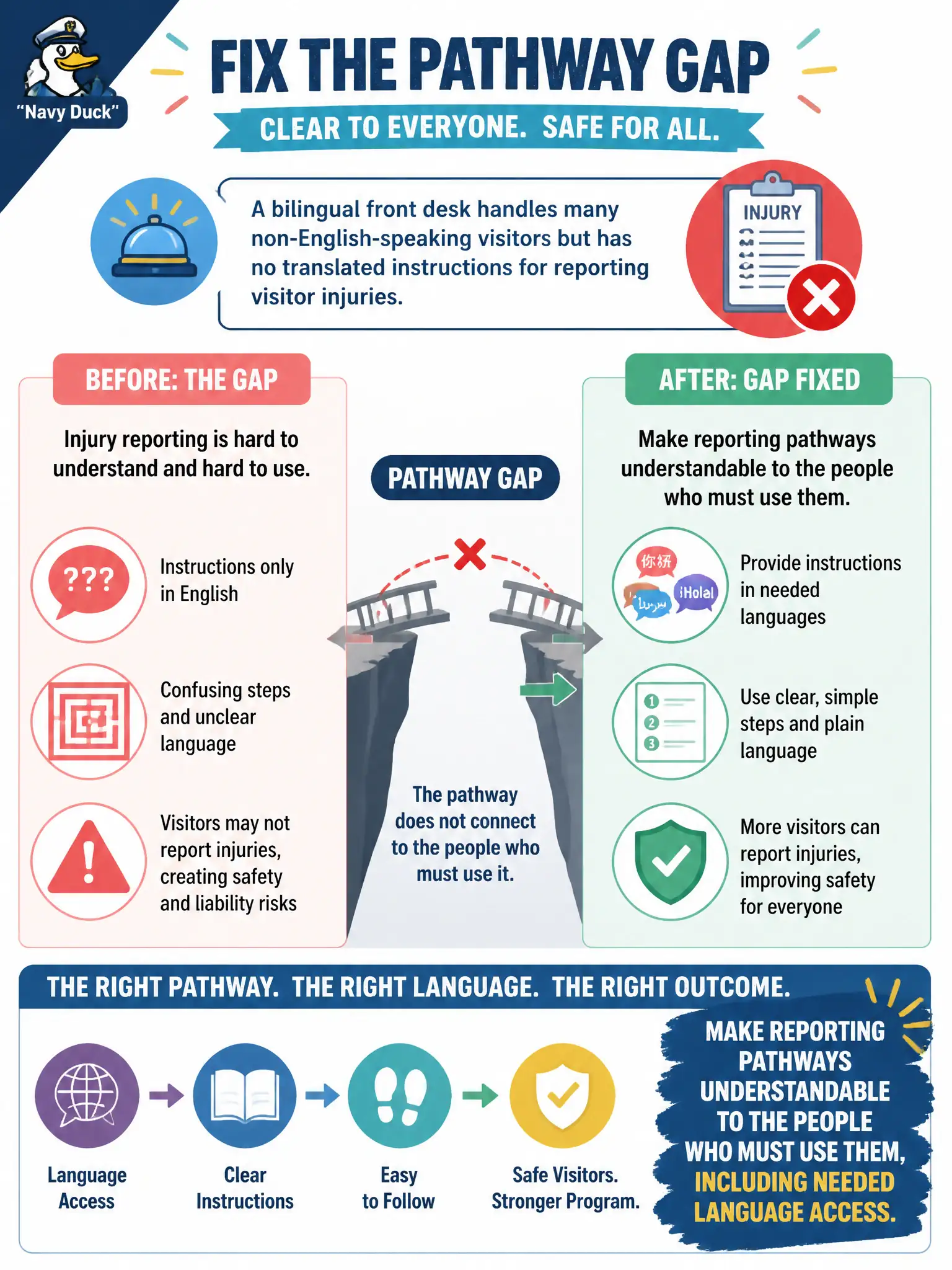
A bilingual front desk handles many non-English-speaking visitors but has no translated instructions for reporting visitor injuries. What pathway gap should be fixed?
Select an answer to reveal the explanation.
Short Explanation
A pathway nobody can read is not a pathway. If the front desk serves bilingual traffic, the how-to-report instructions need to travel in languages people actually use. Accessible beats fancy.
Full Explanation
Reporting pathways must be understandable to the people who must use them, including language access for a bilingual front desk serving non-English-speaking visitors. Missing translated visitor-injury instructions create equity and liability gaps in public buildings. Requiring injured visitors to bring their own translator before a report is taken barriers care and documentation. Posting instructions only in technical legal English reduces accessibility under the guise of precision. Routing all visitor injuries through social media DMs is uncontrolled and inappropriate. Exam caveat: usable pathways include language access, not English-only formality. Operational check: translate the visitor injury reporting card into the top languages served, train front-desk staff on the script and interpreter access, place cards at reception, and test with a role-play that a non-English speaker can start a report. Review annually against community language data. In municipal practice, record the rationale in the risk procedure or committee minutes so future staff apply the same rule under budget pressure. Re-validate after the next seasonal peak or org-chart change to confirm the civic control still holds as designed for residents and staff.