
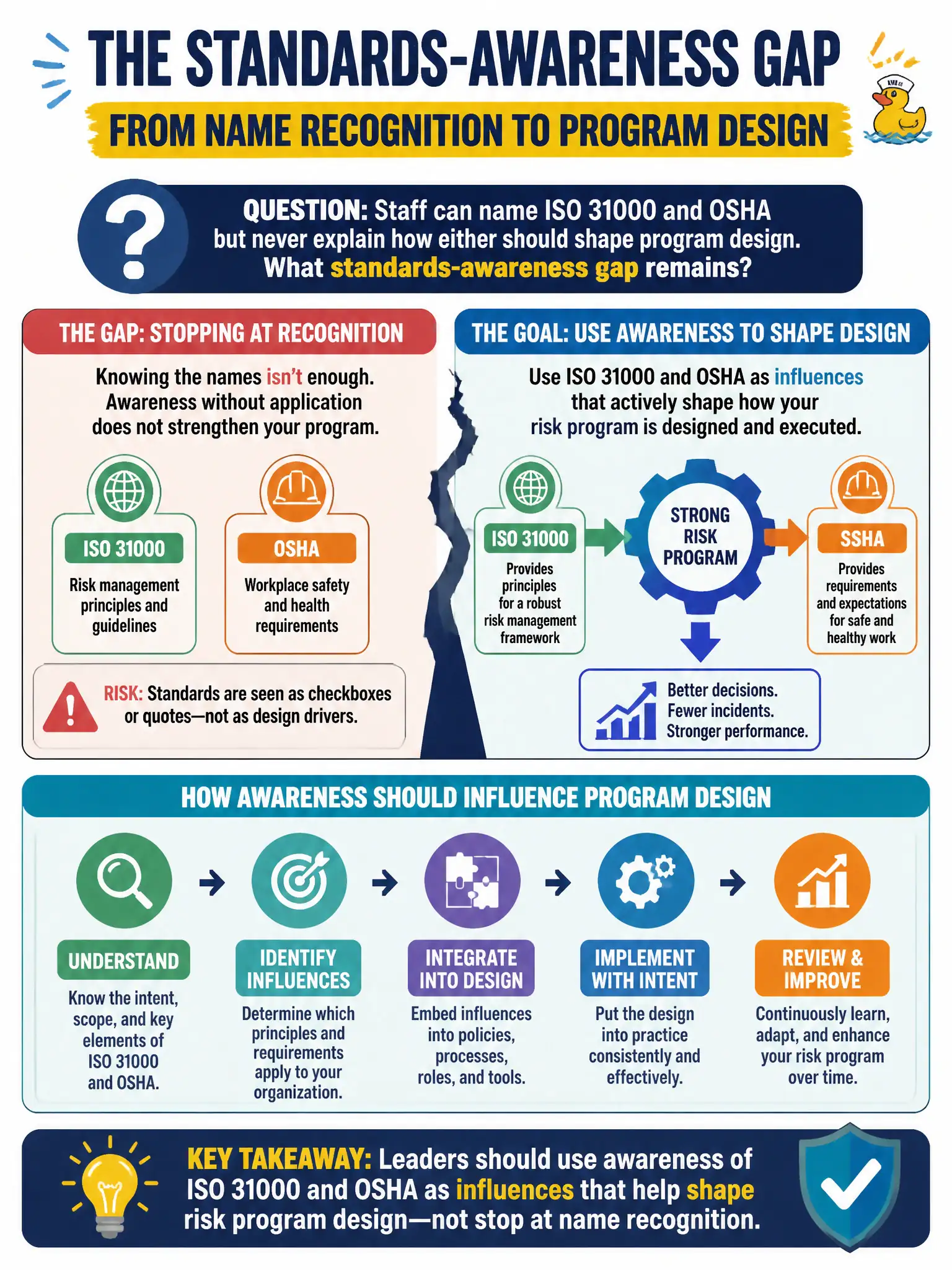
Staff can name ISO 31000 and OSHA but never explain how either should shape program design. What standards-awareness gap remains?
Select an answer to reveal the explanation.
Short Explanation
Name-dropping ISO 31000 and OSHA at a meeting is trivia night—not program design. The point is using those influences to shape how you identify, control, and report risk.
Full Explanation
CRMC-level standards awareness includes understanding how key references such as ISO 31000 and OSHA should influence program design—training, controls, reporting, and governance—not merely recognizing their names. Leaders should use awareness of ISO 31000 and OSHA as influences that help shape risk program design rather than stopping at name recognition.
Treating naming standards as sufficient and discouraging links to procedures leaves awareness ornamental. Claiming ISO 31000 and OSHA must never inform training, controls, or reporting choices rejects the point of standards literacy. Designing programs only from informal tradition while ignoring published standards discards useful external guidance civic programs can adapt.
Exam caveat: awareness means informed use in design, not trivia recall of titles. Name recognition without application is incomplete.
Operational check: for each named standard or regulation in scope, document one concrete design influence (procedure, training module, reporting field, or control); brief staff on those links; retire “we know the names” as a maturity claim without application evidence. For ISO 31000 and OSHA (as applicable), list concrete design influences in the program plan—policy clauses, training modules, or reporting fields. Use that list in maturity discussions instead of name-dropping alone.