
A manager claims adopting ISO 31000 means the organization no longer needs any local procedures. What is wrong with that claim?
Select an answer to reveal the explanation.
Short Explanation
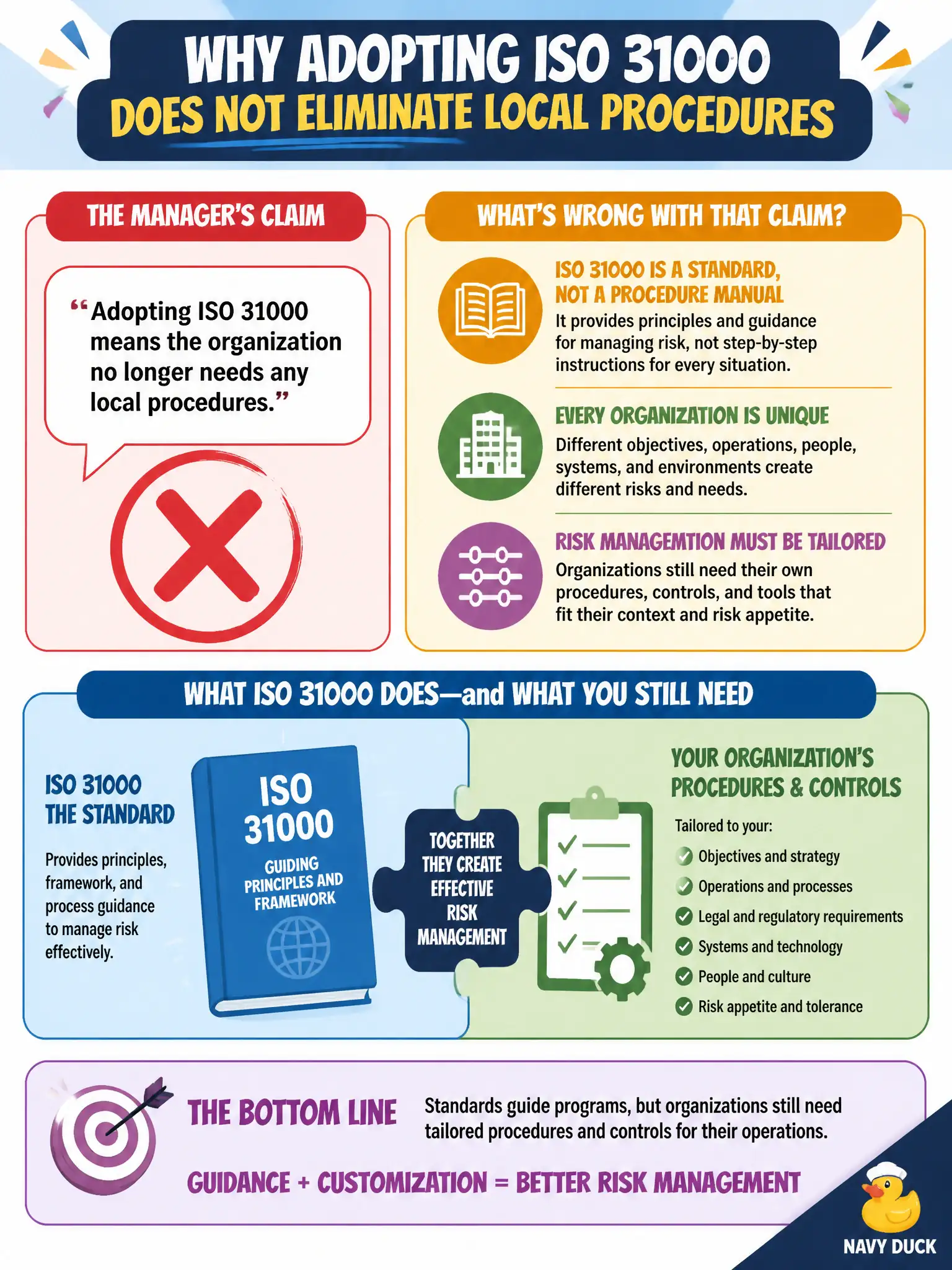
A standard is the recipe book, not the cooked meal. You still write local procedures that fit your kitchen—ISO 31000 points the way; it does not replace your site-specific how-to.
Full Explanation
International risk standards provide principles and framework guidance. They do not automatically generate a complete set of enforceable local procedures for every civic operation. Adopting ISO 31000 still requires tailored procedures and controls for the organization’s specific processes; claiming the standard removes the need for local procedures is wrong.
Believing ISO 31000 automatically generates enforceable local SOPs without any writing treats a framework as a procedure factory. Claiming local procedures become illegal once any international standard is referenced invents a conflict that does not exist. Restricting procedure writing to consultants only after ISO adoption excludes the staff knowledge municipal programs need.
Exam caveat: standards guide; organizations still write and maintain local procedures. Adoption ≠ autopilot documentation.
Operational check: map ISO 31000 principles to existing municipal procedures; identify gaps; write or revise SOPs for local operations; record that ISO informs design while procedures operationalize it. Maintain a procedure register that cites which ISO-aligned principle each key SOP supports. Adoption announcements should always include a local documentation work plan.