
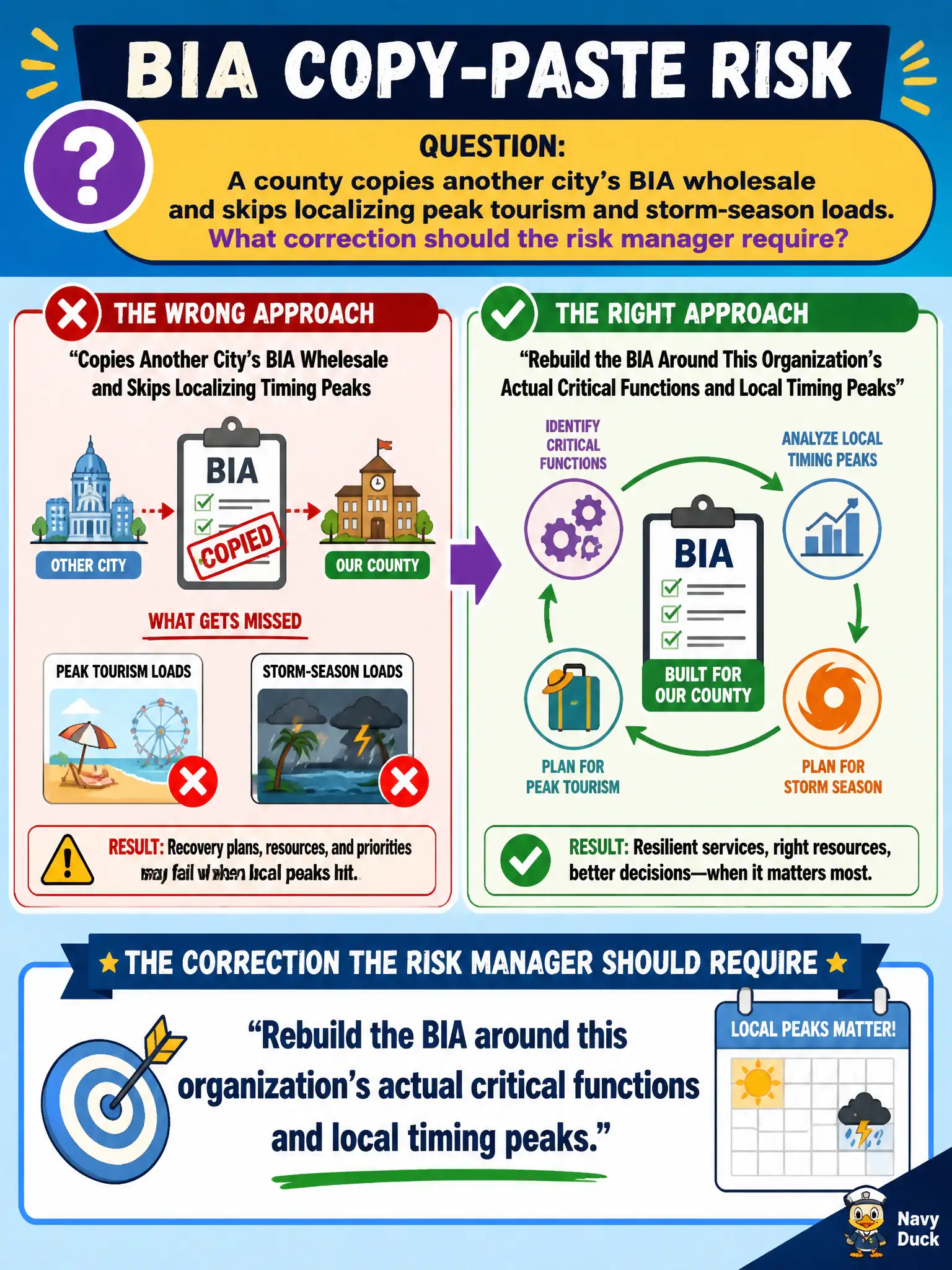
A county copies another city's BIA wholesale and skips localizing peak tourism and storm-season loads. What correction should the risk manager require?
Select an answer to reveal the explanation.
Short Explanation
Borrowing a neighbor's grocery list does not feed your household—you still need what your week actually demands. A pasted BIA misses local peak loads and mission timing. Rebuild it for this county's real functions and seasons.
Full Explanation
A business impact analysis is organization-specific. Criticality rankings, peak-load timing, and maximum tolerable downtime must reflect this county’s actual functions, statutory calendars, tourism seasons, and storm-driven demand—not another city’s pasted worksheet. Rebuilding the BIA around local critical functions and local timing peaks corrects borrowed assumptions that can mis-order recovery and underfund what this jurisdiction actually needs during its own stress windows.
Keeping a borrowed BIA unchanged so peer cities always share identical rankings sacrifices local truth for false comparability. Replacing BIA work with a generic industry template that ignores local calendars repeats the same localization failure at larger scale. Delaying any BIA update until after the next disaster validates which functions mattered turns learning into post-catastrophe triage instead of proactive prioritization.
Exam caveat: CRMC expects candidates to reject wholesale copy-paste of peer BIAs. Peer examples can inform method, but criticality and timing must be localized.
Operational check: inventory this county’s peak tourism and storm-season loads; map which civic functions spike then; rewrite BIA criticality and timing fields accordingly; brief leadership that peer rankings are reference only until localized evidence is recorded.