
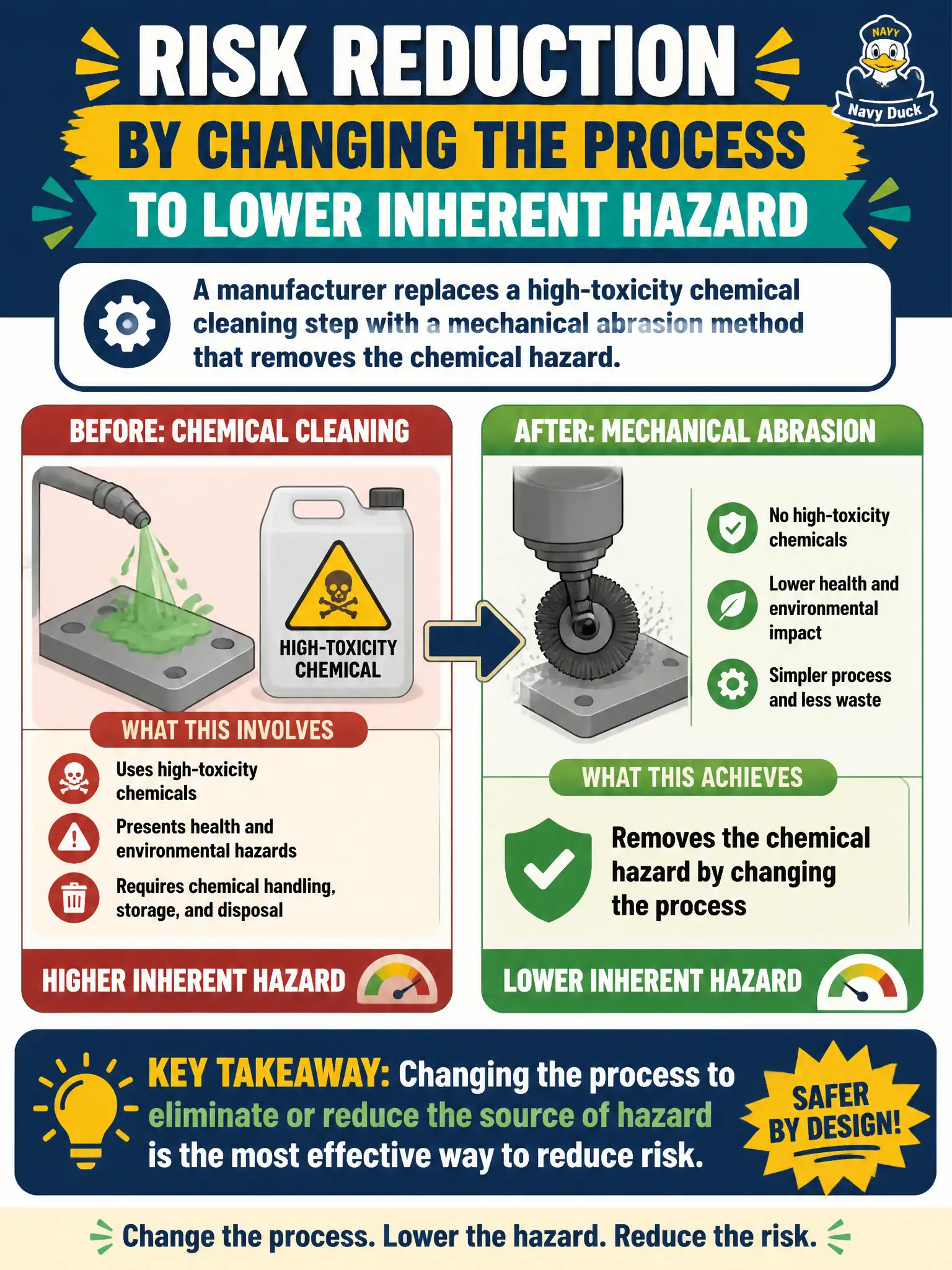
A manufacturer replaces a high-toxicity chemical cleaning step with a mechanical abrasion method that removes the chemical hazard. What treatment does this primarily illustrate?
Select an answer to reveal the explanation.
Short Explanation
Swapping a nasty chemical bath for a scrubbing machine is like replacing a blowtorch with a screwdriver when a screwdriver will do. You reduced the inherent hazard by changing how the work gets done.
Full Explanation
Risk reduction by changing the process to lower inherent hazard is illustrated when a manufacturer replaces a high-toxicity chemical cleaning step with mechanical abrasion that removes the chemical hazard. Substitution and process change reduce inherent danger at the source. Civic and industrial risk programs prize such reductions over perpetual reliance on PPE or transfer alone.
Risk avoidance by closing the entire manufacturing division is not what occurred—the activity continues via a different method. Risk transfer by naming the chemical supplier as sole responsible party is not shown; the organization changed its own process rather than shifting liability paperwork. Risk acceptance by continuing the toxic process without documentation is the opposite of substituting away the toxic step.
Exam caveat: CRMC reduction includes process changes and substitution that lower inherent hazard. Distinguish reduction from avoidance (stop activity), transfer (shift financial burden), and acceptance (retain residual).
Operational check: When evaluating toxic process steps in city-owned shops or contracted plants, prefer feasible substitution/mechanical alternatives, update procedures and training, and retire chemical controls that are no longer needed while verifying new abrasion hazards are managed.