
In a team meeting, a counselor contrasts a medical-model 'fix the person' frame with an ecological or interactional model of disability. Which contrast is most accurate?
Select an answer to reveal the explanation.
Short Explanation
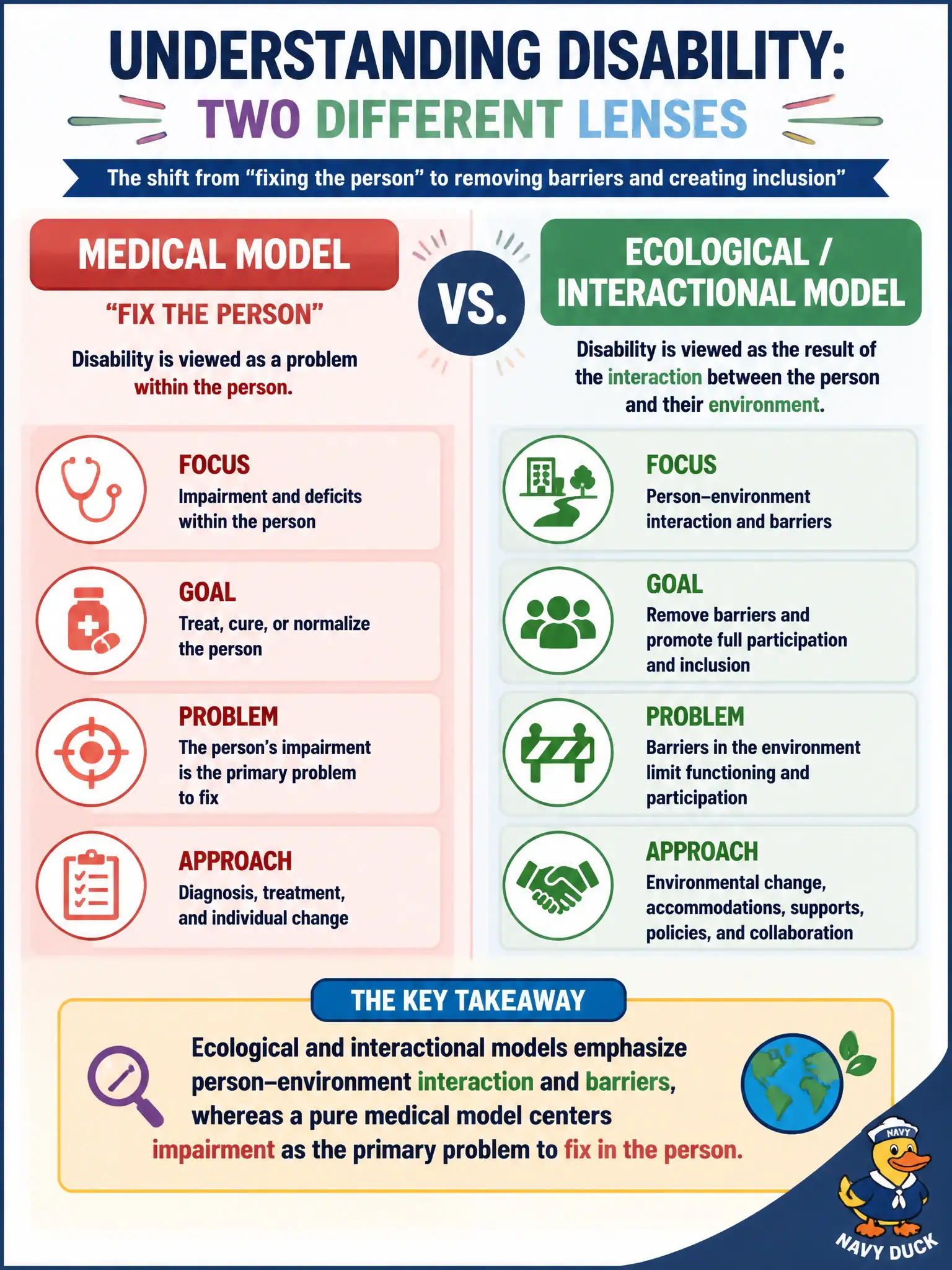
If the only tool you bring is a wrench for the person, you'll miss a doorway that's too narrow. Medical-model thinking puts the 'fix' inside the individual; ecological thinking looks at the fit between the person and the world — ramps, attitudes, and systems included.
Full Explanation
In interdisciplinary team meetings, contrasting a medical-model “fix the person” frame with ecological or interactional models clarifies philosophy for civic rehab practice. Ecological and interactional models emphasize person–environment interaction and barriers, whereas a pure medical model centers impairment as the primary problem to fix inside the person. That contrast guides whether teams only seek clinical cure or also redesign environments, attitudes, and job demands.
Saying both models locate disability exclusively inside the body fails by concept because ecological models explicitly include environments. Claiming the medical model focuses only on employer training while ecological models focus only on surgery reverses and confuses both frames. Asserting ecological models reject all medical care and treat diagnosis as irrelevant fails because ecological practice can include medical care while still analyzing environmental barriers.
Exam caveat: modern practice is often biopsychosocial; exam items still test the conceptual contrast between impairment-centered versus interactional views. Operational check: in case formulation, list impairment factors and environmental/attitudinal barriers separately, then assign interventions to both person-focused and environment-focused columns.