
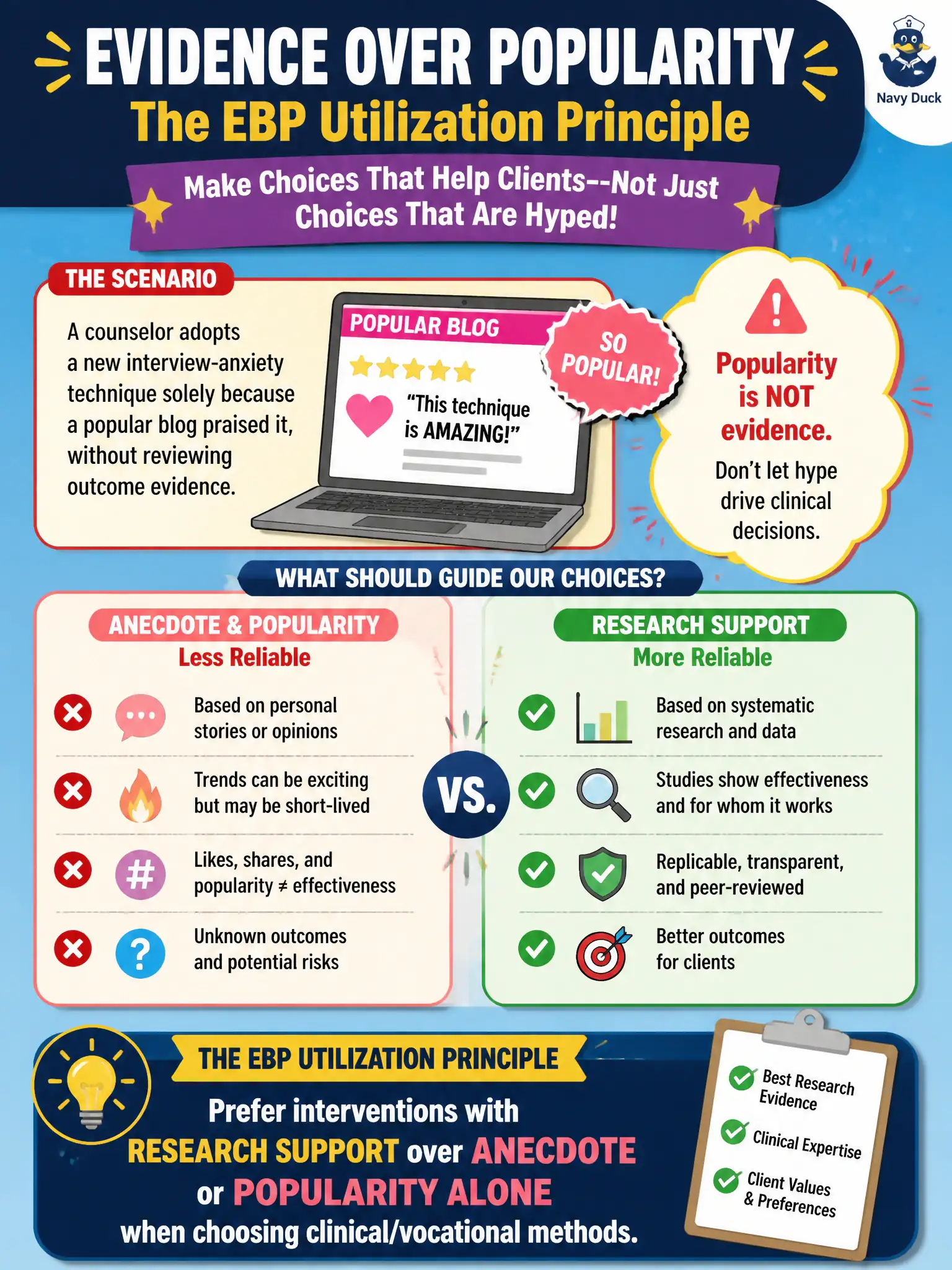
A counselor adopts a new interview-anxiety technique solely because a popular blog praised it, without reviewing outcome evidence. What EBP utilization principle applies?
Select an answer to reveal the explanation.
Short Explanation
A viral blog post is a billboard, not a lab report. Cool stories can spark curiosity, but rehab choices should lean on outcome evidence—not applause counts. Popular isn’t the same as proven.
Full Explanation
Adopting a new interview-anxiety technique solely because a popular blog praised it, without reviewing outcome evidence, violates EBP utilization principles that prefer interventions with research support over anecdote or popularity alone. Civic agencies owe clients methods selected by evidence and clinical fit, not marketing virality or social-media enthusiasm that skips appraisal.
Treating blog popularity as the highest standard of evidence fails by concept against research hierarchies used in evidence-based practice. Ignoring outcome studies because marketing language sounds innovative fails by anti-scientific selection that privileges rhetoric over data. Claiming any catchy-named technique is equally evidence-based fails by confusing branding with empirical support and client-outcome accountability.
Exam caveat: EBP also integrates clinical expertise and client context—research is necessary but not the only pillar—yet popularity alone is insufficient for adoption. Operational check: locate outcome studies or systematic reviews before agency adoption, compare effect evidence and populations studied, pilot with evaluation measures, and retire blog-only methods that lack support when better-supported options exist.