
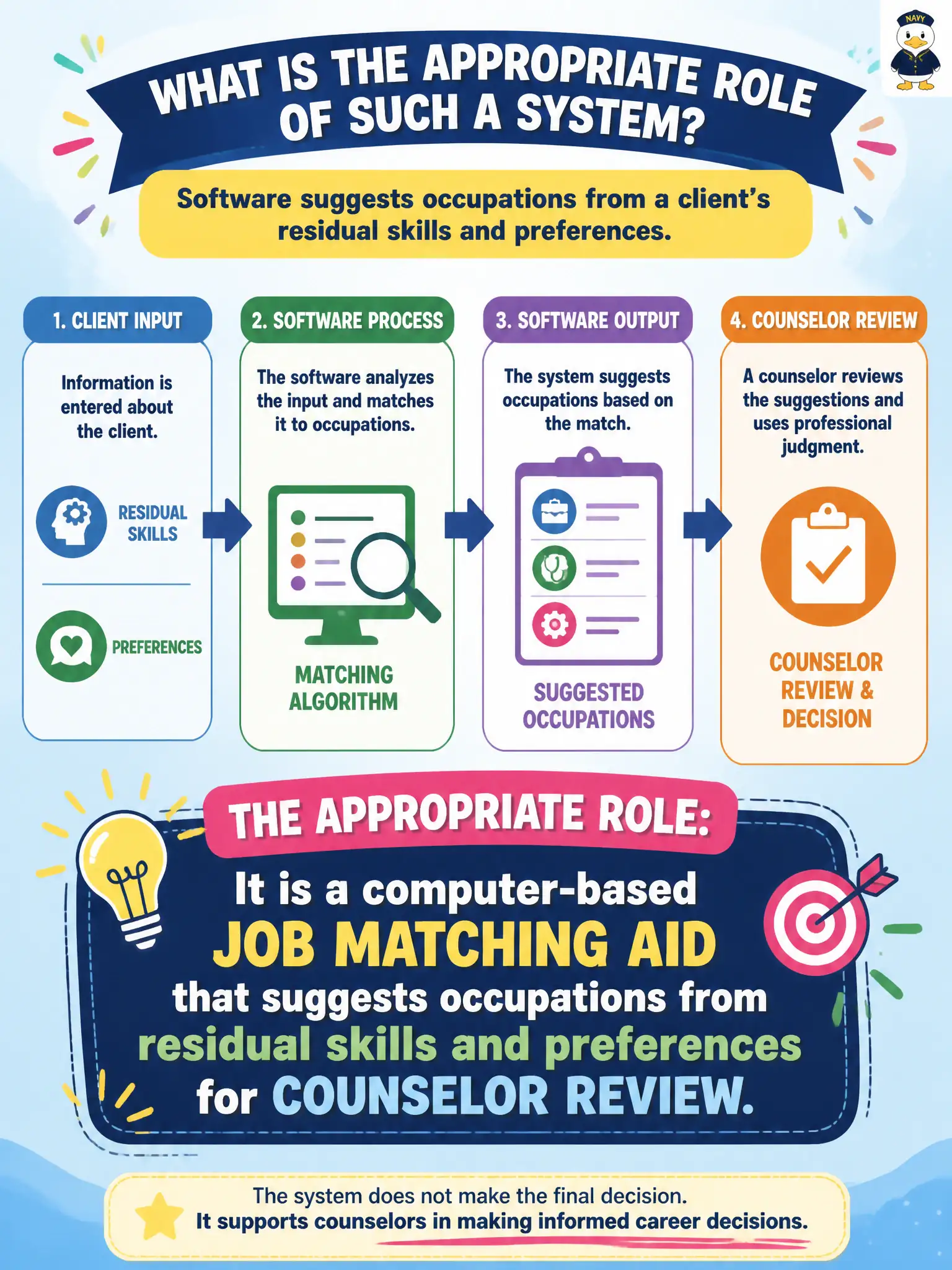
Software suggests occupations from a client's residual skills and preferences. What is the appropriate role of such a system?
Select an answer to reveal the explanation.
Short Explanation
Think of it as a smart search filter, not an autopilot. Job-matching software can line up occupations from skills and preferences in seconds. The counselor still steers — the tool just narrows the map.
Full Explanation
Software that suggests occupations from residual skills and preferences is a computer-based job-matching aid for counselor review—not an autonomous decision-maker, not prohibited, and not a random title generator. CRC practice uses such tools as supports under professional judgment. Civic VR systems increasingly offer matching aids that still require human oversight.
Treating the system as permanently replacing the counselor for all planning decisions abdicates professional responsibility. Claiming it is prohibited under all circumstances is false. Saying it only generates random titles unrelated to skills or preferences misrepresents competent matching tools.
Counselor review also catches algorithmic bias and outdated DOT mappings some matching systems still emit.
Exam caveat: job-matching software is an aid that suggests occupations from residual skills/preferences for counselor review.
Operational check: run the matching aid; review each suggestion for RFC, LMI, and client goals; accept or reject titles with documented counselor judgment. Re-verify length and fidelity of the written plan at the next supervisory case review so civic accountability stays visible. Confirm the rationale in the case record so auditors and supervisors can see the clinical logic.