
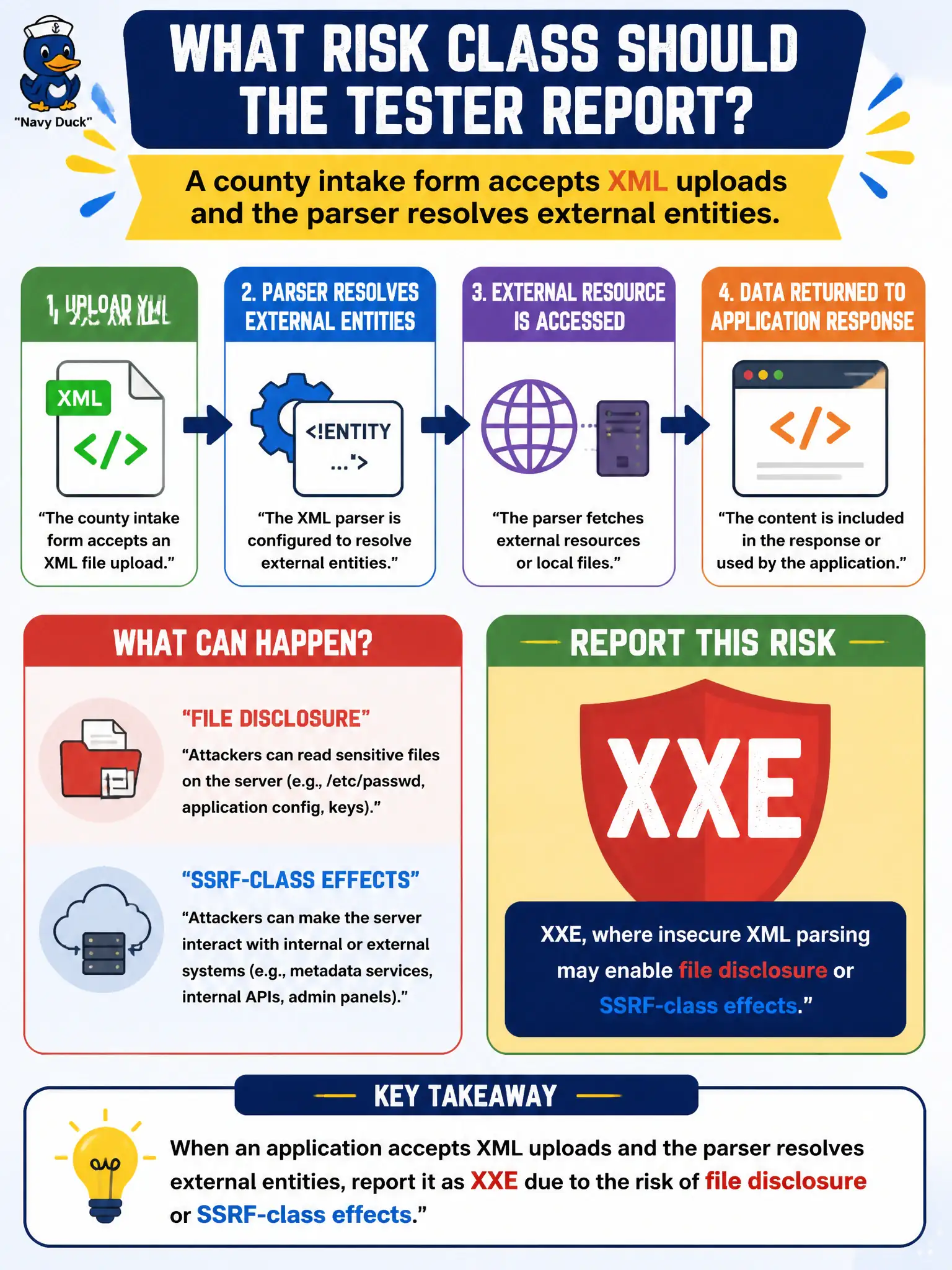
A county intake form accepts XML uploads and the parser resolves external entities. What risk class should the tester report?
Select an answer to reveal the explanation.
Short Explanation
XML that can phone home or open local files is more than a fancy document — it is a backstage pass. XXE is that parser trust problem. Report the class and likely impacts, not a pile of entity payloads.
Full Explanation
XXE arises when XML parsers resolve external entities unsafely, potentially enabling file disclosure or SSRF-class effects from the application server. A county intake form that accepts XML uploads with external entity resolution lets crafted documents pull internal resources—risking confidential municipal files or internal service reachability via the parser.
SMTP open relay, robots.txt gaps, and lobby Wi-Fi PSKs are unrelated distractors that do not describe XML entity resolution risk.
Exam caveat: disable external entities/DTDs by default in civic XML parsers; prefer JSON or hardened XML stacks. CPTS XXE discussions should mention file disclosure and SSRF-like fetch risks without providing weaponized payloads.
Operational check: confirm parser settings disallow external entities, reject unexpected DTDs, test with benign XXE probes only under RoE, and monitor outbound requests from the intake app during XML processing. Prefer non-XML intake formats for county uploads when possible; if XML remains, centralize hardened parser settings for every service that consumes it. Log and block outbound entity-resolution attempts from county XML parsers during intake processing. Cite the control owner in the civic remediation plan.