
A municipal Windows estate shows long WSUS or update offline periods leaving hosts unpatched. How does that relate to privilege-escalation likelihood?
Select an answer to reveal the explanation.
Short Explanation
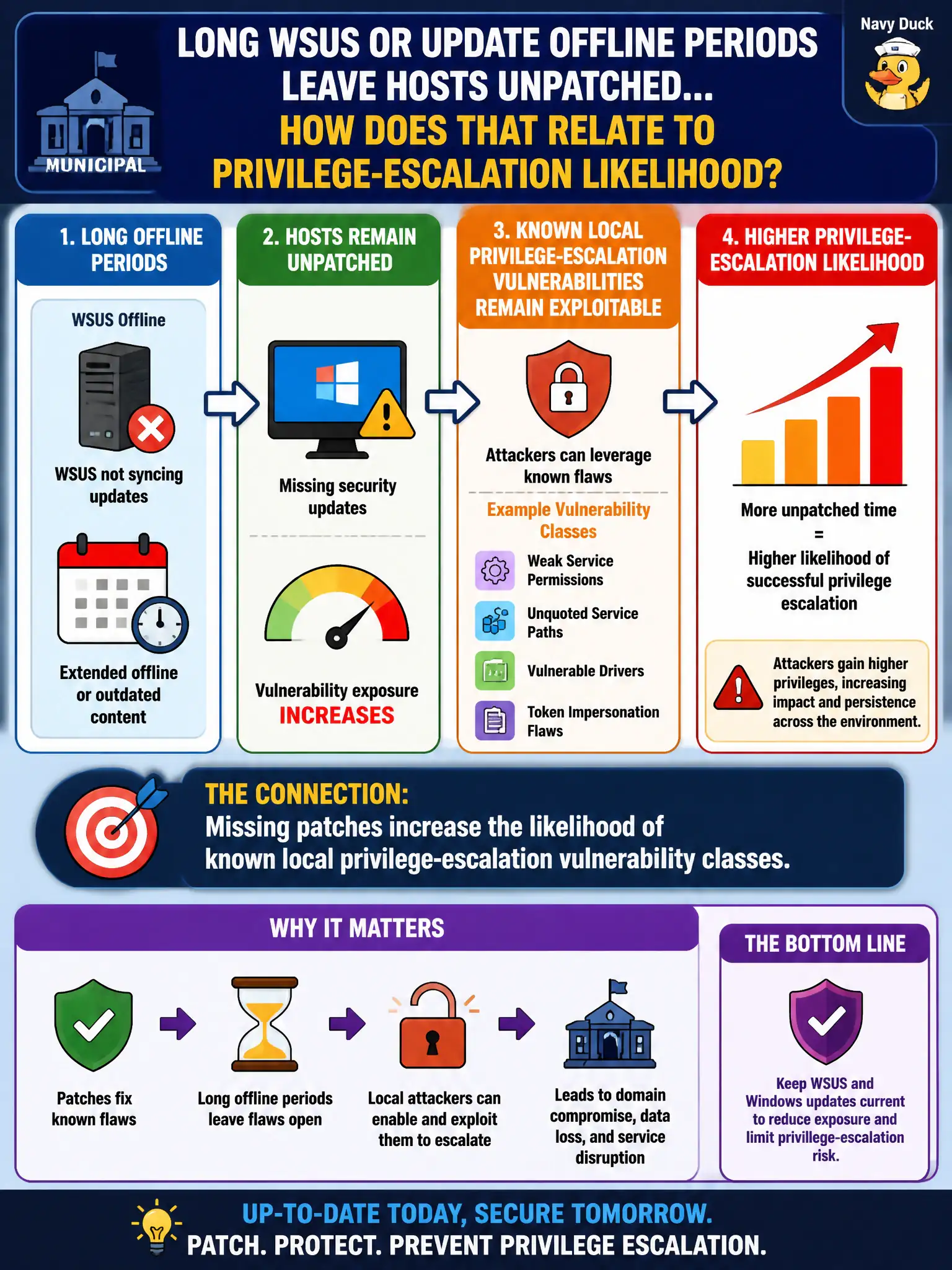
Skipping updates is like leaving last year's broken lock on the door. Known local elevation bugs hang around longer when WSUS is dark, so the odds of a boring-but-real LPE go up.
Full Explanation
Long WSUS or update offline periods leaving municipal Windows hosts unpatched increase the likelihood of known local privilege-escalation vulnerability classes. Patch debt is an environmental multiplier for LPE risk and should be reported with remediation urgency tied to exposure.
Offline update themes affect endpoints, not only printers. Unpatched systems are not immune because exploits supposedly need internet callbacks—many LPE classes are local. Patch debt does not lower LPE likelihood by making hosts somehow less attractive.
Exam caveat: correlate specific missing updates to plausible LPE classes at a conceptual level without dumping unstable public exploit instructions.
Operational check: sample update age on representative civic hosts, document offline WSUS/update gaps, and recommend restoring patch pipelines before or alongside point fixes. In municipal operations, record the rationale in the engagement notes so future assessors know which control was chosen and which failure modes the rejected options would create for city services. Re-validate after the next maintenance window that the same finding class still applies under the estate's current patch and configuration baseline.