
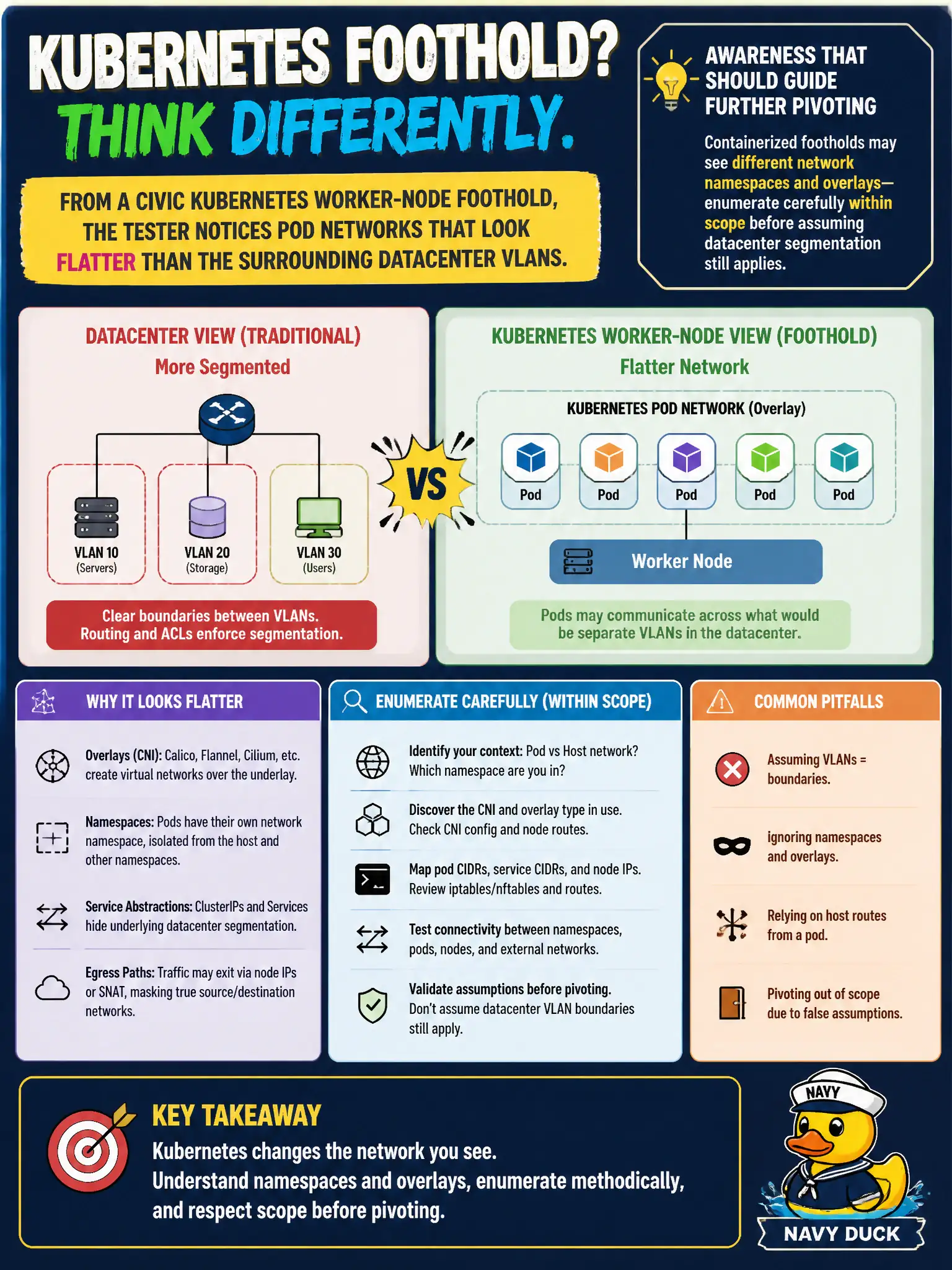
From a civic Kubernetes worker-node foothold, the tester notices pod networks that look flatter than the surrounding datacenter VLANs. What awareness should guide further pivoting?
Select an answer to reveal the explanation.
Short Explanation
Landing on a K8s node is not the same as standing in a normal VLAN closet. Pod overlays and namespaces can change what you can see and reach. Map carefully inside scope before you assume the old segmentation story still holds.
Full Explanation
From a civic Kubernetes worker-node foothold, noticing pod networks that look flatter than surrounding datacenter VLANs should guide the tester to remember that containerized footholds may see different network namespaces and overlays—enumerate carefully within scope before assuming datacenter segmentation still applies. It is false that container hosts never share network visibility with pods. Flat pod networks do not automatically authorize exploitation of every cluster control-plane service. Kubernetes also does not always fully isolate every pod from the node in ways that prevent a host foothold from observing pod ranges. Exam caveat: treat overlay visibility as an enumeration problem bounded by RoE, not as implied cluster-admin rights. Operational check: map observed pod CIDRs against scope, avoid out-of-scope namespaces or clusters, and document overlay assumptions before further pivots in the municipal platform environment. In municipal operations, record the rationale in the engagement notes so future testers and city defenders understand which approach was chosen and which failure modes the rejected options would create for civic services. Re-validate the same judgment after the next change window so the control still holds under the city’s current tooling, identity posture, and RoE amendments.