
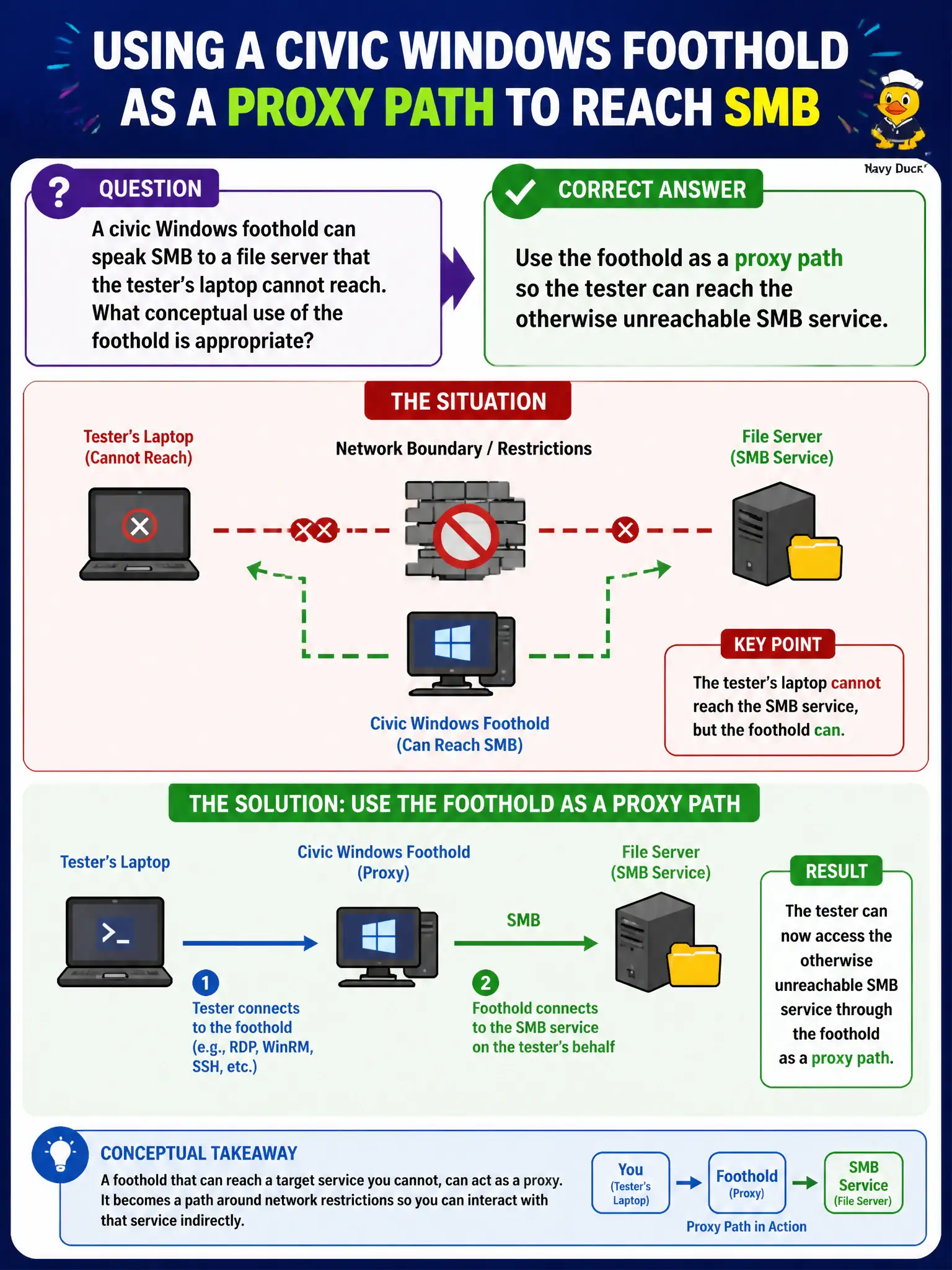
A civic Windows foothold can speak SMB to a file server that the tester’s laptop cannot reach. What conceptual use of the foothold is appropriate?
Select an answer to reveal the explanation.
Short Explanation
Your laptop cannot knock on the file server’s door, but the compromised Windows box already has a hallway to it. Using that box as a proxy is like asking a coworker already inside to fetch the binder you need. You are extending reach through a host you control—not pretending the server never existed.
Full Explanation
When a civic Windows foothold can speak SMB to a file server the tester’s laptop cannot reach, the appropriate conceptual use is to use the foothold as a proxy path so the tester can reach the otherwise unreachable SMB service. Declaring the file server nonexistent because the laptop cannot ping it ignores pivot reality. Flattening Active Directory trusts to make every share Internet-exposed is reckless architecture abuse, not testing. Emailing the server’s SAM database to a personal account violates data handling and RoE secrecy rules. Exam caveat: footholds extend vantage points; they do not authorize data exfiltration to personal channels. Operational check: confirm the file server is in-scope, establish an approved proxy/forward through the foothold, limit SMB actions to authorized enumeration, and keep any sensitive files inside the engagement evidence vault. In municipal operations, record the rationale in the engagement notes so future testers and city defenders understand which approach was chosen and which failure modes the rejected options would create for civic services. Re-validate the same judgment after the next change window so the control still holds under the city’s current tooling, identity posture, and RoE amendments.