
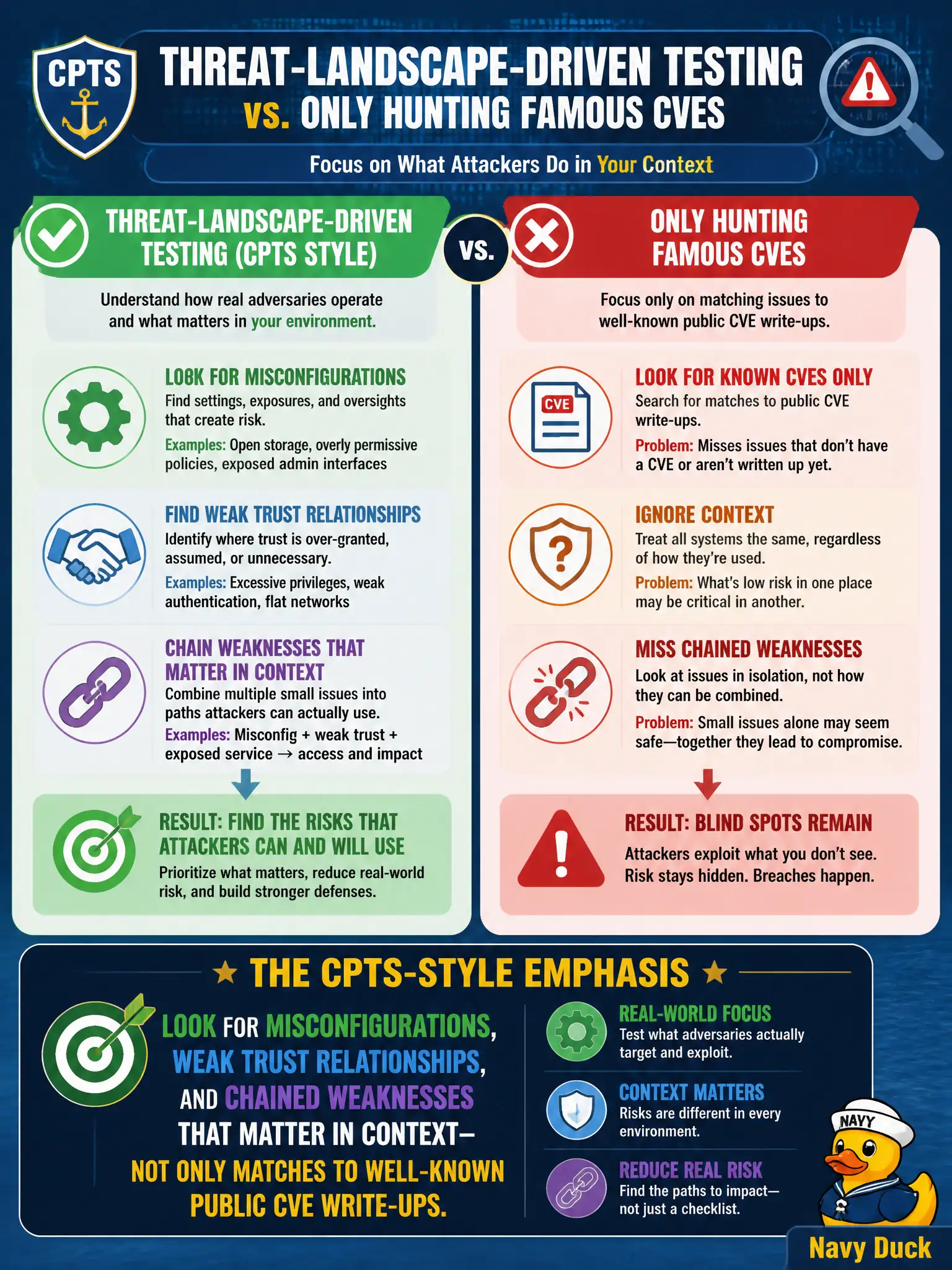
A utility CISO asks what threat-landscape-driven testing means compared with only hunting famous CVEs. Which statement best captures the CPTS-style emphasis?
Select an answer to reveal the explanation.
Short Explanation
Famous CVE bingo is the easy crossword; real testing is noticing the unlocked side door between systems. Misconfigs and trust chains often matter more than yesterday's headline bug. Hunt the path an attacker would actually use.
Full Explanation
Threat-landscape-driven testing, in CPTS-style practice for a utility CISO, emphasizes misconfigurations, weak trust relationships, and chained weaknesses that matter in the real environment—not only hunting famous public CVE write-ups. Limiting work to CVEs from the last thirty days privileges novelty over risk. Ignoring configuration review because only remote code execution 'counts' discards high-impact municipal findings such as excessive privileges or exposed management planes. Outsourcing all judgment to a single 'critical only' scanner profile abandons contextual validation. Exam caveat: well-known CVEs still matter when present, but absence of a headline CVE does not mean the environment is safe for water operations. Operational check: combine scanner output with manual review of trusts, identity paths, and service exposure on utility assets, then prioritize chains that could affect operations or safety systems within the written rules of engagement. Keep the explanation tied to authorized civic scope, documented rules of engagement, and evidence that a reviewer can reproduce without guessing. Prefer precise technical language over slogans, and separate what was observed from what was successfully exploited under permission.