
A public library asks how approved credentialed scanning differs from unauthenticated scanning on the same subnet. What is the accurate distinction?
Select an answer to reveal the explanation.
Short Explanation
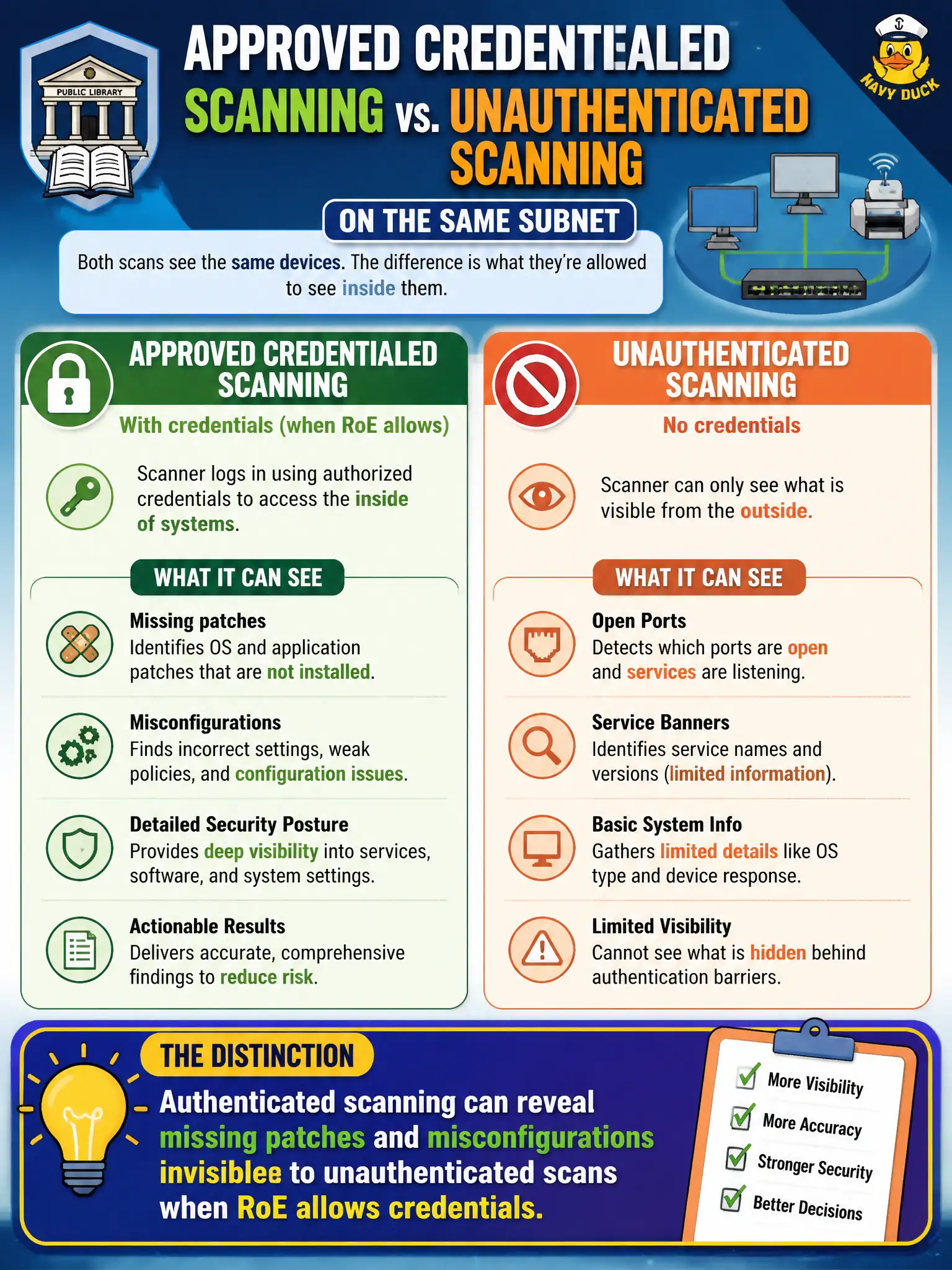
Scanning from the hallway versus with a library card are different tours. A permitted login lets the scanner see patch gaps and bad configs that anonymous checks simply cannot open.
Full Explanation
Approved credentialed scanning differs from unauthenticated scanning on the same public-library subnet because authenticated scanning can reveal missing patches and misconfigurations invisible without credentials when RoE allows them. Credentialed scans are not illegal when authorized. Unauthenticated scans do not always find every missing patch credentialed scans would find. Credentialed scans change technical coverage, not only the report cover page. Exam caveat: protect and rotate scan credentials; never reuse them outside the engagement. Operational check: obtain least-privilege scan accounts through the library's approval process, verify credentialed checks run successfully, compare coverage gaps against unauthenticated results, and secure credential storage per RoE. Document the rationale in the municipal engagement notes so later civic responders know which boundary was honored and which failure modes the rejected options would create for public services. Document the rationale in the municipal engagement notes so later civic responders know which boundary was honored and which failure modes the rejected options would create for public services. Document the rationale in the municipal engagement notes so later civic responders know which boundary was honored and which failure modes the rejected options would create for public services.