
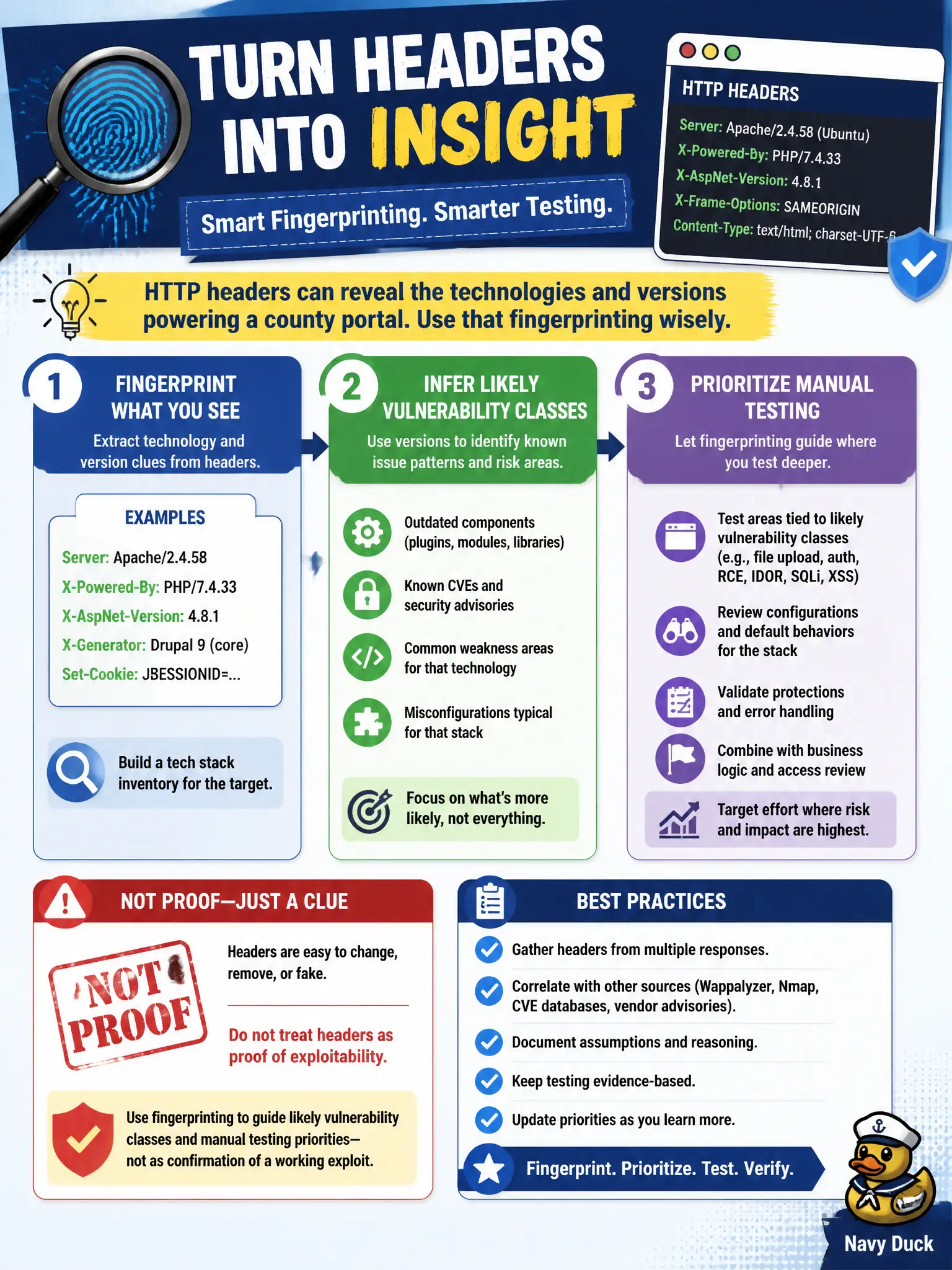
A county portal's HTTP headers reveal framework and server versions. How should the tester use that fingerprinting?
Select an answer to reveal the explanation.
Short Explanation
Headers that blurt out framework and server versions are hint cards, not finished crossword puzzles. They steer which weakness classes deserve attention first. They do not, by themselves, prove a working exploit.
Full Explanation
HTTP headers that reveal framework and server versions on a county portal should guide likely vulnerability classes and manual testing priorities without treating headers as proof of exploitability. Version headers alone do not prove remote code execution is present or justify stopping testing. Fingerprinting meaningfully affects web test planning and should not be ignored. A single automated exploit pack keyed only to the Server header is not a substitute for manual validation on municipal apps. Exam caveat: headers can be altered by reverse proxies, so corroborate with other fingerprinting signals. Operational check: record observed technology stack, map candidate issue classes, prioritize authenticated and input-handling tests within RoE, and validate findings manually before reporting exploitability to the county. Document the rationale in the municipal engagement notes so later civic responders know which boundary was honored and which failure modes the rejected options would create for public services. Document the rationale in the municipal engagement notes so later civic responders know which boundary was honored and which failure modes the rejected options would create for public services.