
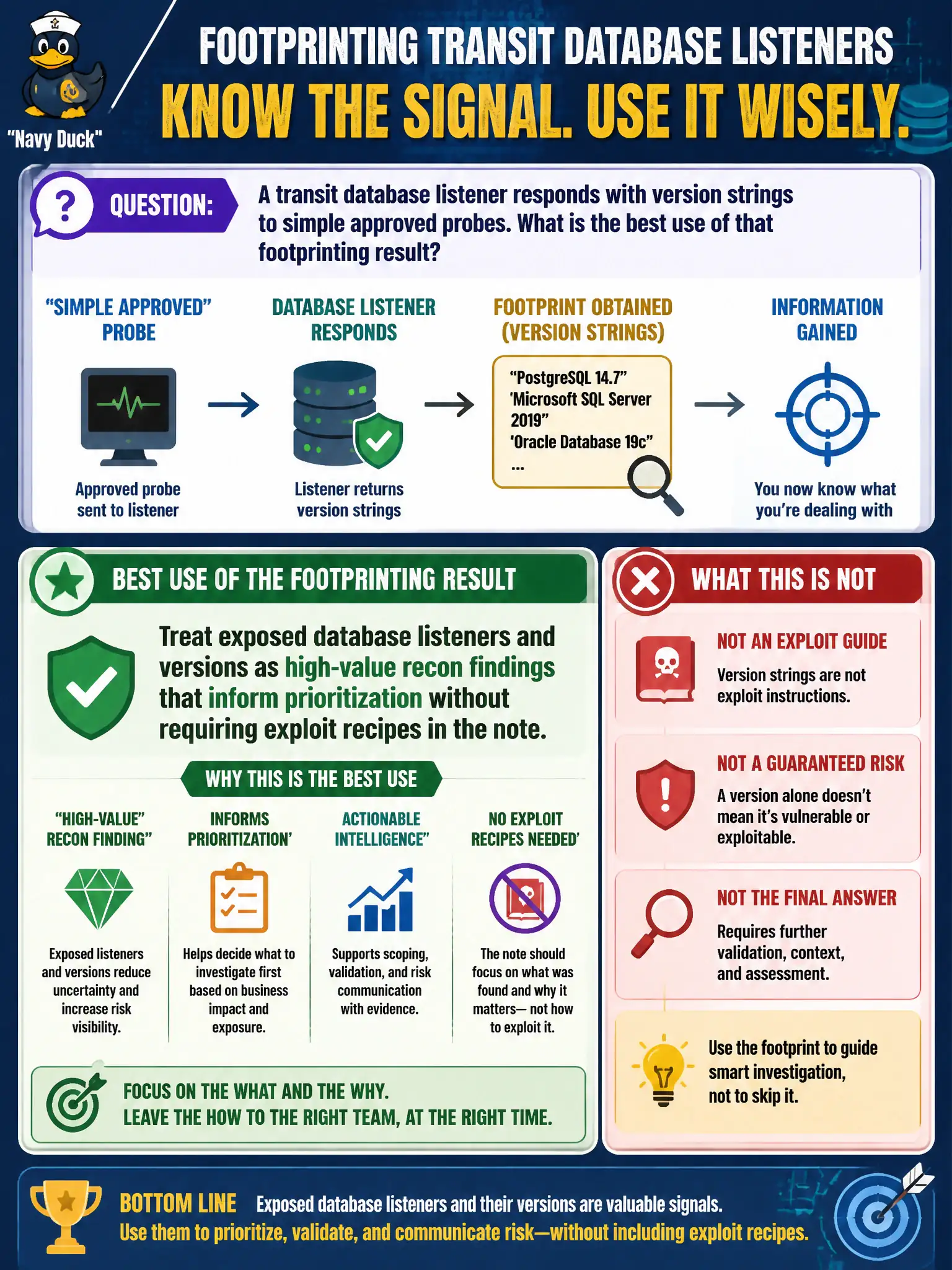
A transit database listener responds with version strings to simple approved probes. What is the best use of that footprinting result?
Select an answer to reveal the explanation.
Short Explanation
A database that announces its version is waving a product label at you. That label helps you decide how urgent the follow-up is. You do not need a ready-made exploit recipe just to record a serious recon finding.
Full Explanation
When a transit database listener responds with version strings to simple approved probes, treat exposed listeners and versions as high-value recon findings that inform prioritization without requiring exploit recipes in the note. Database version banners should not be ignored in infrastructure tests. Immediately publishing public zero-day exploit code is inappropriate and outside professional reporting norms. Version strings do not prove a database is patched or justify closing the item as noise. Exam caveat: keep proof-of-concept depth within RoE and avoid destructive queries on transit production data. Operational check: record listener address, version, and authentication posture; prioritize based on exposure and data sensitivity; validate further only with approved techniques and data-handling controls. Document the rationale in the municipal engagement notes so later civic responders know which boundary was honored and which failure modes the rejected options would create for public services. Document the rationale in the municipal engagement notes so later civic responders know which boundary was honored and which failure modes the rejected options would create for public services.