
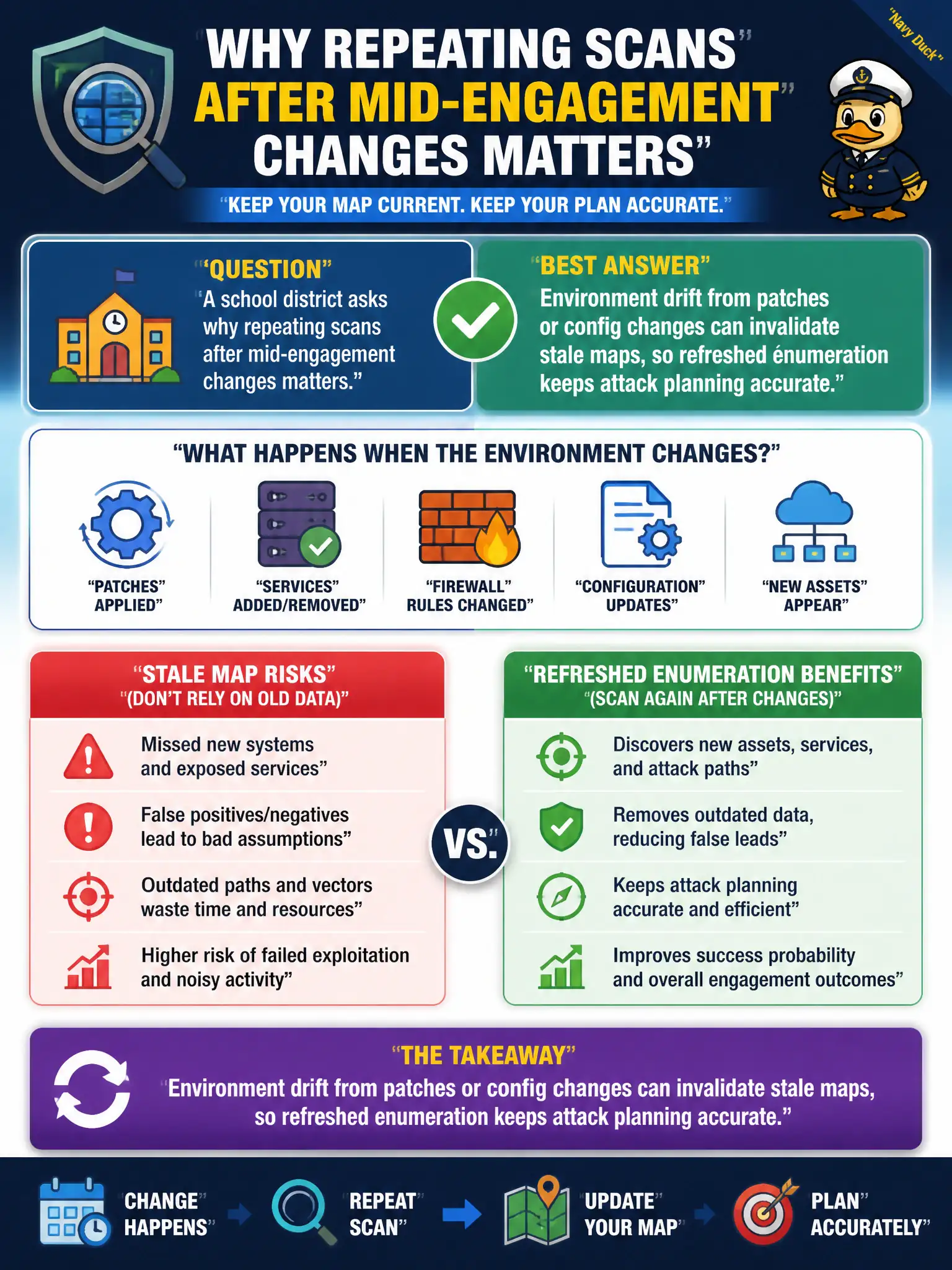
A school district asks why repeating scans after mid-engagement changes matters. What is the best answer?
Select an answer to reveal the explanation.
Short Explanation
Networks move while you work — patches and config tweaks rearrange the furniture. An old scan is yesterday's floor plan. Refresh the map so you do not kick a door that is no longer there.
Full Explanation
Repeating scans after mid-engagement changes matters because environment drift from patches or config changes can invalidate stale maps, so refreshed enumeration keeps attack planning accurate for a school district. Re-scanning is not merely a billing tactic. Initial scan results are not permanently valid for the rest of the engagement when administrators are actively changing systems. Patches mid-test do not always require abandoning the engagement and restarting the entire contract from zero; targeted re-enumeration is the professional response. Exam caveat: document what changed and which findings were re-validated versus retired. Operational check: after significant district changes, re-run discovery on affected subnets or hosts, update the live target list, and note closed versus still-open issues before further exploitation attempts. Document the rationale in the municipal engagement notes so later civic responders know which boundary was honored and which failure modes the rejected options would create for public services. Document the rationale in the municipal engagement notes so later civic responders know which boundary was honored and which failure modes the rejected options would create for public services.