
A municipal DMZ review finds many filtered ports. What is the most accurate interpretation for next enumeration steps?
Select an answer to reveal the explanation.
Short Explanation
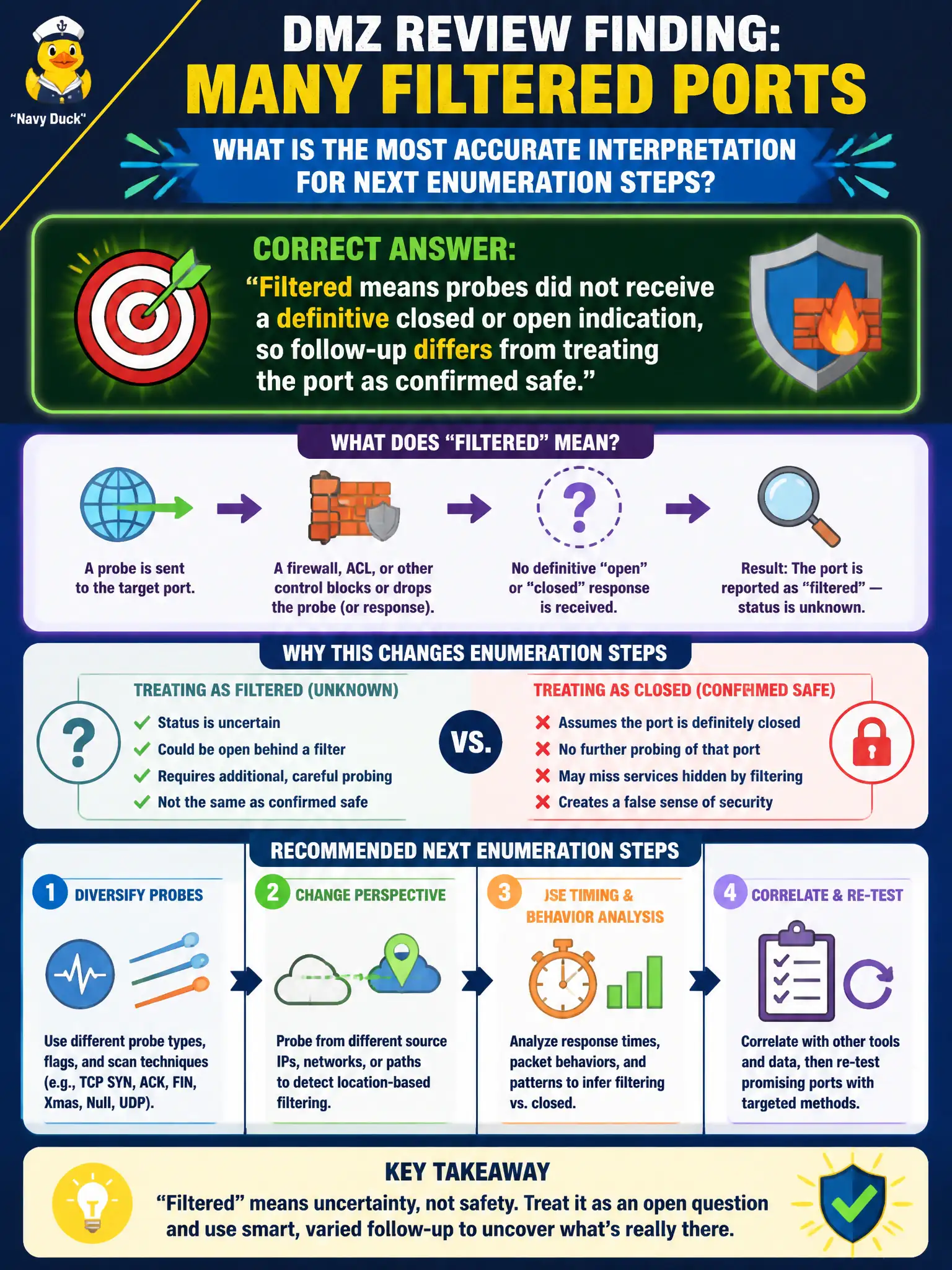
Filtered is fog on the road, not a green light and not a boarded-up shop. You still do not know what is behind the filter the way you do with a clear open or closed result. Do not stamp it 'safe' and walk away.
Full Explanation
In a municipal DMZ review, filtered ports mean probes did not receive a definitive closed or open indication, so follow-up differs from treating the port as confirmed safe. Filtered is not identical to closed and should not be ignored in attack-surface maps. Filtered does not always mean a service is running and fully exploitable. Open, closed, and filtered labels meaningfully influence methodology and reporting. Exam caveat: firewall behavior, rate limiting, and asymmetric paths can produce filtered results that change with timing or source address. Operational check: record filtered results, attempt alternate probe types or schedules only if RoE allows, correlate with firewall policy owners, and avoid marking filtered ports as 'verified secure' in the city DMZ report. Document the rationale in the municipal engagement notes so later civic responders know which boundary was honored and which failure modes the rejected options would create for public services. Document the rationale in the municipal engagement notes so later civic responders know which boundary was honored and which failure modes the rejected options would create for public services. Document the rationale in the municipal engagement notes so later civic responders know which boundary was honored and which failure modes the rejected options would create for public services.