
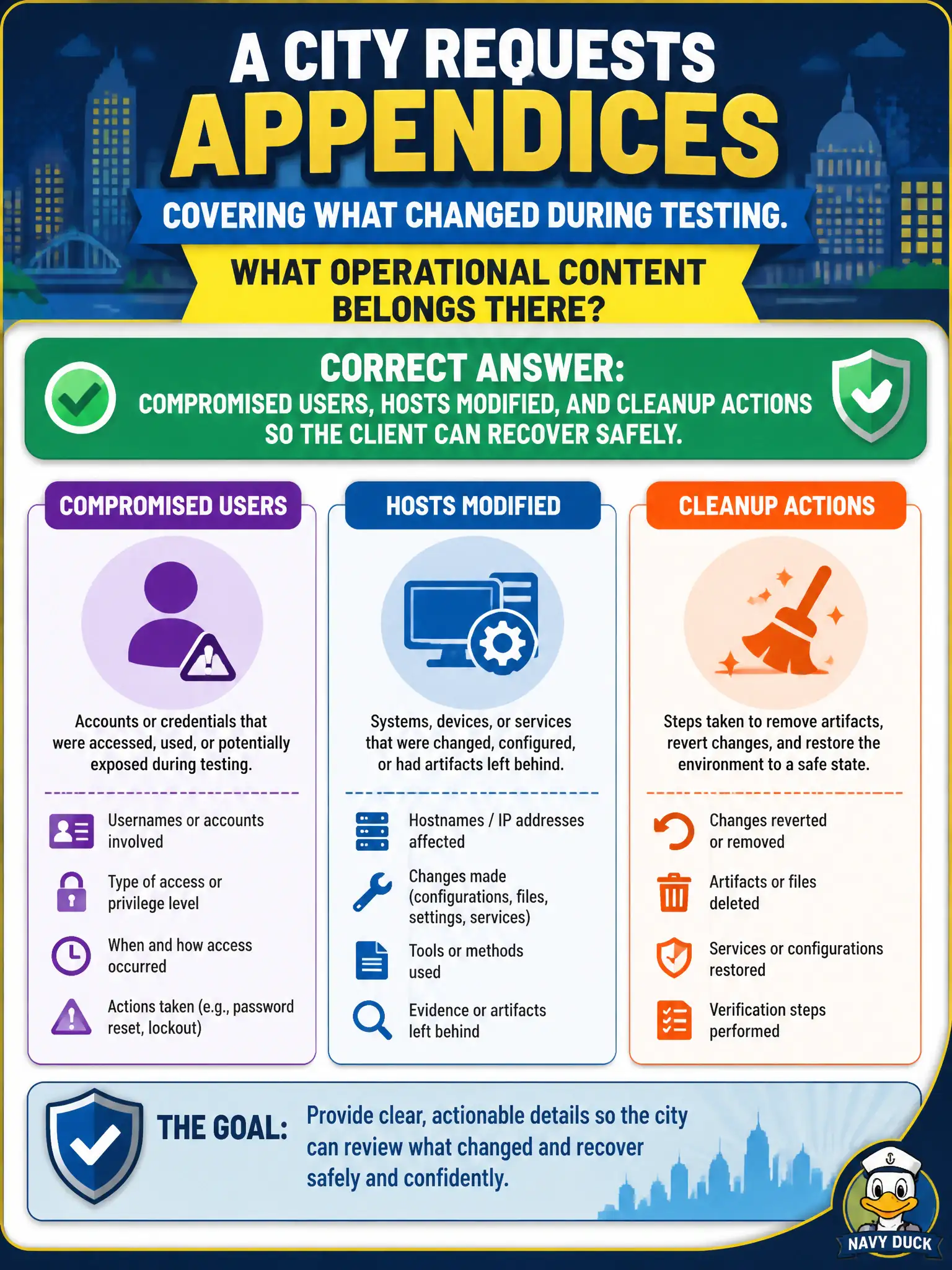
A city requests appendices covering what changed during testing. What operational content belongs there?
Select an answer to reveal the explanation.
Short Explanation
When the test ends, the client needs a tidy inventory of what you touched—accounts, hosts, and what you cleaned up. Think of it as returning the keys and the checklist.
Full Explanation
Appendices covering what changed during a city assessment should include compromised users, hosts modified, artifacts planted, and cleanup actions so the client can recover safely and verify restoration. Operational truthfulness at closeout protects municipal continuity.
Marketing logos and tester biographies are not the operational content requested. Unrelated vendor price lists do not help recovery. Dumping every packet capture without indexing creates unusable noise.
Exam caveat: cleanup appendices pair with attestation that leftovers were removed or explicitly handed off.
Operational check: maintain a living change log during testing, reconcile it at debrief, and deliver an indexed appendix city IT can use for verification. In municipal operations, record the rationale in the engagement notes so future assessors know which control was chosen and which failure modes the rejected options would create for city services. Re-validate after the next maintenance window that the same finding class still applies under the estate's current patch and configuration baseline. In municipal operations, record the rationale in the engagement notes so future assessors know which control was chosen and which failure modes the rejected options would create for city services.