
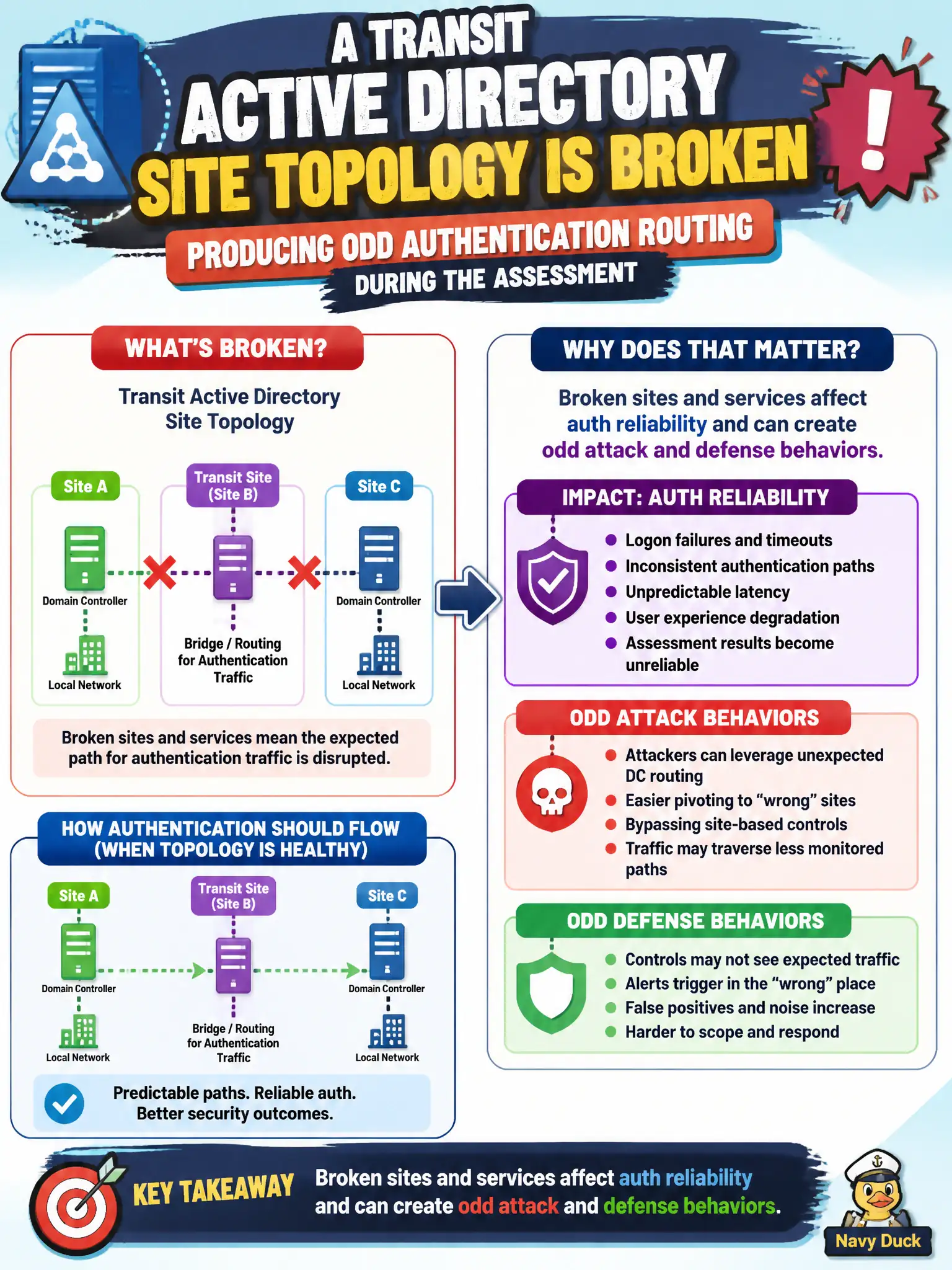
A transit Active Directory site topology is broken, producing odd authentication routing during the assessment. Why does that matter?
Select an answer to reveal the explanation.
Short Explanation
Sites are the traffic map for "which DC should I ask?" A torn map sends cars down strange roads — flaky logons, weird DC choices, confusing logs. Call out topology health; it shapes both ops and assessment behavior.
Full Explanation
Active Directory sites and services shape which DCs clients prefer and how authentication and replication are expected to flow. A broken transit site topology that produces odd authentication routing matters because it affects auth reliability for staff systems and can create unusual attack and defense behaviors—misdirected auth, unexpected DC load, and confusing forensic trails during an assessment.
Site topology is not merely about printer location. Odd auth routing does not by itself prove Domain Admin compromise. Site links remain relevant even when DNS is configured; topology findings belong in AD infrastructure review for municipal estates.
Exam caveat: separate availability/reliability findings from privilege-escalation findings while still explaining how broken sites complicate both defense and assessment. CPTS AD work includes infrastructure correctness, not only ACLs.
Operational check: validate site definitions, subnets, and site links against real civic network locations, correct mismatches, and confirm clients authenticate to intended DCs during business operations. Fixing sites and subnets improves both rider-facing staff login reliability and the clarity of security monitoring during transit AD incidents.