
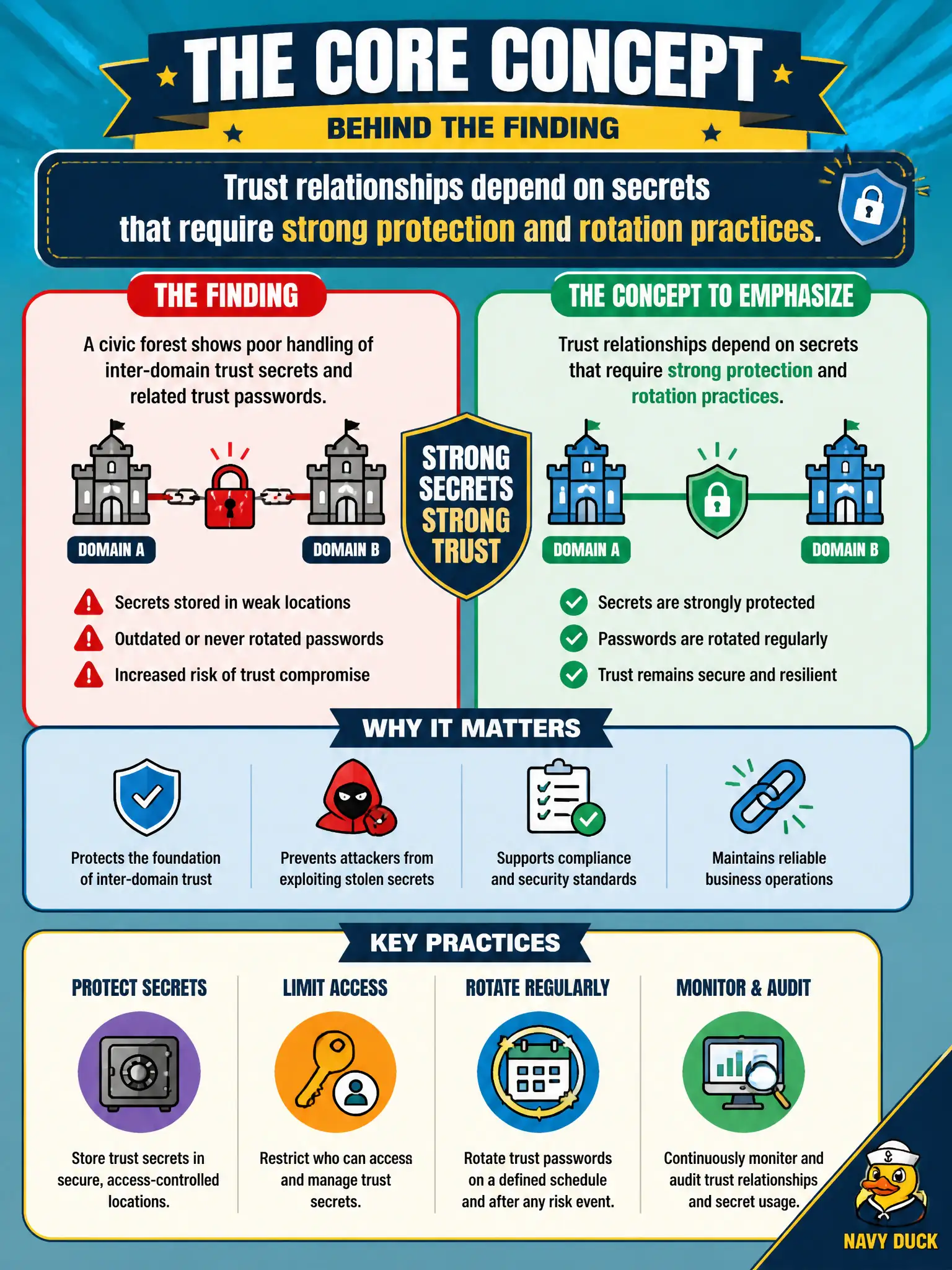
A civic forest shows poor handling of inter-domain trust secrets and related trust passwords. What concept should the finding emphasize?
Select an answer to reveal the explanation.
Short Explanation
A trust is a shared handshake key between neighborhoods. If that key sits in a sticky note drawer, the handshake is for sale. Protect and rotate trust secrets like the high-value material they are.
Full Explanation
Inter-domain and inter-forest trust relationships depend on trust secrets (trust passwords and related material) that require strong protection and rotation practices. Poor handling of those secrets in a civic forest can undermine authentication boundaries between domains that separate agencies or environments, creating cross-domain path themes assessors must highlight.
Trust secrets are not public by design for any domain user to validate foreign tickets at will. Trusts do not remove the need for authentication between forests; they define how authentication is brokered. Trust password hygiene is not limited to wireless RADIUS keys—that distractor confuses unrelated shared-secret domains.
Exam caveat: treat trust configuration and secret hygiene as boundary controls equivalent in importance to many intra-domain ACL issues when multi-domain civic forests are in scope. Distinguish trust abuse potential from completed forest compromise in wording.
Operational check: review trust types/directions, confirm protected handling and rotation of trust-related secrets per municipal AD ops standards, and test (within RoE) whether unintended cross-domain access remains after cleanup. Multi-agency civic forests especially need trust hygiene reviews whenever agencies consolidate or separate directories after reorganization.